
It happens every year: Themes emerge from a film festival program that couldn’t be predicted going in, leading you to wonder what that says about how art engages with the real world that year. What does it say that these three films grapple, in very different ways, with youthful identity, and how the world can sometimes make it hard for kids and teens to find themselves?
It’s a scary world out there in 2026, and these films all, in their own way, offer an oasis from those fears through joyful animation, playful comedy, and an unexpected coming-of-age narrative. While the third film here misses some of its marks, the first two are absolute TIFF gems, the kind of movies that one hopes will have adoring fans when they leave the fest circuit.
The first of the pair is the latest from the geniuses at Cartoon Saloon (“Wolfwalkers”), the hand-drawn “Julián,” a movie that I’ve been telling people who ask what I’ve liked this year is “wonderful” because it’s truly the best word to describe this moving gem, one of the best animated films of 2026. Louise Bagnali adapts a slight children’s book by Jessica Love into a moving story of how aging can threaten to dull creativity, expression, and identity.
It’s a gorgeously rendered piece of art that hums with the specific vibrancy of its community while also exploring universally understood themes of family and dreams. Somewhat episodic and slight at first, “Julián” grows with its protagonist, capturing something familiar to anyone who remembers being told or shown that their childhood dreams were unrealistic. Seven-year-old Julián is so specifically himself but also speaks to the hopes of millions. He’s wonderful.
Julián wants to be a mermaid. It happens over a long summer with his abuela, who he barely knows but he’s forced to live with while his dad is away. At first, culture and age clashes lead to frustration, such as when Julian’s grandmother’s Afro-Caribbean cuisine doesn’t exactly vibe with the boy’s palate, but Bagnali pulls magic out of these moments, sometimes quite literally, such as when a sun that Julian has drawn in crayon comes to life and flits about the room. Is it Julian’s imagination? Magic? What’s the difference? The sprite known as Luna becomes Julian’s ally, a friend in a scary new place.
As for human beings, Julián befriends three local girls and becomes somewhat obsessed with their style, trying to grow his hair long and join them as a mermaid in a Brooklyn parade. Both Julián’s grandmother and abuela’s friends question the gender role for Julián, forcing him to cut his hair and act like a boy. Anyone who has been told their style, expression, or beliefs were too much will relate to Julián, a kid who just wants to have fun and be himself. We so often push that out of kids too early.
Julián’s creativity is mirrored in the film, which bursts with color and light in ways few animated films are allowed to (though it’s definitely a trend at Cartoon Saloon, a company that understands how to use form as much as the creative leaders at Studio Ghibli). The use of pinks and blues, the sunshine on the streets and in abuela’s apartment—everything shines but never in a way that detracts from the realism of this story. Bagnali threads the needle visually, marrying her protagonist’s creative mind to the world around him and reminding us how important it is to cherish both.
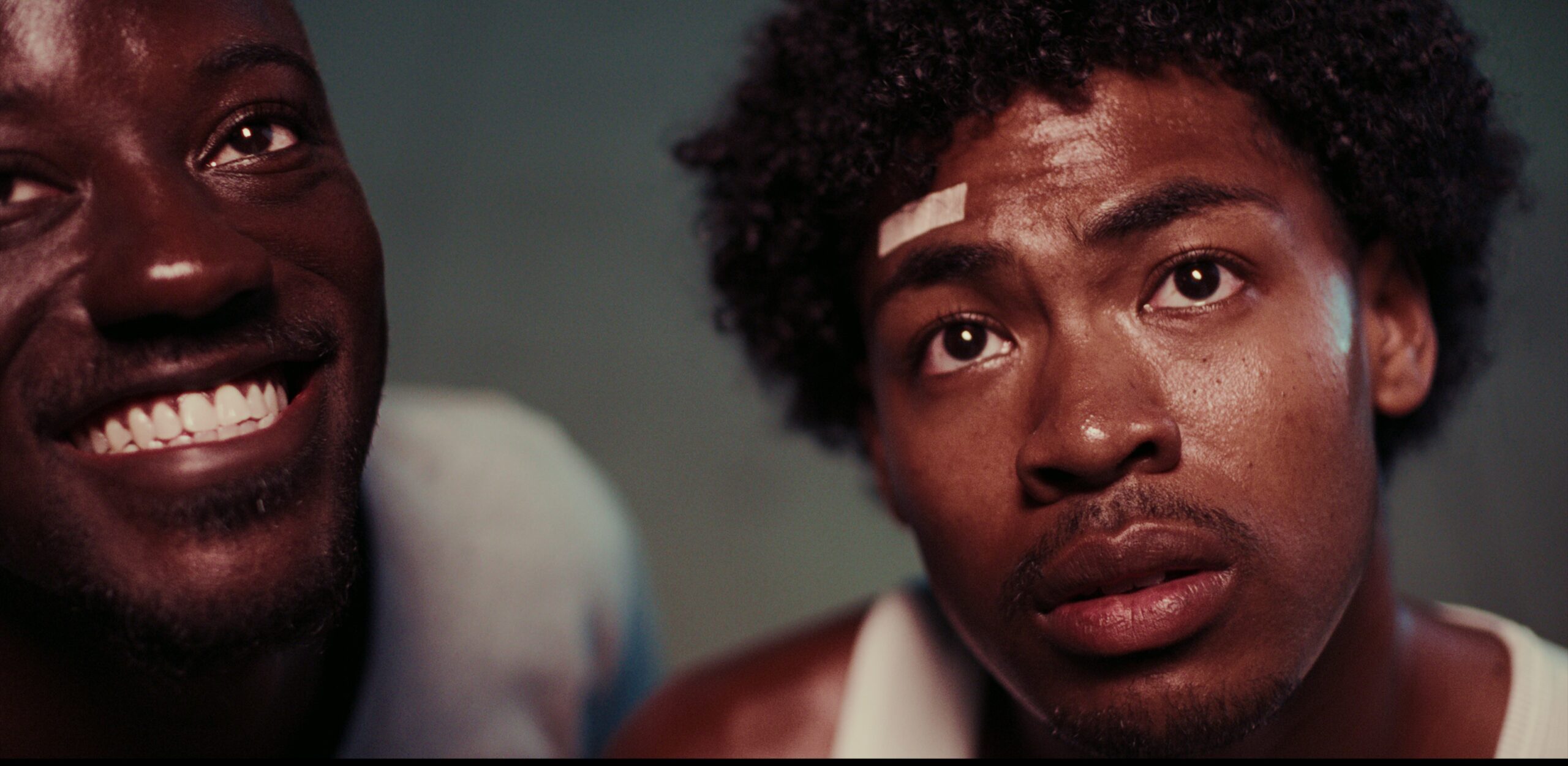
Serville Poblete’s “Sunburn” shares that blend of youthful exuberance, regional specificity, and charming characters. One of the bigger sleeper hits of TIFF 2026, it’s a buoyant gem, a movie inspired by hangout flicks like “Dazed and Confused” but with its own distinct, playful personality. The concept is simple yet engaging: On one of the hottest days of the summer, the power goes out in a Toronto apartment complex, forcing the young people outside to find some relief and something to do. We jump between characters in this brightly lit, colorful setting, falling in love with most of them thanks to Poblete’s incredible work with young performers, giving them confidence, backstory, and agency. This is a funny, sweet ensemble piece about some young people on the cusp of change while others are living for the moment.
If there are leads in this true tapestry piece, they are Shay (Joshua Obra) and Vince (Dashawn Blackwood), two teens becoming guys. They’re at that age when they can still be a little goofy and awkward, but also want to impress both girls and friends. I have three teenage boys—it’s rare to see that in-between space between childhood and adulthood so perfectly captured on film. There’s an age when a teenager is still kinda a kid but also moving toward being a man. And Shay and Vince are there: able to be goofy with the little ones in the complex, and serious with the older teens and twentysomethings.
“Sunburn” balances silly, nuanced comedy beats with conversations about what’s about to change. Again, trust this parent when I tell you that teenagers know when their youth is ending. And it’s funny to think about how a day without screens can send them reeling through their joyful present and into an unknown future.
It’s also a truly culturally vibrant film, with a cast of Jamaican, Filipino, and Guyanese performers, shot by Poblete and her team in the heat of a 100-degree day. It’s a movie with a pulse, which is so often lacking in our low-lit drama era, and it’s a movie that doesn’t just take the lives of young people seriously; it adores them.
Finally, there’s the more intense “In Alaska,” an Inuk-Canadian film directed by Jaap van Heusden and Vinnie Karetak. The teenage half is strong enough to overcome some drawbacks in the more procedural adult half of a thriller that plays better when it focuses on character and setting instead of plot. Shot in Canada’s northern wilderness, it’s a strikingly beautiful film at times, with the frozen tundra looking both terrifying and gorgeous. Leo Matthew Temela gives the kind of performance that should get a casting agent’s attention, but he’s on parallel tracks with Noomi Rapace, who often seems miscast and under-directed. Her involvement likely helped secure funding, but people will remember Temela’s half of the film.
In his debut role, Temela plays the deeply troubled Woody, a depressed Inuk teen who has attempted suicide numerous times. No one knows how to help him, and so you get the sense that they’ve given up. One day, he loads a rifle and heads out to a field, intending to end his life. When he can’t go through with it, he fires an errant shot that, believe it or not, hits the Trans-Alaska Pipeline, leading to a burst of oil that quickly pours millions of gallons of oil into the wild. Knowing this is a big problem, he takes off to find family who he can stay with in Nunavut, braving the deadly landscape as he tries both to hide from the authorities (led by Rapace) and find himself at the same time.
“In Alaska” is effective in its small beats: a character choice by Temela, a shot of the icy conditions, fluid editing. It’s less effective in the big picture, especially as Rapace’s half of the film drains some of the building energy from Temela’s. She’s not bad so much as unnecessary, even as the script tries to weave her mental health issues into Woody’s. In the end, “In Alaska” isn’t your average coming-of-age film, which makes it valuable; that, along with Temela’s brave work, is just enough.
Hence then, the article about tiff 2026 julian sunburn in alaska was published today ( ) and is available on Roger Ebert ( Middle East ) The editorial team at PressBee has edited and verified it, and it may have been modified, fully republished, or quoted. You can read and follow the updates of this news or article from its original source.
Read More Details
Finally We wish PressBee provided you with enough information of ( TIFF 2026: Julián, Sunburn, In Alaska )


Also on site :
- Pulitzer-Winning Author’s Novel, Written in a Home Basement, Ranked ‘Greatest Book of the Last 20 Years’
- Walmart’s ‘Whimsical’ Boucle Mushroom Storage Ottoman Looks ‘Trendy’ and ‘High-End,’ But It’s Now Under $30
- Taylor Swift Makes Surprise Emmys Cameo to Unpack Swiftie-Coded Easter Eggs With Detective Olivia Benson