
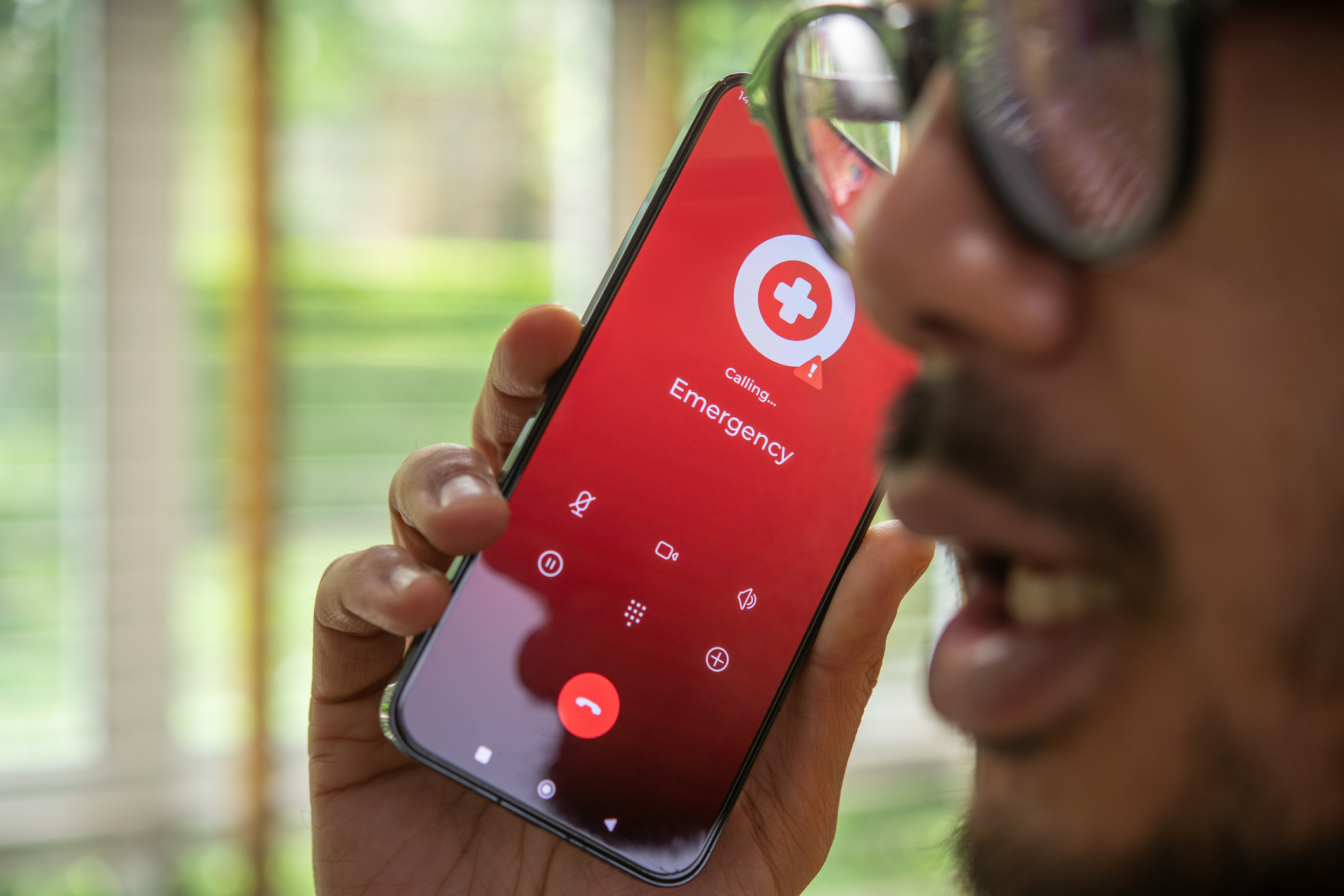
“911, what is your emergency?”
For the millions of Americans who have dialed 911, these are the familiar and comforting words we hear upon placing the call. It is the question that guides us through a moment of chaos or crisis, the linchpin to saving lives and protecting health.
But in recent years, an increasing number of 911 callers have heard something a little different:
“911, where is your emergency?”
It is very nearly the same question, but the slight change underscores vast differences in people’s experiences seeking help in an emergency. In an era when parents can monitor their children’s movements in real time, and ride-share drivers know the precise corner to stop, many Americans may be surprised to learn a sobering truth: the 911 professionals who answer the phone are often unable to automatically pinpoint a caller’s precise location, and cannot always rely on callers themselves to provide it.
The extra time it takes to figure out exactly where to send help, even if it’s a few extra seconds, costs lives. But the United States has let our 911 emergency response system languish for decades, failing to make the necessary investments to bring it into the digital age. That inaction should be unacceptable to every American. Upgrading 911 technology should be a national priority, and Congress must provide sufficient funding to ensure it works in every community.
When America’s 911 system launched in 1968, it was built to serve people calling from landlines at fixed locations. Callers were tracked using address directories that listed the location of the phone they were calling from. As a result, emergency personnel could be dispatched almost immediately. It made sense, and it worked fast.
Nearly 60 years later, we are living in a completely different era. In 2024, more than three-quarters of 911 calls came via either cellphones or Voice over Internet Protocol (VoIP) and other wireless voice services. Since some states do not break down calls by service type, that number is likely even higher. By contrast, only about 7% came from landlines. In many states, landlines now account for less than 5% of 911 calls. That number is likely to decline further in the years ahead.
Our current 911 system isn’t built for this. Often, a 911 professional can trace a call only to the cell tower that received it, which can be a fair distance from a caller’s exact location. As many as 20% or more of calls are traced to the wrong tower. Unlike apps like Google Maps or Life360 that can continuously track a phone’s precise location, 911 call takers must rely on carrier data when the call was first made. Updates come in 20- to 30-second intervals. If the call needs to be transferred, this process must start from scratch. This wastes precious time. It is especially hard in rural areas, where towers can be few and far between, or dense locations like high-rise apartments.
Asking “where is your emergency” may sound like an easy fix, but that incorrectly assumes a caller can always answer the question. Callers may be in an unfamiliar location. They may be navigating imminent danger, such as an intruder or attacker, that prevents them from sharing. They may give the wrong address, or they may move locations from the moment a call is placed to the time help arrives. Even the emergency data that may be stored in a person’s cell phone for precisely such a circumstance can’t be accessed by call takers or dispatchers.
Simply put, our nation’s 911 system is rapidly becoming obsolete.
Past attempts to fix these errors have failed. The ENHANCE 911 Act, enacted in 2004, authorized up to $250 million in annual federal grants to help states upgrade their 911 systems. But those appropriations were never made. Other funding opportunities for states wound up being far smaller. Ultimately, the legislation was not reauthorized by Congress, and national funding efforts dried up. In recent years, federal funding for 911 upgrades has ground to a halt.
Congress should right this wrong by fully funding NextGen 911 services, which would provide 911 professionals and Emergency Communications Centers with the life-saving information they need—such as accurate location information—to do their jobs. Thirty-eight states have pledged to upgrade to NextGen 911. If fully implemented, 911 would shift from an analog relic to an Internet Protocol-based system. That would allow for more advanced communication technologies, including receiving 911 “calls” via text or video, that would be especially useful for 911 callers who are either unaware of or unable to share their location. It would also help callers with disabilities, such as people who are deaf or hard of hearing, access the system as well.
Full NextGen 911 rollout nationwide is estimated to cost approximately $15 billion. The cost of inaction is far higher. Fixing access to location data would free up 911 professionals to rapidly triage calls. It would also mean a quicker and more accurate on-scene response, helping callers and emergency personnel alike.
When 911 launched, cell phones did not yet exist, and America’s emergency response system is still largely stuck in that bygone era. This is an emergency of our own making, and it is fixable. Our leaders must answer the call for help.
Hence then, the article about america s 911 system is dangerously out of date was published today ( ) and is available on Time ( Middle East ) The editorial team at PressBee has edited and verified it, and it may have been modified, fully republished, or quoted. You can read and follow the updates of this news or article from its original source.
Read More Details
Finally We wish PressBee provided you with enough information of ( America’s 911 System Is Dangerously Out of Date )


Also on site :
- ‘The Debut’ Explodes at Telluride With Julianne Moore’s Gonzo, Career-Best Turn, Thanks to Bananas, Unlit Cigarettes and a Faux Musical
- ‘The Debut’ Features Seven Original Songs, All Written by Jesse Eisenberg, and One Is Getting an Oscar Push (Exclusive)
- 1971 Movie, Directed by Dennis Hopper, Launched a Music Legend’s Acting Career—Just as He Scored His First No. 1 Hit