
Drug cartels across Mexico are increasingly turning to car bombs, explosives-laden drones and improvised explosive devices, a trend that could further strain Mexico’s already tense relationship with U.S. President Donald Trump, who has repeatedly threatened military action against the cartels.
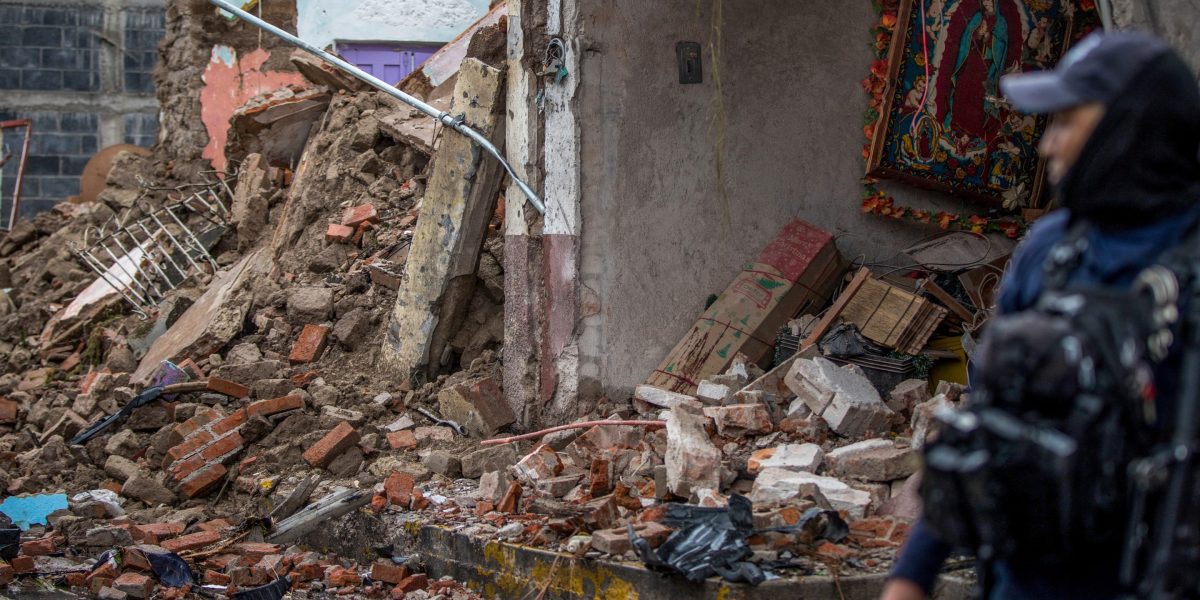
The latest incident occurred Sunday night outside a police station in Ojocaliente, a town in the north-central state of Zacatecas, about 360 miles (580 km) northwest of Mexico City. No one was killed, but the explosion of 200 kilograms (440 pounds) of explosives injured 11 people and damaged more than 60 homes in the city center, Mexico’s security chief Omar García Harfuch said Friday during a visit to Zacatecas with President Claudia Sheinbaum.
So far this year, Zacatecas has recorded 23 attacks involving explosives, including six involving cars or motorcycles packed with explosives, state Attorney General Cristian Paul Camacho said.
The Jalisco New Generation Cartel, or CJNG, and the Sinaloa Cartel have fought for years over control of Zacatecas.
Here’s what to know about why the car bombings are raising concern in Mexico, even though their scale remains far below the violence seen in countries such as Colombia.
Car bombs are rare in Mexico but have been used in the past
Victor Manuel Sánchez, a University of Coahuila professor who has tracked car bombings in Mexico in recent decades, said an early period of such violence included a 1994 attack in Guadalajara by the Tijuana Cartel targeting Sinaloa Cartel co-founder Ismael “El Mayo” Zambada, who was later convicted in the United States.
More recently, he said the Jalisco New Generation Cartel has increasingly used explosives as it expands its reach across Mexico.
Authorities have attributed two recent bombings in the centers of small cities to the group: one in Michoacán in December that killed five people and Sunday’s attack outside a police station in Zacatecas. The CJNG is among the Mexican criminal organizations designated as foreign terrorist organizations by the Trump administration.
The use of explosives is relatively recent
Mexican cartels began using explosives more extensively about five years ago, dropping them from drones to attack security forces or rival groups and burying explosive devices in the ground to defend or control territory.
In 2023, roadway bombs planted by drug cartels in the western Jalisco state killed six people and injured another 14. A month later, the military acknowledged the growing threat and released its first figures, saying it had seized about 2,800 explosive devices nationwide over the previous 4 1/2 years.
The following year, authorities deactivated nearly 3,200 explosive devices in Michoacán state alone. In 2025, an explosive device there killed eight soldiers in one of the deadliest such incidents in Mexico. Authorities have not released more recent nationwide figures.
“It is all a bad development in Mexico,” said Vanda Felbab-Brown, an organized crime expert at the Brookings Institution, a U.S. think tank. “We are facing steady intensification of violence,” she said. “This certainly greatly intensifies the atmosphere of fear and retaliation.”
Sheinbaum said Friday that the nationwide decline in killings was clear evidence that the government strategy against cartels was working.
Car bombs to spread fear
Experts say cartels use car bombs to intimidate rivals and authorities, pressure the government and spread fear among civilians.
Carlos Pérez Ricart, an international studies professor at Mexico’s CIDE university, said car bombs also draw attention and can be used to pressure authorities into negotiations, particularly when criminal groups feel under siege.
Calling it cartel violence, not terrorism
Mexico has long resisted describing cartel violence as terrorism, in part because of concerns that the designation could invite foreign intervention and hurt tourism and investment, Felbab-Brown said.
Another official argument is that terrorism generally involves political or ideological aims, while cartels are primarily motivated by profit.
Still, civilians have been deliberately targeted. In 2008, grenades thrown into crowds celebrating Independence Day in Morelia, the capital of Michoacán, killed eight people and wounded dozens. Three years later, gunmen set fire to a casino in northern Mexico, killing 52 people.
The Trump administration’s designation of eight Mexican cartels as foreign terrorist organizations — and its use of that framework to justify military action — has made the terminology more consequential, particularly as the legality of such actions is challenged in the United States and abroad.
Pérez Ricart cautioned against applying counterterrorism strategies to organized crime. “The answer to terrorism is the disappearance of the enemy,” he said, while in the drug trade the adversary is not simply an armed group but an entire illegal market.
This story was originally featured on Fortune.com
Hence then, the article about mexican drug cartels are increasingly using bomb laden drones and improvised explosive devices we are facing steady intensification of violence was published today ( ) and is available on Fortune ( Middle East ) The editorial team at PressBee has edited and verified it, and it may have been modified, fully republished, or quoted. You can read and follow the updates of this news or article from its original source.
Read More Details
Finally We wish PressBee provided you with enough information of ( Mexican drug cartels are increasingly using bomb-laden drones and improvised explosive devices. ‘We are facing steady intensification of violence’ )


Also on site :
- Mandy Moore on Hilary Duff’s Musical Comeback and Playing an ‘Absolute Bitch’ in Dan Fogelman’s NFL Family Drama ‘The Land’: It’s ‘”Friday Night Lights” and “Succession” All Rolled Into One’
- New York gallery sues Alaska Airlines for allegedly ruining half a million dollars in Japanese artwork
- After hitting oil tankers, Iran targets Navy warships and U.S. retaliates with ‘higher economic cost’ in new escalation that could transform the war