
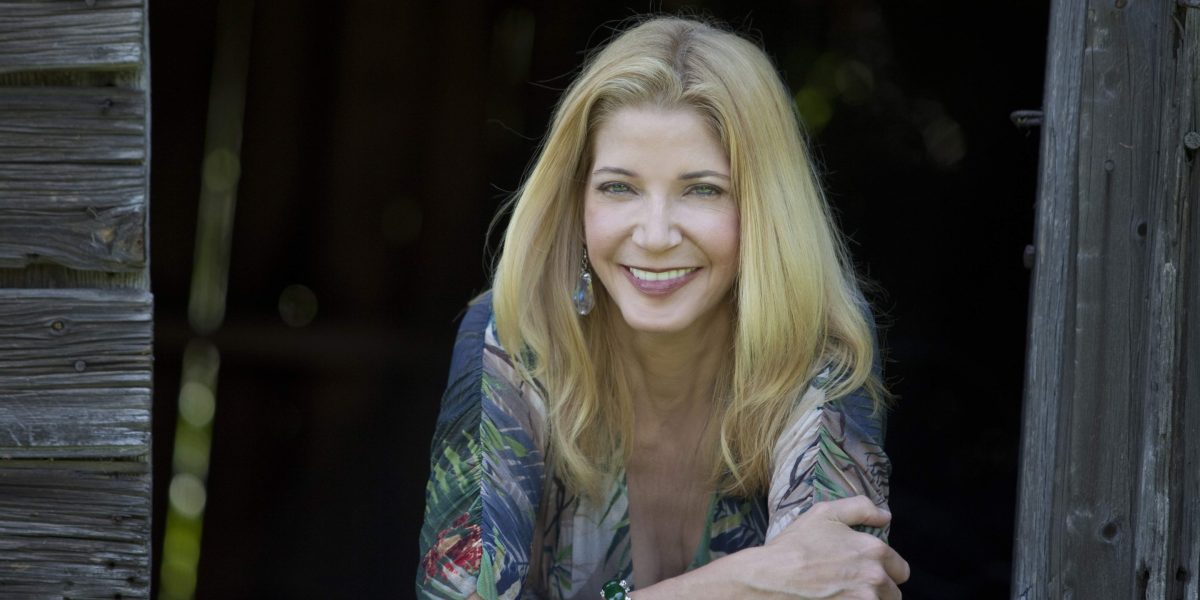
In an era where personal identity is often transformed into a brand and creativity into a strategy, Candace Bushnell has taken a different path. Not because she couldn’t move in that direction, but because she chose to remain, above all, a writer.
Sex and the City, the column that began in The New York Observer in 1994, has become one of the most recognizable cultural narratives of recent decades, influencing the way women talk about themselves, their choices, and their place in the world. And yet, for her, this success never functioned as an end point, but rather one of the many facets of her journey. Instead of being confined, her writing has continued to evolve, from best-selling novels such as Four Blondes, Trading Up, and Lipstick Jungle, to new narrative forms that test the boundaries between the private and the public.
Perhaps this is because, for her, creation is not the result of a strategy, but of an inner need. Of a constant urge to observe, process and transform experience into narrative – whether this happens in the solitary process of writing or in front of a live audience. It is no coincidence that, almost three decades after her first major success, she chose to return to the stage with a one-woman show that functions as a more direct, almost confessional version of her journey.
With True Tales of Sex, Success and Sex and the City, which was also presented in Athens on April 17, Candace Bushnell appeared in front of an audience, bridging the past and the present, but also the individual and the collective. It is a reminder that the stories that stand the test of time are not necessarily those designed to be “great”, but those that are told with honesty.
On the occasion of her presence in Greece, the iconic author spoke to Fortune Greece about the timelessness of writing, the importance of an authentic voice, and what it means to continue to evolve creatively, even when you have already left your mark. (This is republished in Fortune with permission.)
You started writing about a very specific world, your own world, and yet your experiences became a thing with global resonance. When did you realize that something so personal had acquired universal power?
I started writing when I was 19 and I was always writing about my world, about New York and the women who lived there. When I started the Sex and the City column in The New York Observer, one of the decisions I made was to write about things that I thought could only happen in New York.
Very quickly, however, it turned out that these things were happening everywhere. It was, in essence, social anthropology, and that’s something that can be translated to almost every major city.
I think I first realized that the writing was transcending New York when people in Los Angeles started sharing the column with each other. That was really where it all started. Then, of course, the TV series came along and took it much further, but that didn’t happen overnight either. It was probably around 1999 or 2000 that I felt like something had really taken off.
Many people today would describe what you have built as a strong personal brand. Did you ever view it that way?
I have often been told: “You have been a brand for 20 or 30 years.” But I do not agree with that, because I do not see myself as something inanimate. I am a human being. What I do is dedicate my time to creating, to producing something that, at least until now, even in the age of AI, only a human being can really do; and that is writing.
I never built myself as a brand in marketing terms. I did not seek to develop anything beyond my works in that way. Yes, some of my books have been adapted for television, but I never approached myself as a marketing “machine”.
I, in essence, just do my job. I do not put my name on buildings or product lines, nor do I have that type of business “umbrella.” For me, the focus has always been on the work itself and my creative expression.
In a world where attention is often fleeting, what do you think makes a work truly stand the test of time?
Ideally, the work speaks for itself. Of course, everyone needs marketing these days, that’s the reality, but when you’ve created something strong enough, that acts as a signal in itself. The public comes to you because they know who you are and have seen what you have created.
Of course, there are always those who are better at turning ideas into larger business ventures, and today many have found ways to commercially exploit worlds like Sex and the City with “recipes” that didn’t exist back then. The landscape has changed. But in the end, I still believe that it all comes down to whether the work has something original and true in it.
How can someone create something that is truly their own, today, in the age of AI?
First of all, I think that creativity is something deeply unique. I’m not worried about AI, because I know that it can’t replace what I can do, and that is true for creative people in general.
Creativity is about combining elements, recognizing patterns, and transforming them into something original. AI can, perhaps, imitate a style; it could probably write something that resembles my own style, but essentially it would be limited to reproducing it. I, as a human, can evolve; become a better writer, think differently, introduce new elements into my work.
This authentic creative process is human. At least as of today, I don’t think AI can replace it. I would, of course, like to learn how to use it as a tool, but when it comes to true originality, I still believe that it belongs to humans.
When Sex and the City went from writing to television, how did you experience that transition? And how different is the degree of control that a creator has in these two media?
I think it is important to understand that television and books are two completely different things. Television has different demands and its own logic, and there are people who work exclusively in that medium.
I was on the writing team for Sex and the City for the first two seasons, but then a $1 million deal came up to write two books. That was much more profitable financially, but more importantly, it was what I really wanted to do, which was to write books. So, this was my choice.
Books and cinema are closer to one another because they have a beginning, a middle, and an end. Television, on the other hand, has to be ongoing and, because of that, it requires a mechanism that keeps the story moving, with characters starting in one place and ending somewhere else. In books, my feeling is often that people do not change that radically. It is a completely different structure and a different mindset.
So yes, I had an initial involvement, but my energy was always directed towards books.
What is your creative process in practice when you start writing a book?
Writing a book, for me, is mostly about discipline. I mean, at least six hours a day, six days a week, sometimes seven. There are periods when the work can last for up to ten hours per day. At the end of the day, you just have to sit down and do it.
It is a lot like playing a musical instrument. It takes practice, endurance, and consistency. You cannot passively wait for inspiration, you have to show up every day and try.
As for ideas, you need to have a deeper sense of both your material and your characters. The main question is whether these characters can support a big narrative, that is, whether they have the depth to “hold” 100,000 words. It is not something that can be easily explained, because it is an internal, mental process: you create a world in your mind and then channel it on paper. You have to, essentially, enter that creative space and manage to stay there.
We talk a lot about “reinvention,” especially in long-term careers. How do you view that concept?
I do not really think in terms of “reinventing oneself.” In fact, the message at the end of my one-woman show is that when you reach 60, it is not about reinventing but rather about inventing yourself.
I do not think that people really reinvent themselves. This is a catchphrase that has become fashionable, but to me it does not really mean anything. We are who we are, and what really matters is accepting that and allowing it to express itself. That was the advice I got when I was in my 20s and was starting to write: just keep doing what you are doing and be true to yourself.
Sometimes, culture “meets” you and responds to what you create. Sometimes, you are so ahead of your time that people are not ready to understand it yet. Then, you just hope that, at some point, they will. So, for me, it is more about timing than reinvention.
Your narration is now being transferred to the stage. How did that transition come about and what did it give you creatively?
The show came about because someone I met said to me: “I think you can do a one-woman show.” It was not something that I had planned, but during the pandemic I wrote something and thought: why not? Let’s give it a try.
That’s where it all began. Our first performance was in a small theater and then it went off-Broadway in New York. It was an exciting experience because, on the one hand, it was something different from what I was used to and, on the other hand, it was not completely foreign to me. As a writer, I had been doing readings and public appearances since the mid-1990s, so it felt more like a natural progression than a radical change.
Actually, I feel very comfortable on stage; it comes naturally to me. A lot of people say, “Oh my God, I could never do that,” but for me it is easier than writing a book. And this is the paradox: people think that being on stage is harder, when in fact writing a book is much more demanding.
You have spent years writing about women, relationships, and modern life. How different do you feel the younger generations’ experience is today?
One of the reasons I created the one-woman show was because people kept asking me the same things about Sex and the City: Did I really have three female friends like the ones on the show? Did I have a wardrobe like Carrie Bradshaw’s? How did I get into writing the column? So, the show answers a lot of these questions.
As for younger women today, I feel like the more I hear about their experiences, the more I understand that yes, things are very different. 25 years have passed, dating apps are here and individuals have access to a lot more people than they used to. But at the same time, everything seems less romantic. It seems harder to make meaningful connections; there is more disappointment and more negative experiences.
When I was younger, in the 1980s and the 1990s, there was still excitement, a romantic anticipation around meeting someone and the feeling that something beautiful could happen. Today, when I talk to younger women, I often hear about “one bad experience after another”. Maybe it is my algorithm’s fault, but even what I see online has a more negative connotation around dating. It’s a different world altogether.
Speaking of power today, what do you think makes a woman truly powerful?
I think that success requires, above all, being motivated and constantly striving. It is a fact that some people have more energy than others, while some people have a special aura or a heightened awareness of their potential. But in the end, it all comes down to how you make the most of the cards you’ve been dealt.
We all start with certain givens, and the power lies precisely in the ability to make the most of them.
Is there a woman who inspires you personally?
Martha Stewart. I see her every now and then in New York and she is truly special. She has so many different talents and has created so many opportunities. She is 83 years old now, which is incredible, and yet she is still working, doing everything. She is also a very kind and friendly person. So yes, I would say that Martha Stewart inspires me.
This story was originally featured on Fortune.com
Hence then, the article about candace bushnell on ai creativity and why originality still wins was published today ( ) and is available on Fortune ( Middle East ) The editorial team at PressBee has edited and verified it, and it may have been modified, fully republished, or quoted. You can read and follow the updates of this news or article from its original source.
Read More Details
Finally We wish PressBee provided you with enough information of ( Candace Bushnell on AI, creativity and why originality still wins )


Also on site :
- At 92, Harriette Thompson became the oldest woman to run a marathon; the classical pianist went on to set the oldest-woman half-marathon record at 94
- Santa Barbara Foundation and California Lutheran University Center for Nonprofit Leadership Host PR Workshop Led by Marketing Maven CEO Lindsey Carnett
- ‘Mamma Mia!’ Star Amanda Seyfried’s Sweet Joni Mitchell Cover Turns Into a Scene From ‘Scream’ in a Matter of Seconds