
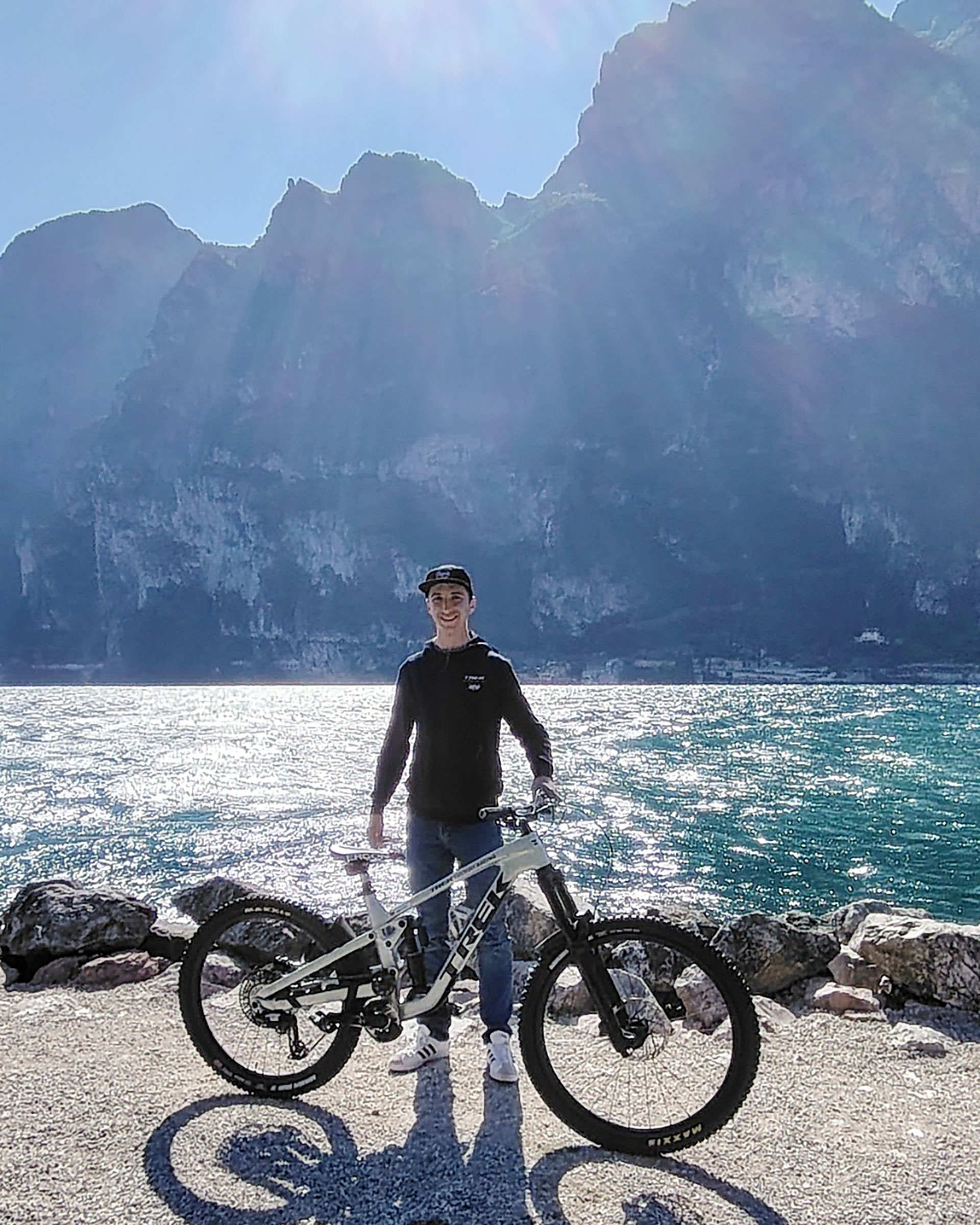
In Germany, a 7-year-old boy had been diagnosed with kidney cancer. He had beaten it back with a series of treatments over about a decade and was able to live a relatively normal life, pursuing his love of riding his bike and becoming a serious cyclist. But by the time he was 17, the cancer had returned and spread to multiple organs, including his brain. He was out of options.
The most his team could offer was an experimental treatment to buy a little time, says Dr. Christian Seitz, head of the Cell and Gene Therapy Program at Hopp Children's Cancer Center in Heidelberg. Seitz and his colleagues found that the boy’s cancer carried a set of markers that could be targets for immune cells, called T-cells, that are specially programmed to hunt cancer, and although this type of solid tumor is not usually treatable this way, the team decided to proceed.
As they describe in a new paper published Aug. 12 in the New England Journal of Medicine, a single infusion of the cells last year resulted in a complete remission. The boy just came in for his follow-up, Seitz says. More than a year later, he still has no detectable signs of cancer.
The study suggests that doctors and scientists may be able to tailor immune cell treatments even for certain cancers that have been difficult to tackle with earlier forms of engineered immune cell therapy.
In the last two decades, engineered T-cells, such as CAR T-cells, have fundamentally altered the landscape of cancer treatment. There are a variety of approaches, but in most of them, a patient’s T-cells, a type of immune cell, are removed from their body, altered or trained to hunt down a particular protein carried by cancer cells, and then re-infused into patients to destroy tumors. Results can be nothing short of breathtaking. While the treatments don’t work for everyone, those for whom they are effective can go from death’s door to essentially cured.
Not every cancer is vulnerable to these attacks, though. “The dogma over the past 10 years was, basically, if you have a large solid tumor, it's not going to work,” says Seitz. Something about the T-cells produced by most approaches makes them unsuitable for broaching the defenses of these tumors, which produce their own little microenvironment full of molecules that protect them from the immune system. The approach is typically more successful in blood cancers.
However, the treatment used in the latest study is a little different from standard engineered T-cell therapies. In this particular approach, called T-cell receptor-engineered therapy, the T-cell’s target is not a protein on the surface of the cancer cell, but a protein within the cell. This opens up a different set of targets to doctors, and it also seems to mean that the T-cells can act a little more like natural immune cells as they work to clear the cancer, says Seitz. That means the T-cells might work better against solid tumors.
The patient receiving T-cell therapy against PRAME in July 2025. —Courtesy of Hopp Children’s Cancer CenterThe role of genetics in T-cell therapy
The boy’s cancer carried a protein called PRAME, which scientists had already been investigating as a potential target for T-cell treatments for melanoma and sarcoma, and which seems to be present in many pediatric cancers as well. Seitz and colleagues worked with Immatics Biotechnologies in Germany, which is running clinical trials of various PRAME-focused treatments, to produce T-cells for the boy’s infusion.
The period after the infusion was tough on his body; he had to spend about two weeks in the ICU, says Seitz.
Eight weeks after the treatment, the boy and his mother came in for his follow-up. After the scans, Seitz recalls, “I was looking at the images, and I was like, ‘This is not possible.’” All of the liver metastases were gone. Tumors elsewhere had shrunk enormously, and when doctors checked the tumor tissue for signs of live cancer cells, they saw none. The boy is now cancer-free, with no detectable signs of disease. What’s more, his blood still contains T-cells that hunt down PRAME, suggesting that his body may now be able to eliminate further recurrences.
It’s an exciting finding, says Rimas Orentas, an adjunct professor at Johns Hopkins Bloomberg School of Public Health and head of immunotherapy at Miltenyi Biotec who was not involved in the study. “Solid tumors are enmeshed in your tissues,” he says. That makes it quite difficult for engineered T-cells to work. “That's the surprising part of this paper.”
As with many engineered T-cell discoveries, this particular approach, if it reaches the clinic, is unlikely to work for every patient or every cancer. Still, with many of these approaches, says Orentas, “just a few patients benefit, but when they benefit, they really benefit. I think that's where we're headed with this.”
Seitz, who is now planning a clinical trial of the treatment with 18 pediatric cancer patients who all have PRAME in their tumors, just saw his recovered patient this week. Over the weekend, the boy had been part of an extreme cycling event. “Apparently, they drive uphill, and then they go nuts downhill between trees and rocks,” Seitz says. “And I was like, ‘Oh my God...please don't crash into a tree! It's not worth it!’ But he really loves it”—and Seitz feels honored to have helped him reclaim his life.
Hence then, the article about an experimental pediatric cancer treatment shows promise in new research was published today ( ) and is available on Time ( Middle East ) The editorial team at PressBee has edited and verified it, and it may have been modified, fully republished, or quoted. You can read and follow the updates of this news or article from its original source.
Read More Details
Finally We wish PressBee provided you with enough information of ( An Experimental Pediatric Cancer Treatment Shows Promise in New Research )


Also on site :
- Ivanka Trump Shares Rare Family Photos From Her Grandmother’s 100th Birthday Celebration, With Special Wishes From These Unexpected Stars
- Pedro Pascal Was Surprised Tony Gilroy Made ‘Behemoth!’ “So Intimate And Healing”: “I Thought You Were Gonna Be Mean”
- Dolly Parton’s Nephew, Accused of ‘Terrorizing Conduct,’ Requests Delay in Restraining Order Fight to Find Lawyer