
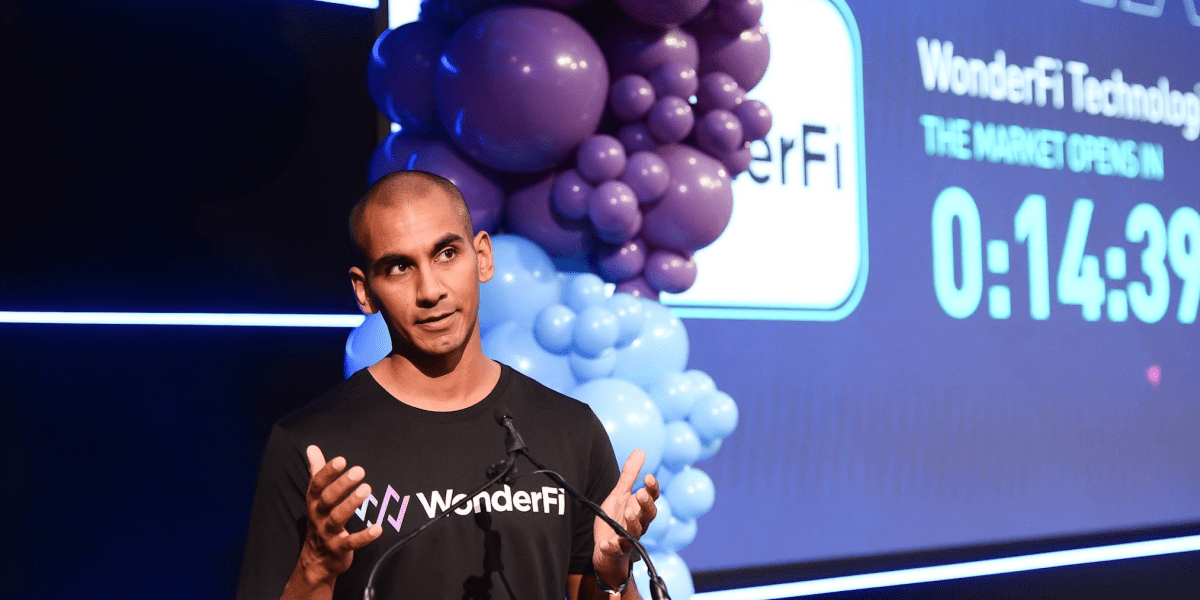
When Robinhood agreed to buy WonderFi, the company I founded, some of Canada’s loudest voices argued that federal regulators should block the deal. WonderFi, they said, had become a strategic national asset, the crypto equivalent of one of Canada’s Big Five banks, and that it could not be allowed to fall into American hands.
I understood the concern. Canada has been losing on too many fronts. For decades, capital and many of our most talented and ambitious citizens have moved south. But blocking the sale of my company to Robinhood would have done nothing to address the underlying problems that have spurred this exodus.
Sure, Canada would be better off with more large, Canadian-owned tech companies. But that would require creating the conditions for a company as ambitious as WonderFi to keep expanding after winning the home market.
I founded WonderFi in 2021. Over the next several years, we brought together the best talent and technology in the country, built a national brand, and consolidated a fragmented crypto market. We built trust with millions of users – no small feat after Quadriga, Canada’s last notable crypto exchange, collapsed in fraud and scandal. We went on to survive the collapse of FTX, despite them being an early investor, and worked through one of the most aggressive regulatory overhauls any crypto market had seen. By 2023, we owned the Canadian market.
I’m proud of what we built, but winning Canada was never supposed to be the end. I wanted WonderFi to become an international success. But the most credible path to global scale came through Robinhood, which saw WonderFi as its entry point into the Canadian market and acquired the company for C$250 million—an excellent outcome for WonderFi and a clear step into its next phase of growth.
Canada’s growth ceiling
Canada claims to have an innovation culture. The reality is much different. Canada has created a ceiling for growth for ambitious companies. This didn’t happen all at once but gradually as entrepreneurs confronted an interlocking series of headwinds: weaker business investment, thinner growth capital, declining public markets, fragmented regulation and less competitive reward for taking risk.
Other countries are moving aggressively in the opposite direction. Florida and Texas compete tooth and nail for founders and investors (no state income tax). At the federal level, the United States gives founders and early investors major capital gains exclusions. Britain and Singapore offer strong incentives for local investors and innovation. In contrast, Canada offers a patchwork of programs, credits and consultations, which are layered onto higher taxes, scarce capital and sluggish policy-making. In a relatively small market, that makes the risk-reward equation worse. Canada has not competed with the same urgency.
The business climate in Canada is challenging for any entrepreneur. For crypto companies, those challenges are compounded.
In the wake of Quadriga, Canadian regulators designed one of the most demanding crypto regimes in the world. The response was understandable at the time, but it also made Canada one of the hardest markets in which to build a viable crypto business. Global exchanges with deep pockets tried. Many concluded the Canadian market was not worth the cost. Binance, OKX, Bybit and Gemini, among others, all entered and later exited.
Canada’s crypto laws are already burdensome enough, but they are also layered on top of a fragmented and inefficient system of securities regulation. As a former securities lawyer, this was my bread and butter – inefficient regulations are great for lawyers. But they are terrible for business. They raise financing costs, complexity, and worst of all – they scare away investors. There have been numerous efforts to unify this over the last two decades, all of which have failed.
WonderFi is not an isolated case. Nuvei, Verafin, Magnet Forensics and Sierra Wireless followed different versions of the same Canadian pattern: build something real, reach the limits of the domestic market, then turn to foreign capital or a foreign strategic buyer. As Tobi Lütke, the founder of Shopify said: “It’s literally the same story again and again. We take the thing that’s most important and send it somewhere else.”
Jim Balsillie, the former CEO of BlackBerry, and other prominent Canadians are right about the diagnosis: Canada keeps losing important businesses and its best talent. I built WonderFi here, and I know Canadian founders can create companies that matter. But if Canada wants companies like WonderFi to remain Canadian, it must create better conditions for ambitious companies to finance, scale and compete globally.
Blocking a sale is easy politics. Building a country where remaining independent is still a serious option is where the real work begins.
Karia Samaroo is the founder and former CEO of WonderFi, which was acquired by Robinhood for C$250 million. He was formerly known as Ben Samaroo.
This story was originally featured on Fortune.com
Hence then, the article about i built canada s largest crypto company but the business climate here made selling to robinhood inevitable was published today ( ) and is available on Fortune ( Middle East ) The editorial team at PressBee has edited and verified it, and it may have been modified, fully republished, or quoted. You can read and follow the updates of this news or article from its original source.
Read More Details
Finally We wish PressBee provided you with enough information of ( I built Canada’s largest crypto company. But the business climate here made selling to Robinhood inevitable )


Also on site :
- Dolly Parton Secretly Flew to Germany for Experimental Cancer Treatment Before Death
- Quote Of The Day By Benedict Cumberbatch: 'Everything Is Not Necessarily In Decay, But Change Is Constant...'
- Quote of the Day: Cleanthes Worked Night Shifts as a Water Carrier to Study Philosophy by Day. Then He Took Over Ancient Greece’s Leading Stoic School