
Written by LAUREN SCHUTTER
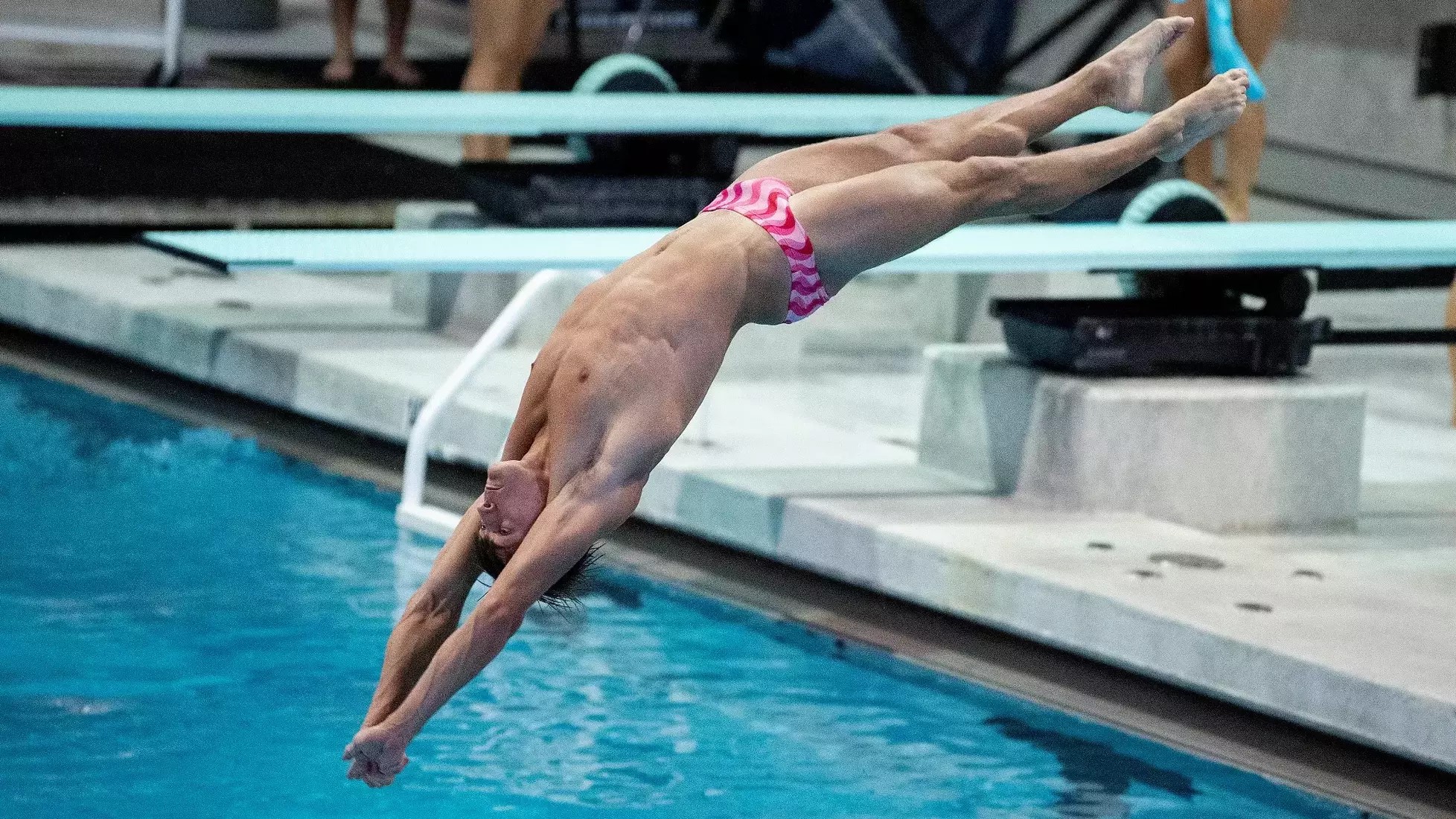
CHAPEL HILL — Carter Loftin was warming up at practice when he learned that his college diving career could last another year.
A new NCAA rule gives Division I athletes five years of eligibility, leaving the UNC-CH senior to decide whether his body—and his future plans—can accommodate another season.
The rule offers younger athletes more time to compete, but excludes those whose eligibility expired this spring, dividing UNC athletes over who benefits and what another year would require.
With a unanimous vote passed by the NCAA’s Cabinet on June 23, all NCAA Division I athletic teams are set to adopt an “age-based eligibility model,” known more bluntly as the 5-for-5 ruling. The ruling allows athletes five years of collegiate eligibility, beginning either after they enroll in college or after their 19th birthday, effectively eliminating redshirts — the only exceptions being military service, pregnancy, or religious missions.
Originally, the ruling did not grandfather in the high school class of 2022 — but due to various lawsuits across the country, the group is officially included as of July 31.
The decision has prompted reconsiderations in the athletic world.
“I feel like I’m still in shock because I felt like I had everything relatively planned out, and now all of my plans are changing,” senior volleyball captain Zoe Behrendt said.
Athletes about to begin their senior year now have another year of eligibility to play if they so choose. Freshmen have five years to compete, regardless of the number of games they play or injuries they may sustain. Seniors who just graduated — the high school class of 2022 — are out of luck. They were not grandfathered into the ruling, leading to numerous lawsuits and a plaintiff list that grows by the day.
A majority of Division I athletic programs are already on campus training for their upcoming seasons.
In the month since this decision hit the news, athletes at the University of North Carolina have had to figure things out amid preparations for the academic year.
Upperclassmen
Loftin, a senior diver and member of UNC’s Student-Athlete Advisory Committee, had heard swirlings of the rule previously, noting that the age cap is a generally good promise and standard among “almost every sport.”
“Honestly, I wasn’t too surprised,” Loftin said of the ruling.
The change — expected or not — brings this class to make a difficult decision.
“To take a fifth year is a mental shift,” rising senior volleyball player Safi Hampton said.
“College has asked so much of me as a person … because you’re a student, you’re a teammate, you’re being statted at everything you do — you have to be places on time. There’s constant bonding, which I love, but it’s its own thing. For a fifth year, I’ve got to immensely re-shift to sit in this a little bit longer and be able to give it my all and not just think, ‘Well, I was about to be done anyway,’” Hampton sighed.
UNC volleyball’s Safi Hampton (center) celebrates a point against Wake Forest in 2025. Hampton, who is entering her senior season at Carolina, now has the opportunity to play a fifth year thanks to the updated NCAA eligibility rules. (Photo via UNC Athletic Communications/Dalton T. Wainscott.)
This mental shift that Hampton describes embodies the indecision felt by athletes in response to this ruling, with many considerations falling under both mental and physical categories.
“It’s hard for me to imagine stretching my diving career another year without built-in time for healing and recovery that has already been necessary thus far for me to be able to complete a whole season,” Loftin said.
Dr. Jeni Shannon, the head sports psychologist for UNC Athletics, empathizes.
“I think there is a sense of loss of control because athletes don’t necessarily trust how the system is going to integrate and respond to this new timeline,” Shannon said.
This group of rising seniors has witnessed COVID-year athletes, the birth and rapid growth of name, image and likeness, direct school pay, revenue share, and massive conference shuffles — all within their college careers.
“I feel like a lot of these decisions stem from football and basketball, and there’s a bit of a trickle-down effect, like, ‘figure it out’ other sports,” Hampton said.
Underclassmen
While rising seniors scramble to make sense of what’s next, there are athletes fresh on campus with a little more time on their hands.
“If your first season as a freshman doesn’t go the way you planned — whether you just didn’t compete well, or you were injured — you have more time to complete your goals, and become the gymnast or athlete you want to be,” incoming freshman gymnast Sarah Savisky said.
Katie Cross, a fellow incoming gymnast, noted, “Coming in as a freshman, we’re still adjusting to the academics and the gymnastics side of things. So, maybe it takes some pressure off of your first year, where you don’t have to worry about, like, after this, I only have so much time left, and you want to make this impact. It gives more time for that growth, and it’s a little less pressure on the student-athlete.”
Along with the athletic upside, underclassmen also have an academic opportunity.
“If I’m able to get my master’s while still playing tennis… I feel like that could be a really cool option,” incoming freshman tennis player Aya Manning said.
Savisky emphasized this point.
“Especially at a school like UNC, which is academically so good, a lot more athletes are going to start taking their fifth years,” she said.
Class of 2022
With all of the decisions, ranging from stressful to more opportune, there’s a class that was the last to learn they even had a choice.
Unlike rising seniors and incoming freshmen, athletes who exhausted their eligibility following the 2025-26 academic year were not originally grandfathered into the 5 for 5. Most graduated, assuming that their collegiate careers were over as originally intended. On July 31, a federal court ruled that all high school class of 2022 athletes who exhausted their fourth season of college eligibility this spring are eligible for a fifth season in 2026-27.
Former track and field athlete Trevor Paschall didn’t envision extending his collegiate career. Now studying to become a doctor of optometry in Memphis, Tennessee, he said another season might have changed his plans had the rule been implemented earlier.
“I had graduate school plans and never considered professional athletics or taking a graduate year for sports,” Paschall said. “However, I would have considered it had the ruling been implemented as late as my sophomore or potentially even junior year.”
While he said he is excited about the career ahead of him, Paschall admitted he still wonders what another year in Chapel Hill could have looked like.
“It definitely would have been cool to stick around,” he said.
For Peyton Berryman, a former pole vaulter, it feels like there have been many more questions than answers. Berryman competed through an injury during her senior season rather than taking a redshirt because she had planned to graduate and begin her career. With the new ruling, she said there have been reconsiderations.
“My original plan was to search for a job,” Berryman said, “but now that it’s been a few months and I don’t have a job, and this ruling has come out, I am now thinking of possibly looking into a few certificate programs if a job doesn’t come into fruition.”
While it is a sudden opportunity, there are obvious concerns.
“My mindset is pretty different than what it was 3 months ago,” Berryman said. “I haven’t been training this whole time and have already been in the mindset of being done with college athletics, so it might be hard to get back into it. I also don’t want to waste money on schooling if it won’t help me in the future, just to take another year of college athletics. It would really have to be the right program and something that I could still get into at this time.
Whether it’s opportunity, stress, a complicated legal headache, or somewhere in between, the two rulings have posed many questions — a frontrunner for athletes being: what can five years mean in a college career?
“Five years is a significant physical and emotional commitment and not every athlete will want—or be able—to use all five,” former rower Issy Debling said. “After four years of early mornings, intense training, and balancing athletics with academics, some athletes will feel ready to move on. The opportunity will be very attractive to those pursuing graduate degrees or who feel they still have more they want to accomplish, but it will remain a personal decision.”
Lauren Schutter is a current member of the UNC Volleyball team, as well as a Masters of Journalism student, who contributed this piece as freelance work.
Featured photo via UNC Athletics Communications/Jeffery A. Camarati.
UNC-Chapel Hill Student-Athletes Left ‘Figuring it Out’ Upon NCAA’s 5-for-5 Ruling Chapelboro.com.
Hence then, the article about unc chapel hill student athletes left figuring it out upon ncaa s 5 for 5 ruling was published today ( ) and is available on chapelboro ( Middle East ) The editorial team at PressBee has edited and verified it, and it may have been modified, fully republished, or quoted. You can read and follow the updates of this news or article from its original source.
Read More Details
Finally We wish PressBee provided you with enough information of ( UNC-Chapel Hill Student-Athletes Left ‘Figuring it Out’ Upon NCAA’s 5-for-5 Ruling )


Also on site :
- Stockton high school teacher arrested in child sexual abuse material case, CHP says
- Famous Beer Secures Top Ranking in YouGov’s 2026 Alcohol Survey; The 153-Year-Old Dutch Lager Edged Baileys to Lead America’s ‘Most Considered’ Brands
- The ‘Intermittent Kindness’ Pattern People Miss When Dealing With a Gaslighter, According to Psychologists