
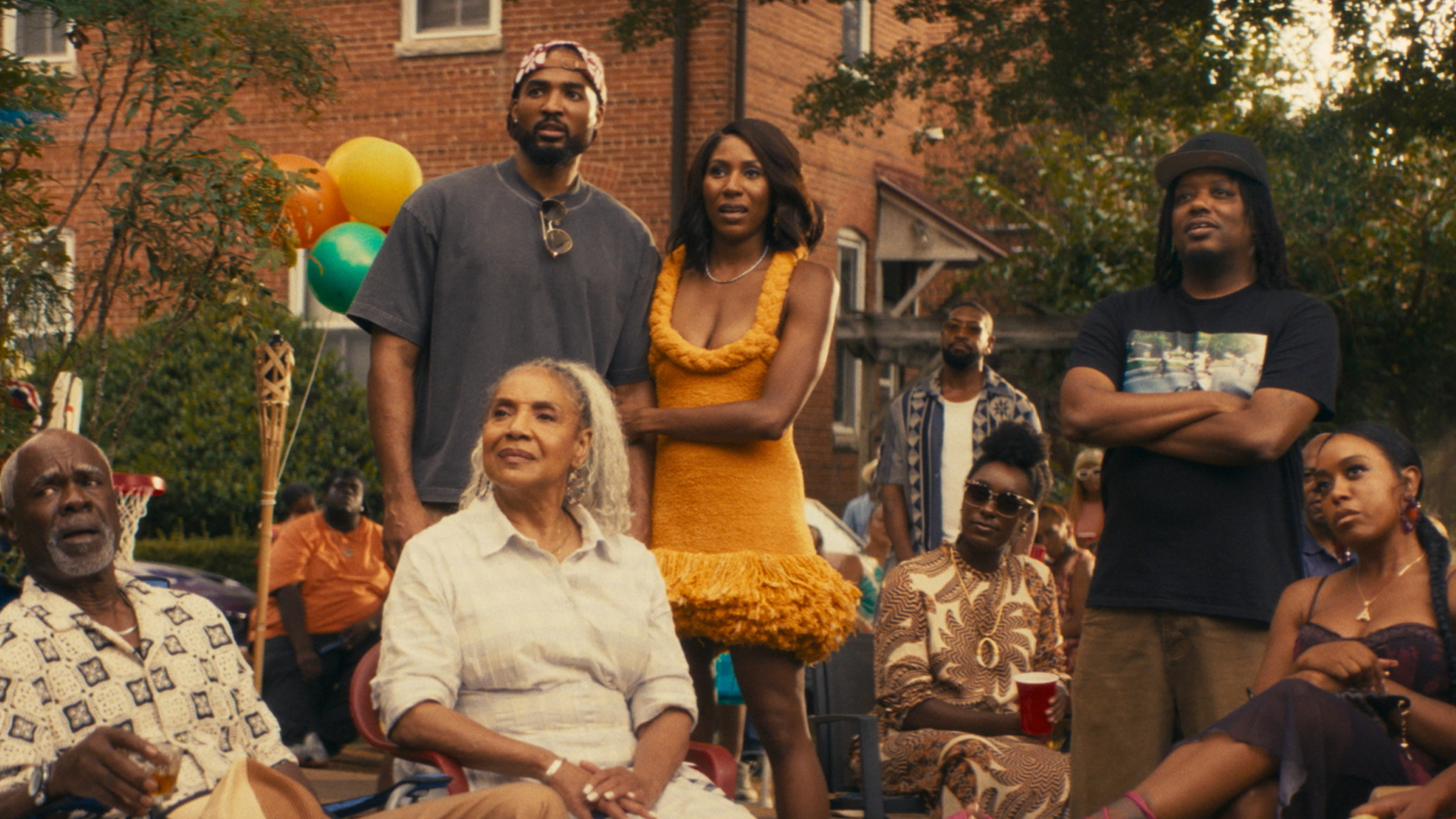
Sprinkled throughout the narrative of the sophomore season of “Diarra from Detroit” (relocated to Paramount+ after the shuttering of BET+ this year) are references to beloved stories in which a gang of friends comes together to solve a puzzle. “Scooby-Doo” gets a shoutout, so does “The Goonies.” But in the opinion of this writer, season two, which changes course from Diarra’s schoolteacher career to life as a burgeoning private eye, shares considerable DNA with Nancy Drew. There’s a hunt for an antique desk, secret societies, shifting alliances, and wisecracking friends at one’s side the whole way through.
And as an inveterate Nancy Drew fanatic, I gobbled this up like summertime TV catnip. Like most mysteries starring the Mustang-driving P.I., “Diarra from Detroit” does have one subplot too many, and more side characters than necessary. Despite its flaws, the series succeeds almost entirely on the basis of its cast’s crackerjack comedic timing and endless charm. It might be the year’s best hangout sitcom, if the definition of hangout sitcom can be expanded to include gang wars, conspiracy theories, and ticking biological clocks.
Season one ended with Diarra Brickland (Kilpatrick) successfully locating her missing Tinder date Chris (Shannon Wallace). Now she finds herself wrestling with existential questions that make hunting for a good partner seem tame in comparison. For example, was Chris’s mother Vonda (the inimitable Phylicia Rashad) involved in his kidnapping? Does she (Diarra) want to become a mother? How will she and Chris make rent until school starts in the fall? With few options left, the pair agree to find Chris’s Uncle Ron’s missing desk, last seen being hauled (read: stolen) out of Ron’s home by his nephew, Booker.
And thus begins an absolute citywide whirlwind, almost none of which I am permitted to discuss in this review. “Diarra from Detroit” is as much a dark comedy as it is a crash course in Detroit history: every episode sports a dizzying array of facts about the city during different periods, including its role in the Underground Railroad, Prohibition, its Motown heyday, even its urban design, not to mention thoughts on the city’s more remote areas. Woven throughout all this is the quest for a handcrafted desk concealing a secret, warring factions hunting for both the secret and for Diarra, and enough physical comedy to keep things light.
As good as the writing is—and it is indeed very good, with rapid-fire jokes and plenty of running gags—it is the cast that really delivers on this show. I breathed a sigh of relief when I saw DomiNque Perry and Bryan Terrell Clark return as Aja and Tea, respectively; there is no Diarra without her best friends (just as there is no Nancy Drew without Bess Marvin or George Fayne). I could do with more Aja than I got this season, because when Perry, Clark, and Kilpatrick fill the frame, something wonderful happens. One sequence in particular involves Perry and Kilpatrick in disguise, while another involves the trio in a kiddie pool; both are comedy gold and made my sides hurt from laughing. Above all else, this is the friendship that would drive a viewer to return to the series, which is why there ought to have been more of it this season.
Each episode is guided by Diarra’s voiceover; she rewinds the narration to go back in time, she gives “adventure tips,” explains her choices, and overall reminds the viewer that she cannot always make the healthy, sound choice. This could be a crutch in a lesser show, but combined with the no-nonsense attitude of Diarra’s friends, this device winds up making the writing deeply attuned to the audience’s expectations. If you’re thinking it, there’s a good chance that in the next minute or two a character might be saying it. There is a surprising level of relatability in the choices these characters make, especially since this is a story where little is going well, and a lot of people are dropping dead.
Kilpatrick, for her part, brings a good deal of the pathos this season. Attired in Dominique Dawson’s eye-catching costumes (the mango minidress, gold trench coat, rust pencil skirt, velvet teal bodycon dress, and countless other looks are all exquisite), she shifts easily from withering sarcasm with cops who don’t take her seriously to tense vulnerability with her traumatized boyfriend. Still, juggling as many narrative plates as the story demands would be tough for anyone, let alone a performer half as charming as Kilpatrick, so it does all come apart a bit by the end. But no matter. It’s still compelling watching Diarra trying to talk her way out of the hairiest of situations, even when she knows that sometimes, there simply is no exit strategy.
“Diarra from Detroit” gets a bit convoluted this season, but its production design, hilarity, and charm cannot take away from a central truth: this series is pure entertainment. Its soundtrack, its sensibility, its jokes all create a greater whole, one that feels energizing and comforting all at once. Watch weekly, instead of bingeing, to see what kind of hijinks the gang is up to this time. There might be no better antidote to the end-of-summer blues.
Entire season screened for review. Streams July 29 on Paramount+.
Hence then, the article about season two of diarra from detroit is nancy drew for grown ups was published today ( ) and is available on Roger Ebert ( Middle East ) The editorial team at PressBee has edited and verified it, and it may have been modified, fully republished, or quoted. You can read and follow the updates of this news or article from its original source.
Read More Details
Finally We wish PressBee provided you with enough information of ( Season Two of “Diarra from Detroit” is Nancy Drew for Grown-Ups )


Also on site :
- The Zodiac Killer shot cab driver Paul Stine in 1969, the last of his five confirmed murders; San Francisco police marked the case inactive in 2004, then reopened it and still list it as open
- After Kelly Clarkson Slams Brooklyn Novelty Store, Shop Says the ‘One-of-a-Kind’ Singing Animatronic Bird She Wanted Wasn’t Actually For Sale
- Robert Pattinson Approached Chris Hansen Portrayal In ‘Primetime’ As “A Fan”: “I Was Trying To Make Him Cool”