
We’re less than a week away from Monday’s trade deadline! Activity has yet to really pick up outside of a fascinating pitcher for hitter swap between the Nationals and Red Sox over the weekend. There have otherwise been mostly depth moves. The compressed standings mean all but six teams (the Angels, A’s, Royals, Rockies, Mets and Giants) are within five games of a postseason spot. Even some expected sellers like the Reds and Blue Jays might hold off until a day or two before the deadline to see if a three- or four-game win streak can change their fortunes.
It’s time for another look at the players who’ll dominate the hot stove over the next six days. As always, this isn’t a strict ranking of players’ trade value, nor is it solely about likelihood of being moved. We’re trying to balance both of those things, an inherently subjective exercise. The #1 player on the list is the most impactful player who has any real chance of being dealt, but there are players in the back half who’d clearly be much higher if the list were based on impact alone.
MLBTR has also broken down each team’s individual deadline outlook throughout July. Links to all those posts, which are a perk for Front Office subscribers, can be found here.
Note: Stats are through play on July 27.
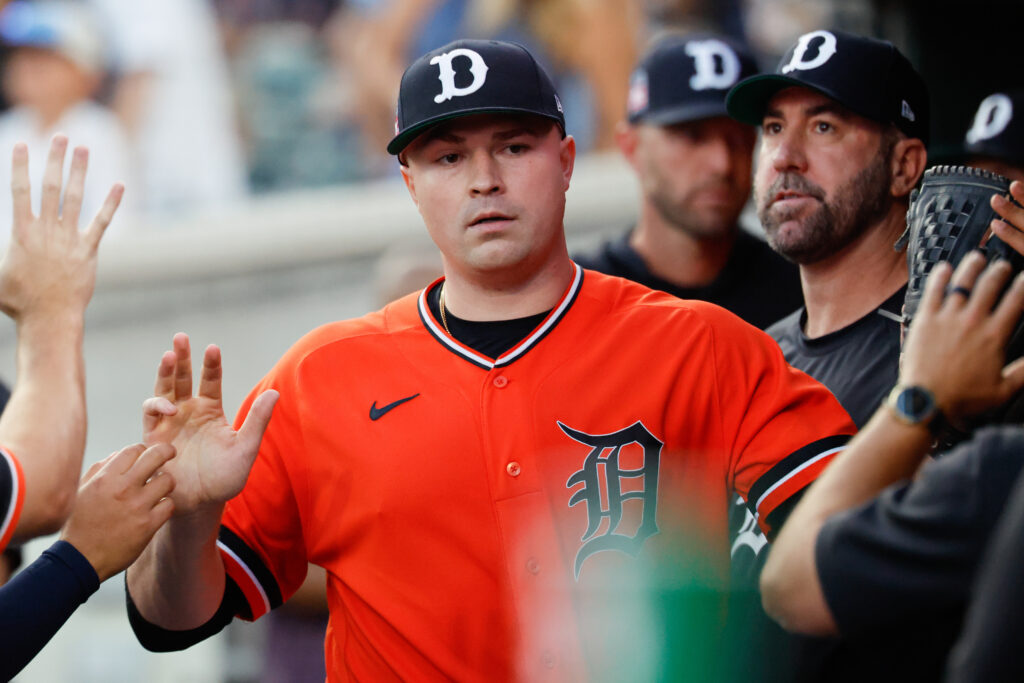
1. Tarik Skubal, SP, Tigers ($32MM salary, impending free agent)
Detroit has played well since June but have dropped three straight to the Royals and Orioles. They’re again seven games below .500 and have respectively fallen six and four games back in the division and Wild Card races. They’ll have two more against the Orioles and a three-game set against the A’s before needing to make the Skubal decision.
The two-time defending AL Cy Young winner has dominated the Angels and Royals in his first two starts out of the All-Star Break. He looks no worse for wear following his remarkably quick return from an elbow procedure. No other plausible trade candidate would more meaningfully improve a team’s odds of winning the 2026 World Series.
Skubal will be due around $9.5MM from the deadline through season’s end on his record-setting $32MM arbitration salary. There’s been some thought the Tigers could deal him for a prospect package built around a controllable starting pitcher, trying not to wave the white flag on 2026 while ensuring they don’t only lose him for a compensatory pick if/when he signs elsewhere next winter.
As MLBTR’s Steve Adams explored last week, the Tigers are also balancing Skubal’s status against the luxury tax. MLBTR estimates the team’s CBT payroll is about $1.6MM above the $244MM base threshold. The actual fees are minimal, but exceeding the CBT dramatically changes the compensation they’d receive if they lose a qualified free agent. They’d get a pick after the first round for Skubal’s departure if they stay below the CBT threshold; that drops to after the fourth round if they pay the luxury tax. That doesn’t mean they’ll trade Skubal, but they could look to offload another player’s mid-level salary or two to ensure they at least get a quality draft pick if they hang onto their ace.
2. Mason Miller, RP, Padres ($4MM salary, arb-eligible through ’29)
It’s unclear how seriously the Padres might listen on baseball’s best reliever, whom they have under arbitration control for three and a half seasons. Trading Miller would be San Diego’s clearest path to acquiring a controllable starting pitcher. There have been a handful of reports from rival executives who feel that’ll force the Padres’ hand, but Dennis Lin of The Athletic reported last week that the superstar closer was likelier to stay put.
Miller is 26-26 in save chances on the season. He has a 0.82 ERA and a near-50% strikeout rate through 43 2/3 innings. Miller is trending toward one of the greatest reliever seasons ever. The Padres would need a massive return — potentially one headlined by an affordable big league starter — to consider moving him. A trade still feels like a long shot, but Miller will be one of the biggest names in rumors right up to 5:00 pm Central on August 3.
3. Luis Arraez, 2B, Giants ($12MM salary, impending free agent)
Arraez is a lock to move. There haven’t been any extension conversations between the three-time batting champion and a bad Giants team. San Francisco will get a better trade package than the compensatory pick they’d receive for making him a qualifying offer. The game’s best pure hitter, Arraez is having his best offensive season since 2023. The more surprising development is that he’s turned himself into a capable defensive second baseman.
The four-time All-Star has said he wants to stay at the keystone after a trade, though the Giants are ultimately going to move him to whatever teams makes the most compelling offer. The Rangers and Rays are the only contenders who have a clear need at second base, assuming the Nationals don’t intend to pay up for one of the best rental hitters available. Maybe a team like the Tigers or Phillies will trade their incumbent second baseman and take a look at Arraez. He might also just need to move back to first base or DH for the next couple months before prioritizing a return to second base in free agency.
4. Reid Detmers, SP, Angels ($2.625MM salary, arb-eligible through ’28)
5. José Soriano, SP, Angels ($2.9MM salary, arb-eligible through ’28)
The Angels are reportedly showing more willingness than they have in previous years to entertain offers on controllable players. Their pair of mid-rotation starters — both of whom are under arbitration control through the 2028 season — will be top targets for contenders.
Detmers has been the more effective of the duo lately. A former top 10 pick, Detmers has been inconsistent but flashed mid-rotation ability throughout his career. He spent last year in the bullpen and has successfully bounced back to a rotation role this year. Detmers carries a 4.05 ERA with quality strikeout and walk numbers across 120 innings. He’ll go through stretches where he’s more homer-prone than teams would like, including giving up five homers in 20 1/3 frames this month, but he’s a capable #3 starter who’d fit any team’s budget. The Cubs and White Sox are reportedly among those with interest.
Soriano was the American League’s pitcher of the month in April after pitching to a 0.87 ERA over his first seven starts. He struggled over the next couple months as his control woes resurfaced but has shown strong form in July. The end result is a career-best 3.29 ERA across 123 innings. Soriano has big velocity, averaging 97 mph on his sinker, and gets a lot of ground-balls while striking out a quarter of opponents. He has below-average command but excellent stuff and fits into the middle of most rotations.
6. Freddy Peralta, SP, Mets ($8MM salary, impending free agent)
Peralta has had an ugly season and a generally unsuccessful Mets tenure, which will almost certainly end within the next week. He’s sitting on an ERA near 5.00 over 22 starts and 113 2/3 innings. His league average 22.1% strikeout rate is easily a career low, while he has allowed 1.35 home runs per nine. The 2026 version of Peralta looks like a fourth or fifth starter, but he’s one season removed from a top five Cy Young finish.
There’s minimal financial cost, as he’ll be owed around $2.37MM after the deadline. There’ll still be plenty of interest from contenders hoping for a rebound, even if the Mets aren’t going to recoup close to the prospect value (Brandon Sproat and Jett Williams) they surrendered to acquire Peralta from Milwaukee in January.
7. Foster Griffin, SP, Nationals ($5.5MM salary, impending free agent)
Washington signed Griffin to a one-year deal in his return from Japan. They hoped the former first-round pick would show enough to be a decent trade chip for a team looking for an affordable fourth/fifth starter. Griffin and the team have each dramatically outperformed expectations. The 31-year-old southpaw has been their best pitcher, working to a 2.76 ERA across 124 innings. He’s striking out an average 22.6% of opponents against a stellar 5.6% walk rate and has a minuscule 1.58 ERA over his past nine times on the mound.
Griffin has pitched his way into being a candidate for the qualifying offer. Extension talks didn’t get far, according to Joel Sherman of The New York Post, leaving the Nats with an interesting call. They’re narrowly above .500 and within one game of a Wild Card spot. Trading their best starter would deal a hit to this year’s playoff chances but could recoup more prospect capital for the overall rebuild. The Nationals swapped Curtis Mead for Connelly Early last week, and while the rotation is still a clear weakness, that’ll at least give them some help once Early returns from seemingly minor elbow inflammation.
8. Casey Mize, SP, Tigers ($6.15MM salary, impending free agent)
Mize is another affordable mid-rotation starter on a borderline contender. He’s a near-lock to receive and reject a qualifying offer if the Tigers don’t trade him, which gives them some leverage, but they’d get a better return via trade if they sell. The 2018 first overall pick is pitching at the best level of his career, working to a 2.70 ERA while striking out a quarter of batters faced across 86 2/3 frames. He has had a couple minor injured list stints for right groin issues but has been healthy and effective for the last six weeks.
9. Ryan Jeffers, C, Twins ($6.7MM salary, impending free agent)
Jeffers is the best impending free agent catcher and has long been expected to be available. That’s complicated by Minnesota surprisingly hanging around the playoff picture. The Twins enter play Tuesday just a game back in the Wild Card and three out in the AL Central. Jeffers, who has been tied to the Yankees and Rays, would be a borderline qualifying offer candidate.
Minnesota could trade him and turn the primary catching job to Victor Caratini, who is having an alright season in a backup role. It wouldn’t necessarily need to be part of a deadline teardown, and the Twins could theoretically demand big league bullpen help among the return.
The righty-hitting Jeffers missed around seven weeks between May and July after suffering a left hamate fracture that required surgery. He has picked up where he left off, hitting .286 with two homers and doubles apiece in nine games since returning. Jeffers has a robust .293/.395/.535 line with nine longballs on the season.
10. Robbie Ray, SP, Giants ($25MM salary, impending free agent)
As with Arraez, Ray is a lock to be dealt out of San Francisco this week. The 34-year-old lefty doesn’t have the same swing-and-miss ability he had at his Cy Young peak, but he has turned in a 3.16 ERA through 116 2/3 innings. Ray has gotten solid results since an ugly May, working to a 1.67 mark in his past nine appearances. His 19% strikeout rate and 11.3% walk percentage over that stretch aren’t nearly as impressive, though, as Ray is more of a frustratingly inefficient mid-rotation arm than a top-end starter at this stage of his career.
San Francisco will probably kick in a few million dollars to cover a portion of the approximate $7.4MM which Ray will make for the season’s final two months. That could net them a couple mid-level prospects from a contender that views Ray as a viable third or fourth starter in a playoff rotation. The Cubs, Braves, Phillies, Diamondbacks or White Sox could all be involved.
Read more
11. Kevin Gausman, SP, Blue Jays ($23MM salary, impending free agent)
12. Daulton Varsho, CF, Blue Jays ($10.75MM salary, impending free agent)
13. Shane Bieber, SP, Blue Jays ($16MM salary, impending free agent)
Gausman, Varsho and Bieber are the top impending free agents on a disappointing Jays team. Toronto’s brutal performance coming out of the All-Star Break has probably sealed their fate as deadline sellers. They’re not likely to kick off a rebuild but should deal their rentals. They’re all on fairly pricey contracts and having inconsistent seasons, so none is going to fetch a top prospect, but their track records are enough to draw interest.
The 35-year-old Gausman started the season strong and took a 3.13 ERA over 12 starts into June. He has allowed more than six earned runs per nine in each of the past two months, and the Jays have dropped eight consecutive Gausman starts. He’s up to a 4.51 ERA over 121 2/3 frames. Despite the recent struggles, Gausman still has a strong strikeout and walk profile and hasn’t seen any dramatic changes to his stuff. He’ll be owed almost $7MM from the deadline on.
Varsho will probably be the top center fielder moved. Although he’s not playing his usual brand of superlative defense this season, teams are going to view him as a plus with the glove who can contribute offensively. Varsho has dramatically cut his strikeouts this season but sacrificed power to do so, hitting only seven homers after connecting on 20 longballs in a half-season in 2025.
Bieber missed the majority of the year rehabbing elbow inflammation. He made his season debut in late June. Bieber was knocked around in two of his first three appearances. He’s been sharper of late, including a season-best showing against the Rays (seven innings of one-run ball) his last time out. His strikeout and whiff rates are at career lows in a small sample.
14. Adrian Morejon, RP, Padres ($3.9MM salary, impending free agent)
Morejon is the best reliever in the upcoming free agent class, so he’d obviously be the top rental bullpen arm on the trade market. San Diego could view trading him as an alternative to moving Miller. Morejon isn’t going to have the same level of trade value because of the limited contractual window, but San Diego might be able to land a borderline Top 100 prospect given the heightened relief prices around the deadline.
The hardest-throwing lefty in the game, Morejon has a 3.20 ERA across 56 1/3 innings. He has been lights out since mid-April after posting consecutive sub-3.00 ERA showings in 2024 and ’25. Morejon is getting ground-balls at a massive 61% clip and striking out 27% of opponents. He’d be a dark horse qualifying offer candidate if the Padres don’t trade him but will have immense appeal to contenders looking for a bullpen boost down the stretch. The affordability only helps, as he’ll make less than $1.2MM from the deadline through season’s end.
15. Clay Holmes, SP, Mets ($13MM salary, $12MM player option for ’27)
Holmes is essentially a rental, as it’s no secret that he’ll decline his $12MM player option barring a late-season injury. The veteran righty is still rehabbing from the comebacker that broke his right fibula in mid-May, but he’s building up on a Triple-A rehab stint and should be major league ready shortly after the deadline. Holmes was the Mets’ best starter before the injury, working to a 2.39 ERA with league average strikeout and walk marks over nine starts. He said last week that there haven’t been any substantive extensions talks. While a qualifying offer is still a possibility, it’s likelier he’ll be flipped while on the injured list as Bieber was from Cleveland to Toronto last summer.
16. Gleyber Torres, 2B, Tigers ($22.025MM salary, impending free agent)
On the surface, Torres is having his typically above-average offensive season. He’s drawing a lot of walks and not striking out very often, leading to a .268/.387/.369 slash across 217 plate appearances. His power production is way down, however, as he only has four home runs and has lost nearly five miles per hour of average exit velocity. Torres’ bat speed has fallen a couple ticks as well, perhaps a product of the pair of left oblique injuries that have limited him to 50 games.
The on-base skills would still make a him a target for a contender in need of a second baseman. Torres is more expensive than Arraez (0wed just over $6.5MM post-deadline) but has the advantage of being a right-handed bat in a thin market. He’s ineligible for another qualifying offer and would be an obvious trade chip if the Tigers sell.
17. Joe Ryan, SP, Twins ($6.1MM salary plus $100K mutual option buyout, arb-eligible through ’27)
Ryan would be quite a bit higher on this list if the Twins weren’t in the playoff picture. Minnesota pulled back on a potential offseason teardown after an ownership transfer within the Pohlad family and a handful of minority investors in the franchise. New control person Tom Pohlad has been vocal about the team’s need to be competitive, even as ownership hasn’t exactly given the front office much flexibility to build an MLB-caliber bullpen.
Unlike most of the pitchers above him on this list, Ryan is under arbitration control for one season after this. He’s a two-time All-Star who fits as the #2 starter in a contending rotation. Ryan has a 3.38 ERA with a near-28% strikeout rate against a 5.3% walk percentage through 21 starts. He’s coming off his worst outing of the season and had his scheduled start over the weekend delayed due to arm fatigue, but Minnesota has listed him as their probable starter for Wednesday’s game against the Royals. He should be fine and could command multiple Top 100 prospects if the Twins were to trade him. That’s less likely than it is that they move Jeffers, both because of the extra year of contractual control and the much higher degree of difficulty replacing a pitcher of Ryan’s caliber.
18. Luke Weaver, RP, Mets ($8MM salary, $11MM salary for ’27)
19. Jeff Hoffman, RP, Blue Jays ($11MM salaries for 2026-27)
Weaver and Hoffman are each relatively expensive late-game weapons who are signed through 2027. Both have a decent chance to move as mid-30s relievers on deadline sellers, even if the Mets and Jays will both try to compete again next year. Weaver probably has the higher trade value because he’s having the stronger season, highlighted by the longest scoreless streak (23 games) of any pitcher in MLB this year. He’s sitting on an excellent 1.93 earned run average while striking out 26% of opponents across 42 frames.
Hoffman pitched his way out of the closer role in Toronto with a brutal start but has been one of the best relievers in MLB over the last two months. He has only allowed three earned runs in 19 1/3 innings dating back to the beginning of June. Hoffman has fanned a career-high 34% of batters faced overall, ranking in the top 15 among relievers in both strikeouts and whiffs.
20. Emerson Hancock, SP, Mariners (pre-arbitration, controllable through ’30)
Seattle’s offense has underperformed, leading the Mariners to consider trading from their rotation for a bat. They’re reportedly not interested in discussing George Kirby, Logan Gilbert, Bryan Woo or Bryce Miller. They would move Luis Castillo (more on him below) but wouldn’t get a significant return. That’s led them to at least consider offers on Hancock, a former sixth overall pick having his breakout season at age 27.
The Georgia product opened the year in Seattle’s rotation because of a Miller injury. He pitched too well to be taken out and has a 3.15 ERA across 19 outings. Hancock has fanned a slightly above-average 23.4% of opponents against a modest 6.5% walk rate. He has always had strong command but had struggled to miss bats before this season. The development of a new sweeper and cutter in tandem with a dramatically lowered arm angle have given him a legitimate swing-and-miss aspect. The arm slot hasn’t taken away from his effectiveness versus left-handed batters or prevented him from working through a lineup multiple times.
This version of Hancock looks like a plug and play third or fourth starter. He’s playing for barely more than the league minimum and has four years of arbitration control after this season. This is the kind of player who doesn’t frequently become available. Seattle is deep enough on the pitching side — they also have two top prospects, Kade Anderson and Ryan Sloan, on the way up — to consider swapping Hancock for a controllable bat.
21. CJ Abrams, SS, Nationals ($4.2MM salary, arb-eligible through ’28)
22. Zach Neto, SS, Angels ($4.15MM salary, arb-eligible through ’29)
Neto and Abrams are going to get plenty of attention from shortstop-needy clubs. They’re both long shots to move but wouldn’t be entirely shocking trade candidates. The Angels control Neto for three seasons after this one. Abrams has two-plus seasons of control and was widely expected to be traded entering the year. The Nationals’ surprise competitive season makes that less likely.
Both players are bat-first shortstops who commit more errors than one would like. They each more than make up for that offensively, with Abrams having a particularly strong year at the plate. He’s raking at a .295/.368/.570 clip and handily leads all shortstops with 27 home runs. Neto is striking out at an elevated 31.3% rate but is third at the position with 19 longballs. He has a .235/.326/.440 slash in 466 trips.
The asking price for both players should be substantial — likely multiple top 100 prospects. They’re shaded down a bit on the list to reflect the relative unlikelihood of a trade, but they’d both be in the top five if their teams seriously considered offers.
23. Luis García Jr., 1B, Nationals ($6.875MM salary, arb-eligible through ’27)
While Washington would need to be overwhelmed to move Abrams, García could be more expendable. He’d be a sell-high candidate, not too dissimilar from Mead. García was a borderline tender call last offseason after a replacement level showing. He has rewarded the team’s faith with a career year, hitting .280/.312/.545 and already establishing a new personal high with 21 home runs.
García’s underlying approach hasn’t dramatically changed. He’s an extremely aggressive hitter who hits for high averages but has a lower OBP because he rarely walks. He’s swinging a little harder and getting a few more balls in the air, but it hasn’t been a huge overhaul. This is his first year as a full-time first baseman, where he has played league average defense. García came up as a middle infielder but was arguably the worst defender in MLB at both shortstop and second base.
There’ll be a little over $2MM on his salary after the deadline. He’ll be in line for an eight-figure salary for his final arbitration season. That’s going to keep the Nats from commanding any premium prospects, but they could still view this as the appropriate time to cash him in.
24. Tyler Stephenson, C, Reds ($6.8MM salary, impending free agent)
Stephenson is a virtual lock to go as the second-best rental catcher behind Jeffers. Cincinnati is still on the periphery of the Wild Card race but would need to jump six teams to sneak into October. They’re focused more on 2027. Stephenson’s season numbers are just ok, but he’s hitting .303/.350/.477 since the beginning of June. He’s an elite blocker who rates as one of the league’s worst pitch framers. While teams will probably have differing opinions on his defensive value, he’d fit for a team like the White Sox or Yankees looking for a righty bat behind the dish.
25. Brady Singer, SP, Reds ($12.75MM salary, impending free agent)
26. Tyler Mahle, SP, Giants ($10MM salary, impending free agent)
27. Dustin May, SP, Cardinals ($12MM salary plus $500K mutual option buyout, impending free agent)
These three are rental back-end starters making low eight figure salaries. Singer and Mahle are very likely to be traded. May is more borderline with the Cardinals hanging in the Wild Card mix, but they could feel that Hunter Dobbins can replicate his production.
Singer has been a mid-rotation innings eater for most of his career. He struggles against left-handed hitters and was one of the worst pitchers in the National League through the end of May, but he has a sub-3.00 ERA with a solid 24% strikeout rate in his past nine outings. Mahle also struggled early before turning things around since returning from a hamstring strain in late June. May has gone in the other direction, scuffling in July following a strong two-month stretch where he looked like St. Louis’ best starter.
28. Jake McCarthy, CF, Rockies ($1.525MM salary, arb-eligible through ’28)
29. Lars Nootbaar, LF, Cardinals ($5.25MM salary, arb-eligible through ’27)
30. Trevor Larnach, LF, Twins ($4.475MM salary, arb-eligible through ’27)
31. Mickey Moniak, OF/DH, Rockies ($4MM salary, arb-eligible through ’27)
This entire group fits broadly together as left-handed hitting outfielders into their arbitration windows. They’re loosely ordered by expected trade value. McCarthy is the cheapest, has an extra year of control, and can play center field. He’s hitting much better at Coors Field than he has on the road, but he can hit pitchers of either handedness and had flashes of being a solid everyday player over an up-and-down run in Arizona.
The others are corner bats who fit best in a platoon role. Nootbaar is the closest to an everyday player but hasn’t hit left-handed pitching well since 2024. Larnach and Moniak are having the best offensive seasons in the group. Minnesota has enough upper minors outfield talent that a trade is still plausible even with the Twins in contention. A completely rebuilding Colorado club should take what they can get for Moniak.
32. Lane Thomas, OF, Royals ($5.25MM salary, impending free agent)
Thomas is sure to be traded as an impending free agent on a poor Royals club. He’s capable of playing all three outfield spots on the grass while providing competent offense, with more punch against lefties. He has a .230/.327/.400 line on the year with a much better .261/.366/.432 showing against southpaws. There are far more lefty bats available than righties, which could help the Royals drum up a good amount of interest.
33. Trevor Rogers, SP, Orioles ($6.2MM salary, impending free agent)
34. Taylor Ward, LF, Orioles ($12.175MM salary, impending free agent)
Baltimore is only two games back in the Wild Card picture one month after GM Mike Elias said the front office was planning to go for it. If they drop four of their next five, maybe that changes things, but it looks like Ward and Rogers will probably both stick around for the stretch run. They’d each be qualifying offer candidates if the O’s hold them.
Ward hasn’t hit for the same power he did with the Angels but has compensated by drawing an AL-high 83 walks. Rogers had a shaky start to the season but has been one of the best pitchers in the league since the beginning of June for a second straight year.
35. Brooks Raley, RP, Mets ($4.75MM salary, impending free agent)
36. A.J. Minter, RP, Mets ($11MM salary, impending free agent)
37. Kirby Yates, RP, Angels ($5MM salary, impending free agent)
38. Antonio Senzatela, RP, Rockies ($12MM salary, $14MM club option for ’27)
This group of rental relievers on non-contenders are locks to move. Raley and Minter are situational lefties. Yates has closing experience and still misses bats at a plus rate. He’s unlikely to be a closer on a contender but could fit in a setup role. Senzatela has had a velocity bump and much improved performance since being moved to the bullpen this year. He looked like one of Colorado’s top trade chips with a hot start but has been knocked around since the beginning of June.
39. Ty France, 1B, Padres ($1.35MM salary, impending free agent)
40. Nathaniel Lowe, DH/1B, Reds ($1.75MM salary, impending free agent)
France and Lowe signed offseason minor league deals with sub-$2MM base salaries. They’re both playing well enough to draw interest. Lowe is hitting well as a strong side platoon bat (.270/.349/.510 vs. right-handed pitching) and all but guaranteed to move in exchange for a lottery ticket prospect. France is having an even better season, playing Gold Glove caliber defense while mashing at a .286/.338/.548 clip through 273 plate appearances. He’d be an obvious trade chip if the Padres sell, but the modest prospect return wouldn’t justify that if they’re still within a couple games of the Wild Card standings.
41. Kenley Jansen, RP, Tigers ($9MM salary, $12MM club option or $2MM buyout for ’27)
Jansen has been serviceable but hasn’t pitched as well as hoped. The future Hall of Famer is up to a dozen saves — placing him 12 shy of 500 — with a respectable 3.90 earned run average. However, he’s also issuing homers (1.63 HR/9) and walks (14.7%) at career-worst rates. He’s always been a fly-ball pitcher, but this year only 20.9% of batted balls against Jansen have been on the ground. On the plus side, Jansen’s swinging-strike rate, hard-hit rate, barrel rate and average exit velocity are their best in a half decade. Even if the Tigers hold Skubal and look to add pieces, they’ll need to drop under the luxury tax in order to avoid reducing their compensation for Skubal’s and Mize’s potential free agent departures. That could put Jansen (or bullpen-mate Kyle Finnegan) in play even if the Tigers aren’t true sellers.
42. Luis Castillo, SP, Mariners ($22.75MM salaries in 2026-27, vesting option for ’28)
Castillo is the closest thing to an odd man out in the Seattle rotation. Hancock would have the much higher trade value, but they’d surely prefer to line up a deal involving Castillo to create some payroll space and/or bring back a right-handed bat. The three-time All-Star is playing on a $22.75MM salary (approximately $6.7MM post-deadline) with a matching sum for next year.
Seattle would need to eat some of the money or take back a notable contract, which they’re reportedly willing to do. Castillo has an ERA just below 5.00 with a career-low 20.1% strikeout percentage across 94 2/3 innings. He’s more of a back-end starter at this point of his career but still has strong command and sits in the 95 mph range on his fastball. If the M’s pay down a few million dollars, there should be teams happy to slot him into the fourth or fifth spot in their rotation.
43. Michael Wacha, SP, Royals ($18MM salary, $14MM salary for ’27, $14MM club option/$1MM buyout for ’28)
44. Seth Lugo, SP, Royals ($20MM salaries from 2026-27, $17MM club/vesting option or $3MM buyout for ’28)
The Royals have signaled a desire to hold onto both pitchers and will set a high asking price when other clubs call. Both Wacha (35) and Lugo (36) have found a home in Kansas City in their mid-30s, posting nearly identical innings totals (469 2/3 for Lugo, 471 2/3 for Wacha) and ERAs (3.70 for Lugo, 3.61 for Wacha) since signing with the Royals ahead of the 2024 season. Both have since signed extensions on top of their original two-year pacts.
Kansas City’s stance appears to be that even in a non-competitive season, they still need these veteran arms to round out the ’27 rotation. There’s something to that, although the flipside is that either could net younger, controllable arms to help achieve that goal. Trading either or both would also free some payroll to pursue younger targets in the offseason. The Royals certainly shouldn’t give either pitcher away for the best offer presented. They’re right to hold out for quality returns — ideally featuring MLB-ready rotation and/or outfield help.
45. Luis Robert Jr., CF, Mets ($20MM salary, $20MM club option/$2MM buyout for ’27)
46. Eugenio Suárez, DH/3B, Reds ($15MM salary, impending free agent)
47. George Springer, DH, Blue Jays ($22.5MM salary, impending free agent)
Each of Robert, Suárez and Springer are veteran right-handed bats on obvious sellers. Suárez and Springer are impending free agents, while Robert is essentially a rental given the high unlikelihood that any team would pick up his $20MM option for 2027. They should all be in trade conversations, though Springer has full no-trade rights as a 10-and-5 player. Their current teams would probably need to eat some money to find a mid-level prospect in return.
Robert still has huge bat speed and the ability to play center field, but he just returned from a three-month absence related to lumbar disc inflammation in his back. He’s hitting .208/.311/.349 through 31 games. Suárez is striking out at a career-worst 36% clip while hitting just .207/.280/.402 in an unsuccessful return to Cincinnati. He missed a month earlier in the year with a left oblique strain. Springer lost a couple weeks in April to a broken toe. He’s essentially been a full-time DH and has a league average .233/.313/.395 slash with 11 homers in 300 plate appearances.
48. Hunter Goodman, C, Rockies (pre-arbitration, controllable through ’29)
In terms of pure power impact, there aren’t many bigger acquisitions a team could make than Goodman. His 31 homers are tied with Ben Rice for third in MLB, trailing only two of this generation’s top sluggers: Kyle Schwarber and Yordan Alvarez. Skeptics will always raise an eyebrow about a Rockies slugger due to the nature of Coors Field, but that’s not a concern with Goodman; he’s actually hit far, far better on the road (.284/.351/.605) this season than he has in Denver (.233/.310/.506). His career rate stats at home are better than on the road, but only by a slight measure. Goodman simply mashes wherever he’s playing.
This time of year, it’s always good to see reminders that not all star big leaguers were top-100 prospects. Goodman never ranked higher than 13th in the Rockies’ below-average farm system, per Baseball America. He’s nonetheless emerged as one of the game’s top young sluggers. Some clubs will be concerned about his glovework behind the plate, but Goodman has more than enough bat to slot in at designated hitter, first base or an outfield corner; he’s played more than 1000 professional innings at first base and 637 between the two outfield corners. A new club could acquire Goodman and only use him at catcher occasionally this season, easing him into a new pitching staff and giving the coaches time to work with him to improve his defense (an effort that’d continue into the offseason).
Goodman’s arbitration years are going to be expensive, relatively speaking, because of his prodigious home run totals. He’ll still be a bargain if he sustains anything close to his 2025-26 pace. The Yankees, Rays, Rangers, White Sox, Red Sox and Guardians are among the teams who could use an offensive upgrade behind the plate.
49. Sandy Alcantara, SP, Marlins ($17MM salary, $21MM club option or $2MM buyout for ’27)
Miami’s recent 12-game losing streak has dropped them from a Wild Card position to a couple games back with five teams to jump. It’s certainly not an insurmountable deficit but probably pushes them away from buying. They might not be particularly aggressive sellers either, though Alcanatara (controllable for next season via $21MM club option) would be their top realistic trade candidate. Craig Mish of SportsGrid recently reported that it’s unlikely the Marlins will move their longtime ace.
50. Francisco Alvarez, C, Mets ($2.4MM salary, arb-eligible through ’29)
The Mets’ focus is going to be on short-term pieces, but it’s notable that Alvarez hasn’t been included in their group of essentially untouchable players. The Mets aren’t trading Juan Soto, Nolan McLean, Christian Scott, A.J. Ewing or Carson Benge. They’re reportedly open to conversations on Alvarez, though they’d need a huge return to part with three and a half seasons of a franchise catcher.
The 24-year-old Alvarez made a quick return from a meniscus tear in his right knee earlier this season. He’s hitting .262/.341/.450 with 12 homers across 71 games. While Alvarez has missed time in each of the last two years, his combined .259/.340/.448 slash over that stretch makes him one of the league’s 10 best offensive catchers on a rate basis. It could be a thin catching market if the Twins and Rockies hold Jeffers and Goodman, respectively. There are plenty of teams looking for right-handed power. It makes sense for the Mets to at least hear clubs out on Alvarez.
New York doesn’t have an heir apparent behind the plate. Luis Torrens is a quality backup but not going to be the primary catcher in 2027. An Alvarez trade would likely need to return big league starting pitching while positioning the Mets to make a free agent run at Jeffers or an offseason trade target (e.g. Shea Langeliers, Adley Rutschman).
Others To Watch
Angels: Jo Adell, Nolan Schanuel, Brent Suter, Ryan Zeferjahn
Astros: Bryan Abreu, Enyel De Los Santos, Cristian Javier, Jake Meyers, Steven Okert, Isaac Paredes, Christian Walker
Athletics: Carlos Cortes, Jonah Heim, Jeffrey Springs
Blue Jays: Nathan Lukes, Max Scherzer, Jesús Sánchez, Tyler Rogers
Braves: Joey Bart
Cardinals: Jimmy Crooks, Nolan Gorman, Riley O’Brien, Ryne Stanek
Giants: Willy Adames, JT Brubaker, Rafael Devers, Caleb Kilian, Jung Hoo Lee, Heliot Ramos
Guardians: Cooper Ingle, Steven Kwan
Mariners: Luke Raley
Marlins: Pete Fairbanks, Braxton Garrett, Michael Petersen
Mets: Brett Baty, Bo Bichette, Huascar Brazobán, Francisco Lindor, Tyrone Taylor, Luis Torrens, Devin Williams
Nationals: Keibert Ruiz, Jacob Young
Orioles: Yennier Cano, Colton Cowser, Rico Garcia, Jackson Holliday, Andrew Kittredge, Adley Rutschman, Tyler Wells
Padres: Jason Adam, Jeremiah Estrada, Michael King, Yuki Matsui, Wandy Peralta, Gavin Sheets
Pirates: Carmen Mlodzinski
Red Sox: Marcelo Mayer
Reds: Andrew Abbott, JJ Bleday, Brock Burke, Hunter Greene, Nick Lodolo, Sam Moll, Emilio Pagán
Rockies: Willi Castro, Kyle Freeland
Royals: Kris Bubic, John Schreiber
Tigers: Drew Anderson, Kyle Finnegan, Jack Flaherty, Spencer Torkelson
Twins: Matt Wallner
Yankees: Camilo Doval, J.C. Escarra
Hence then, the article about top 50 deadline trade candidates was published today ( ) and is available on MLBtraderumors ( Middle East ) The editorial team at PressBee has edited and verified it, and it may have been modified, fully republished, or quoted. You can read and follow the updates of this news or article from its original source.
Read More Details
Finally We wish PressBee provided you with enough information of ( Top 50 Deadline Trade Candidates )


Also on site :
- APOD: 2026 September 23 – A New Lunar Crater: McGetchin
- A Fat, Nude Woman Became a 1970s Merchandise Sensation. Who Was “Bridget in the Buff”?
- 1968 No. 1 Hit, Ranked Among ‘Greatest Songs of All Time,’ Became an 11-Minute Creedence Clearwater Classic