
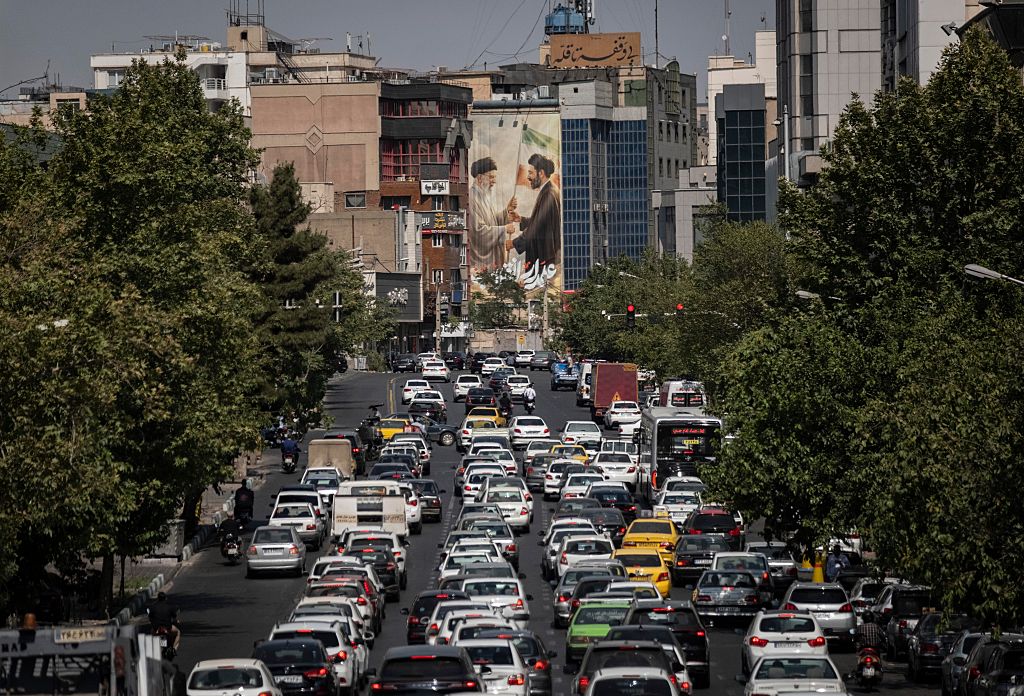
It appears there will be no hasty retreat from weeks of escalating attacks between the U.S. and Iran, which have destabilized energy markets yet again.
On Thursday, President Donald Trump told Axios that he is weighing restarting major combat operations in Iran. Trump said he could carry out even larger strikes than the Operation Epic Fury strikes that killed dozens of Iranian leaders and started the war on Feb. 28.
“I am considering a massive attack. Bigger than ever before. I am close to making a decision. We are all set for it,” Trump said, adding that he knows there would be consequences to such an attack and that a final determination has not been made. The President said Israel “would join in two minutes” if asked but that “we don’t need anybody.”
Trump also said that Iran is “not ready” to make a deal and that its leaders “have some evil intentions.” Trump’s remarks came after Iran reportedly rejected a 15-point cease-fire proposal from the U.S. that was delivered by Iraq on Wednesday.
Trump appeared to suggest that the U.S. may escalate its attacks on Iran in order to force it to the negotiating table.
“They haven’t received enough pain yet,” Trump told Axios.
The sticking point appears to be the Strait of Hormuz, which Iran had militarized at the start of the war, halting commercial shipping and skyrocketing energy prices around the world. The June 17 U.S.-Iran memorandum of understanding did not definitively answer the question of the Strait; instead it said Oman and Iran would carry out discussions over management of the narrow waterway. Since the start of the war, Iran said it wants to manage passage through the Strait, including possibly charging fees. Trump has also at times suggested that the U.S. could take over control of the Strait and charge tolls.
Days after the MOU was signed, Iran resumed attacks on commercial ships in the Strait. The U.S. retaliated with strikes on Iran. The U.S. has escalated its attacks since, carrying out daily strikes on Iran for the past two weeks. Trump has also repeated his threats to attack Iran’s civil infrastructure, including power plants and bridges, and to “wipe out” Iran’s Revolutionary Guards, while Iran has vowed to avenge the death of its Supreme Leader Ayatollah Ali Khamenei.
Iran has claimed responsibility for attacks on Gulf states since the MOU, citing retaliation for the U.S. strikes. The Associated Press reported a series of explosions near a military base in northern Iraq on Friday after the U.S. military had concluded its 13th consecutive night of strikes on Iran.
Tensions have escalated in recent days after Iran-backed Houthi rebels in Yemen began attacking Saudi ships in the Red Sea, threatening to disrupt another maritime chokepoint. If shipping through the Bab-el-Mandeb Strait in the Red Sea halts, the world could face more economic pain. Already, Brent crude topped $100 a barrel on Thursday for the first time since May, and could climb further if the conflict continues to escalate. Trump warned on Thursday that “the U.S. will hold Iran responsible” for any further Houthi attacks, and that “major military punishment will be inflicted upon Iran and, of course, the Houthis, themselves.”
Iranian officials reportedly said they were not interested in any new deal that left the issue of the Strait unresolved.
Butting heads
Iraqi Prime Minister Ali al-Zaidi visited Tehran on Thursday and was expected to convey the U.S. position after he visited the White House last week. But U.S.-Iran negotiations seem off the table for now.
“The problem is not passing messages,” Iranian Foreign Minister Abbas Araghchi told state television on Thursday. “The problem is America’s outlook, which is illogical, greedy and controlling.”
Israel has also continued attacks on Lebanon despite multiple U.S.-brokered cease-fire agreements. More than 4,000 people in Lebanon have been killed by Israel since March 2, according to the Lebanese Health Ministry. Analysts previously told TIME that Israel’s attacks could stand in the way of any longstanding peace with Iran, as Iran has repeatedly said any cease-fire deal must include Lebanon.
Trump and Iranian officials have butted heads on other issues. Trump threatened on Thursday to use frozen Iranian funds to pay for any damage to ships. The assets, that are under U.S. sanctions control, were meant to be released to Iran as part of the MOU.
Araghchi said on Friday that “seizing another nation’s assets to pay for unrelated future claims is an incendiary precedent.”
“Ensuing chaos will not be pretty or peaceful,” he added.
Hence then, the article about trump weighs massive attack as iran rejects cease fire proposal was published today ( ) and is available on Time ( Middle East ) The editorial team at PressBee has edited and verified it, and it may have been modified, fully republished, or quoted. You can read and follow the updates of this news or article from its original source.
Read More Details
Finally We wish PressBee provided you with enough information of ( Trump Weighs ‘Massive Attack’ as Iran Rejects Cease-Fire Proposal )


Also on site :
- ‘Grey’s Anatomy’ Star Receives Outpouring of Support After Revealing Wife Died From Massive Hemorrhagic Stroke
- Macron laments the EU’s nosedive like he’s not one of the pilots
- Box Office: ‘Digger’ Majorly Bombs With $8 Million Opening Weekend, ‘Verity’ Scores $32 Million Debut