
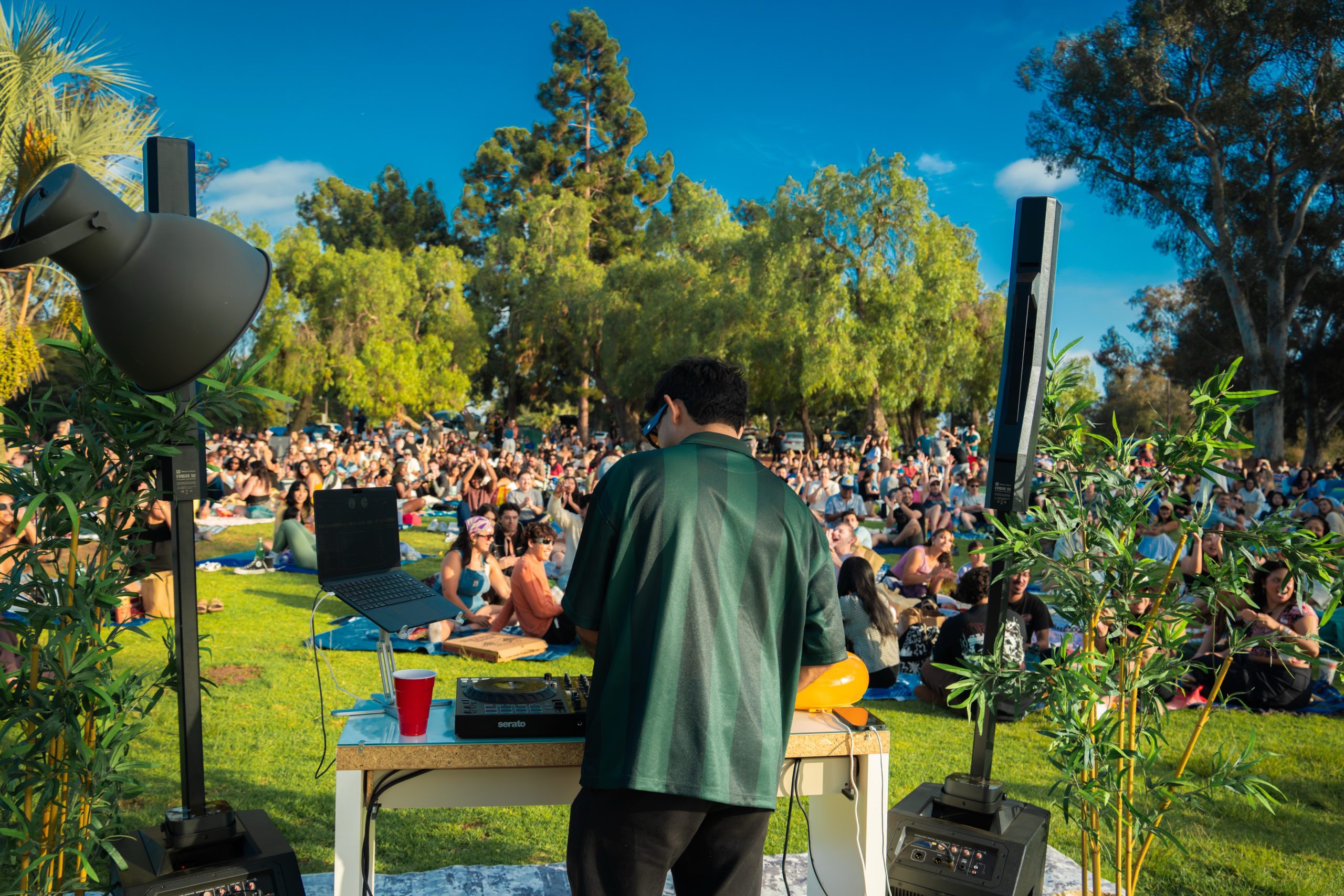
Daniel Joseph Hernandez will continue to put on DJ sets at Golden Hill Park. His record label is ready to cover permit costs. A chance encounter with the mayor gave him connections. It’s all fallen into place.
Last year, it didn’t always seem to be going that way.
He had been setting up his DJ deck in the park with friends on summer nights. A friend posted a TikTok video. He woke up to more than 100,000 views. The event blew up.
Quickly, the city had to step in. His events were unpermitted and by regulation required handwashing stations and porta potties. The slate of costs, on top of permits, totaled at least $1,200.
As the DJ, who spins under the name Daniel Joseph, describes it, a wealthy community member stepped in to cover the cost.
What happened to Hernandez demonstrates the inherent tensions between city regulations put in place to keep people safe and the creation of an event enjoyable enough to get too big for its own good. At the heart of the conflict is this question — can complex bureaucracy be flexible enough to allow these events to exist and thrive, especially without a benevolent hand?
Hernandez isn’t alone. Winyl Club — a gathering of wine lovers spinning vinyl — is officially defunct. In a recent Instagram video, the organizers directly call out the city as the reason they no longer host events.
In Ocean Beach, a local band catered toward Deadheads now finds itself at odds with the permitting process. They were recently forced to cancel a benefit show for Make-A-Wish just days before the fundraiser.
Alissa Whelan describes herself as somewhat of a manager for the band, running its social media.
About a week before their most recent event was set to take place, the city reached out to tell the group’s organizer they needed a permit if they wanted to proceed with it. So they saw about getting one.
Video courtesy of Alissa WhelanIt was the first time they had been told they needed a permit, despite having put on the event numerous times.
But the expense wasn’t just about basic fees. There were penalties too. Whelan said they were told there would be late fees for not getting the permits 60 days in advance, $80 for each day they missed. Obtaining the permit for the July 19 event would have cost $4,400.
If they decided to go through with the event, without permits, she said the fine could have been up to $2,500.
The event’s organizers went down to the wire before deciding to cancel. A man who runs a nonprofit was willing to pay the permit fees. And the city told them they needed to take Collier Park off of their flier; Whelan did so on Instagram.
But then the city told them it was too late anyway because a physical flier already had been up.
“Carrie [their organizer] was getting some different answers and leaving messages, it was hard to get calls back. Someone who was originally, you know, trying to be helpful in the beginning was like ‘I’m sorry, it’s out of my hands,’” she said.
As word of the cancellation of Grateful Days in the Park spread, community members wanted to help out. She hopes that could be a future solution to afford the cost of the permits.
After talking at a community meeting with people from the Ocean Beach Community Foundation though, she says they were made aware of other details the city had not shared during the permit process. There were grants they could have applied for to cover costs. In addition, their food vendors would have had to be certified as up to code, a step that will likely inflate permit costs.
Hernandez says that his experience with the city is now much more pleasant. He has found that as he and his attendees take care of the park, he is granted the permits he needs. He believes that stewardship of the space is a key piece of the puzzle to obtaining and maintaining a permit.
Whelan, though, thinks the Shakedown String Band takes good care of the space, so that’s a particular reason she’s been disappointed in the permit process. Overall, she feels the band and its team couldn’t get a straight answer for what needed to be done to carry on with their event.
The Shakedown String Band’s experience is what Councilmember Sean Elo-Rivera sees as evidence of a cultural issue at City Hall. Those in city government who are tasked with guiding residents on these issues, he concedes, could offer clearer guidance.
“I don’t think that as a city the mandate that is being heard is to be a facilitator,” he said.
“Which starts with — we’ll use Daniel as an example, again — ‘Oh you want to throw free concerts at the park? Thank you.’ And, ‘here’s what we need to do to make that happen.’”
Hence then, the article about organizers behind fun free events want to keep them going but they must satisfy the city to make it happen was published today ( ) and is available on Times of San Diego ( Middle East ) The editorial team at PressBee has edited and verified it, and it may have been modified, fully republished, or quoted. You can read and follow the updates of this news or article from its original source.
Read More Details
Finally We wish PressBee provided you with enough information of ( Organizers behind fun, free events want to keep them going. But they must satisfy the city to make it happen )


Also on site :
- CBS To Switch Affiliation From Nexstar To Hearst TV & Forum Communications Stations In A Half Dozen Markets
- Millions of Eggs Sold at Kroger and Other Stores Recalled Over Salmonella Risk
- Mexican Institute of Sound & Meridian Brothers Are Taking Their Tropical Madness on Tour: ‘I’ve Never Faced Such a Huge Challenge’