
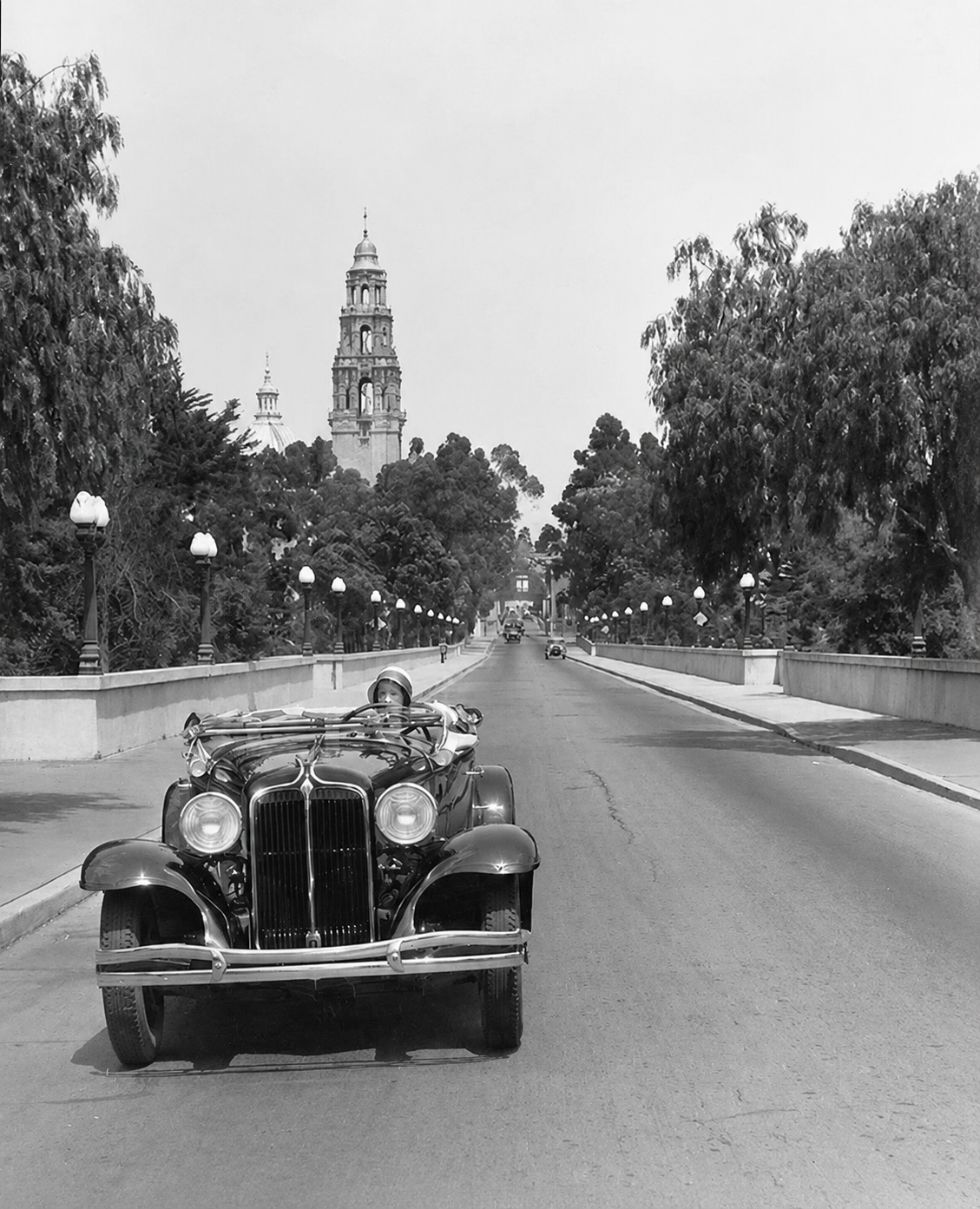
There was a time when beating the summer heat in San Diego didn’t require air conditioning.
Fanning themselves on the front porch, driving with the car top down, boating, opening windows for the evening breeze, heading to the beach or escaping to the mountains — San Diegans had their own ways of staying cool long before air conditioning became a fixture of summer life.
Across the county, residents learned to work with the climate, using the ocean, architecture, public spaces, and nearby mountains as natural escapes from warm weather.
San Diego’s reputation for mild weather helped shape the region’s identity, but enjoying summer once required more than adjusting a thermostat. The ways people stayed comfortable helped shape the communities, traditions and landmarks that remain part of the county’s history.
Four women in bathing suits with American flag, no date. (Photo and caption info courtesy of the San Diego History Center)Selling the San Diego climate
From the late 19th century onward, San Diego’s climate became one of its greatest attractions.
Railroads, land developers, and resort owners promoted the region’s sunshine, fresh air and coastal setting to visitors seeking a place with a comfortable year-round climate. The promise of ocean breezes and outdoor living helped attract new residents and visitors.
Coronado Boat House c. 1892. (Photo and caption info courtesy of the San Diego History Center)The Hotel del Coronado, which opened in 1888, became one of the best-known examples of the region’s resort culture. Built beside the Pacific Ocean, the hotel helped establish Coronado as a destination centered on recreation, scenery, and the appeal of seaside living.
Other coastal communities, including La Jolla, Ocean Beach, and Del Mar, developed their own identities as places that residents and visitors could enjoy the coast during warm weather.
Streetcars turned beaches into summer destinations
Hotel del Coronado Boat House with Coronado Railroad coach No 11 in foreground, opposite Glorietta Bay in Coronado. (Photo and caption info courtesy of the San Diego History Center)For many early San Diegans, reaching the coast depended on public transportation.
The expansion of the electric streetcar system in the early 20th century connected neighborhoods with beaches and recreational areas. Residents could travel from the city to destinations such as Mission Beach and Ocean Beach without relying on automobiles.
The growth of streetcar lines helped drive the development of coastal communities. A trip to the beach became a regular part of summer life, bringing residents closer to the ocean breezes that made the region famous.
Swimming became a summer tradition
Escondido High School , new swimming pool c. 1909. (Photo and caption info courtesy of the San Diego History Center) Kyle’s Plunge Tank no date. (Photo and caption info courtesy of the San Diego History Center) Mission Beach Bath House Swimming Pool Swimming Students with instructor 09-26-1925. (Photo and caption info courtesy of the San Diego History Center) View of large crowed of people at Mission Beach Boardwalk in about 1936. Cafe is seen on right with view looking north. Lamps line boardwalk on left. (Photo and caption info courtesy of the San Diego History Center) Three women in swimming costumes. (Photo and caption info courtesy of the San Diego History Center) People on the Coronado Beach, (Photo and caption info courtesy of the San Diego History Center)Water became one of San Diego’s most popular ways to stay cool.
The Mission Beach Plunge, which opened in 1925, became one of the county’s best-known swimming facilities. Located near the beach and amusement district, the large indoor pool attracted generations of swimmers and families.
The Plunge reflected a broader movement toward public recreation during the early 20th century, when cities were creating places where residents could gather, exercise, and enjoy leisure time.
Along the coast, swimming, boating, and spending time near the water became part of the San Diego summer experience. Families spread blankets beneath umbrellas, children played in the surf, and thousands flocked to the beaches each summer to enjoy the cool Pacific breezes.
View of people in boat at La Jolla c. 1918-1930 . (Photo and caption info courtesy of the San Diego History Center)Homes designed around the climate
Before air conditioning became common, many homes were designed around the region’s natural conditions.
Craftsman and early 20th-century homes often included features that helped improve airflow, including wide porches, large windows, high ceilings, and shaded outdoor spaces.
These designs reflected a different approach to comfort. Instead of relying on mechanical cooling, residents used breezes, shade,e and the cooler evening air to make their homes more comfortable.
Members of the John Kendall family seated on the porch steps of the family’s El Cajon residence. Three dogs are included in group of seven people c. 1900. (Photo and caption info courtesy of the San Diego History Center) A group of guests sitting on the porch of Powam Lodge. No date. (Photo and caption info courtesy of the San Diego History Center)Neighborhoods throughout San Diego County still reflect that era of climate-conscious design.
Parks provided shade and relief
Residents who stayed in the city found another kind of summer refuge in public spaces.
Balboa Park became one of San Diego’s most important gathering places after the 1915 Panama-California Exposition transformed the area into a cultural destination. Its gardens, trees, and shaded pathways provided a place where people could spend time outdoors while escaping the heat of city streets.
Six fountains at Firestone Fountain exhibit at the 1935 Exposition in Balboa Park. People are sitting on the benches in front of the fountain. The California State Building is directly behind the fountain.Photo ad caption info courtesy of the San Diego History Center)The park became a destination for walking, concerts, museums and community events, giving San Diegans a shaded place to enjoy the region’s climate.
The mountains also offered a cooler escape
Large group of people picnicking at the base of Palomar Mountain in 1908. (Photo and caption info courtesy of the San Diego History Center)Not everyone headed toward the ocean. Some went in the other direction.
For residents looking for cooler temperatures, the mountains provided another option. Communities and destinations such as Julian, Palomar Mountain, and the Laguna Mountains offered higher elevations, pine forests, and cooler summer evenings.
Mountain retreats became popular seasonal destinations for people seeking relief from warmer inland temperatures without leaving the county.
San Diego’s geography still makes it possible to experience several different climates within a relatively short distance.
Living with San Diego’s climate
For much of the 20th century, residential air conditioning remained uncommon in San Diego County, making these climate-based strategies part of everyday life for generations.
View of eight young women posed on beach at Mission Beach looking north in about 1928. Mission Beach Plunge is in view in right background. (Photo and caption courtesy of the San Diego History Center)The coast, streetcars, swimming facilities, climate-conscious homes, parks, and mountain communities all played a role in how generations experienced summer.
San Diego’s famous climate was not only something residents passively enjoyed — it actively influenced how communities grew, how people spent their free time, and how they adapted to the environment around them.
Before San Diegans could cool a home the push of a button, they relied on breezes, beaches, parks and mountains — and in doing so, helped shape the region’s distinctive way of life.
Read more history stories here. Do you have a story to tell? Send an email to [email protected]
Sources:
San Diego History Center Digital Archives San Diego Electric Railway Association|Coronado Historical AssociationLa Jolla Historical SocietyCity of San Diego Parks and RecreationSave Our Heritage Organisation (SOHO)Julian Historical SocietyU.S. Forest Service – Cleveland National ForestKPBS: “History Lessons for Staying Cool This Summer” (2007)
Hence then, the article about breezes beaches and front porches how san diegans used to stay cool was published today ( ) and is available on Times of San Diego ( Middle East ) The editorial team at PressBee has edited and verified it, and it may have been modified, fully republished, or quoted. You can read and follow the updates of this news or article from its original source.
Read More Details
Finally We wish PressBee provided you with enough information of ( Breezes, beaches and front porches: How San Diegans used to stay cool )


Also on site :
- I worked with Trump. I know why he is being so easily goaded into a forever war
- Shakira Brings Out Tyla, Ed Sheeran & Burna Boy at Her First Show Post FIFA World Cup in New York City
- ‘Critic to Israel’: Document reveals how Israel scrutinised global NGOs