
Americans are far from optimistic about our future. According to a recent Pew Research poll, 69% of us are dissatisfied with the way things are going, and 59% believe the United States’ best days are behind it. When asked to predict what America will be like 25 years from now, a majority said it will be more dangerous, more divided, worse off economically, and less influential in world affairs.
In other words, the World Cup could not have come at a more crucial time.
One sporting event will not reverse a years-long trend toward pessimism, or make the very real challenges facing our country disappear. But this Cup has nevertheless served as a reminder that America can still deliver on the same revolutionary promise that was made 250 years ago.
While the tournament was not without its fair share of controversy, everyday Americans showed the world that we can still achieve great things on our own terms.
This year’s World Cup wasn’t just a soccer tournament. It was among the biggest global events in human history. Millions of in-person attendees traveled to stadiums across North America to cheer on 1,248 players from 48 countries. More than 100 broadcasters reached a combined viewership of well over 2 billion on television and billions more on social media. More than 400 government agencies were involved in security alone.
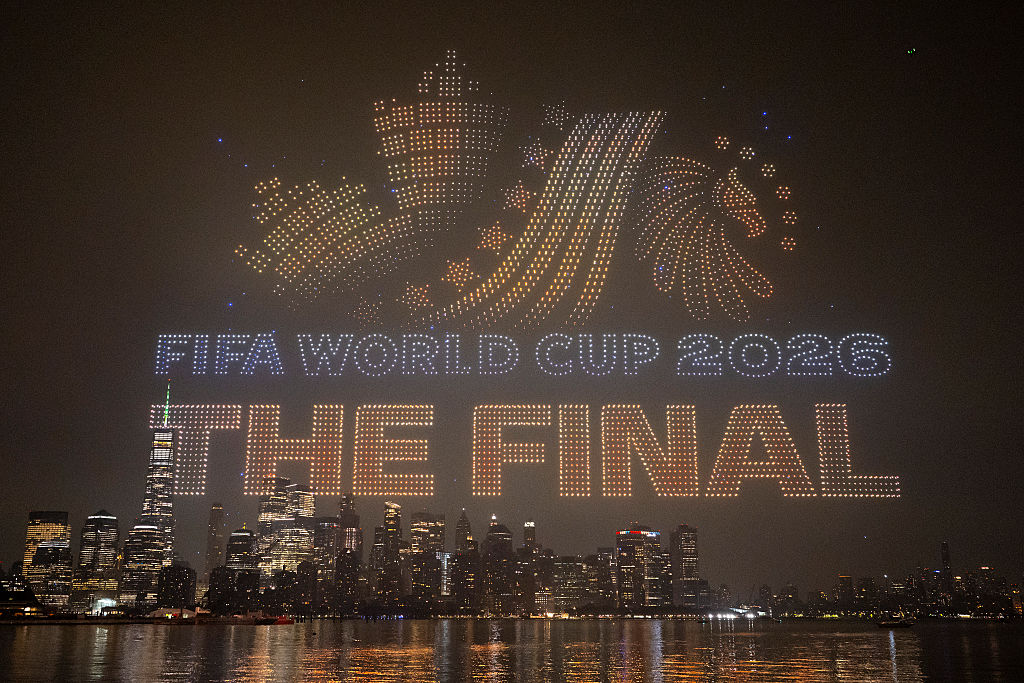
The 2026 Cup was not an exclusively American undertaking. There were three host nations, and five of the 16 host cities were located in either Canada or Mexico. Even so, it was clear from the beginning that the tournament's success depended on the United States. Seventy-five percent of the matches, including the final at MetLife Stadium in New Jersey, were played on American soil. Because of the new expanded format, which increased the total number of teams from 32 to 48, America hosted more individual games than any host nation in World Cup history.
Given the deep divisions in our country, the dysfunction that too often characterizes our politics, and the many genuinely serious challenges we face, it would have been easy to assume that America would not be up to this unprecedented task. The red-card controversy that colored the USMNT’s final game provided America’s skeptics with plenty of additional fodder. But in the end, while no nation or sporting event is perfect, those who doubted the U.S. could organize a historic World Cup learned the same lesson those who underestimate America have learned repeatedly over the past 250 years.
We weren’t just able to pull off a massive national enterprise. We did it in a way that reflects our unique national structure and character.
That begins with our federalist system. Every host nation must coordinate a variety of matches, transportation plans, and events. But few host nations have the kind of decentralized structure created by America’s Founders: a combination of sovereign states and a strong federal government, plus overlapping federal, state, local, and jurisdictions. At times, this system can make meeting major logistical challenges more difficult. It takes more effort, more compromise, and more involvement from civic institutions and the business community.
But the past five and a half weeks demonstrated that our different levels of government are, even now, capable of joining together to get things done. In New York and New Jersey, where I served as chair of the host committee, we worked across state and city lines to lodge players and teams, get spectators to games, coordinate fan festivals, and more. No less importantly, despite political differences, we were able to count on partners throughout the Federal Government, who supported states and cities with funding, coordination, and infrastructure development.
This didn’t just happen in New York and New Jersey. It happened across the country, in a way that reflected America’s place as one of the world’s largest and most populous democracies. The World Cup was a major national event—yet it was also made up of dozens of individual events that took place from coast to coast, each in a community with its own budget, laws, priorities, and culture.
It’s safe to say that when our Founders drafted the Declaration of Independence and Constitution, they were thinking about issues more significant than soccer. Even so, the Cup was an example of the kind of country they imagined: a sprawling nation that allows for, and even embraces, regional differences.
The FIFA World Cup 2026 Semi-Final match between France and Spain on July 14, 2026, in Arlington, Texas. —David Buono—Icon Sportswire/Getty ImagesToday, some argue these differences have grown so great that we can no longer remain a single nation. But the World Cup helped prove those doubters wrong. It demonstrated that out of our separate and distinct state and regional identities, a single national identity can emerge. The World Cup in Miami was different from the World Cup in Boston, or Kansas City, or Atlanta, or Seattle. Yet combined, this Cup showcased something particularly American.
Which brings us to the final way in which this year’s World Cup set itself apart: the character of the American people. The United States’ international reputation is in severe decline. It is likely an understatement to say that the impression people around the world have formed in recent years is less than positive. Yet the America that millions of foreign fans saw with their own eyes was a far more nuanced place—and a far better one—than the one they see on their local news. Social media was full of visitors stunned by things we take for granted: the scale of our cities, the architecture and history of our buildings, the variety on our store shelves, and yes, our ranch dressing.
Most of all, foreign fans discovered that Americans are kind, generous, gregarious, and welcoming. Whether it’s Norwegians rowing in Times Square, the Tartan Army drinking Boston dry, or Lawrence, Kansas becoming the unofficial home away from home for fans of the Algerian national team, people around the world fell in love with America. And America returned the favor.
Perhaps, if we’re lucky, this will be the most lasting legacy of the 2026 World Cup. If millions of people from around the globe could imagine America at its best, then so can we. That doesn’t mean the challenges we face aren’t real or daunting. But maybe, as we enter our 250th year, we can see our country the way so many fans returning home now see us: as a fundamentally good place, full of fundamentally good people, still capable of doing extraordinary things.
Hence then, the article about the 2026 world cup proved that america can still do big things was published today ( ) and is available on Time ( Middle East ) The editorial team at PressBee has edited and verified it, and it may have been modified, fully republished, or quoted. You can read and follow the updates of this news or article from its original source.
Read More Details
Finally We wish PressBee provided you with enough information of ( The 2026 World Cup Proved That America Can Still Do Big Things )


Also on site :
- Walmart’s ‘Pretty’ $24 Scalloped Stoneware Pie Dish and Ramekin Set With Gold Trim Makes Fall Baking Even Sweeter
- Quote of the Day: 51 Years Ago, Philosopher Stanisław Lem Explained Why Getting It Wrong Is Essential to Finding the Truth—and It Still Rings True Today
- Quote Of The Day By Sebastian Stan: 'With Age, You Realize That Uniqueness Doesn't Come From What You Share With Others, But Precisely From...'