
Parents often say that what they fear most is losing a child; those who end up suffering that loss often say there’s nothing more painful. When you’re documentary filmmaker—a person who, by temperament and training, processes what they see and feel through a camera lens—how do you face that kind of grief without trying to reassemble events and feelings into a whole that makes some kind of sense?
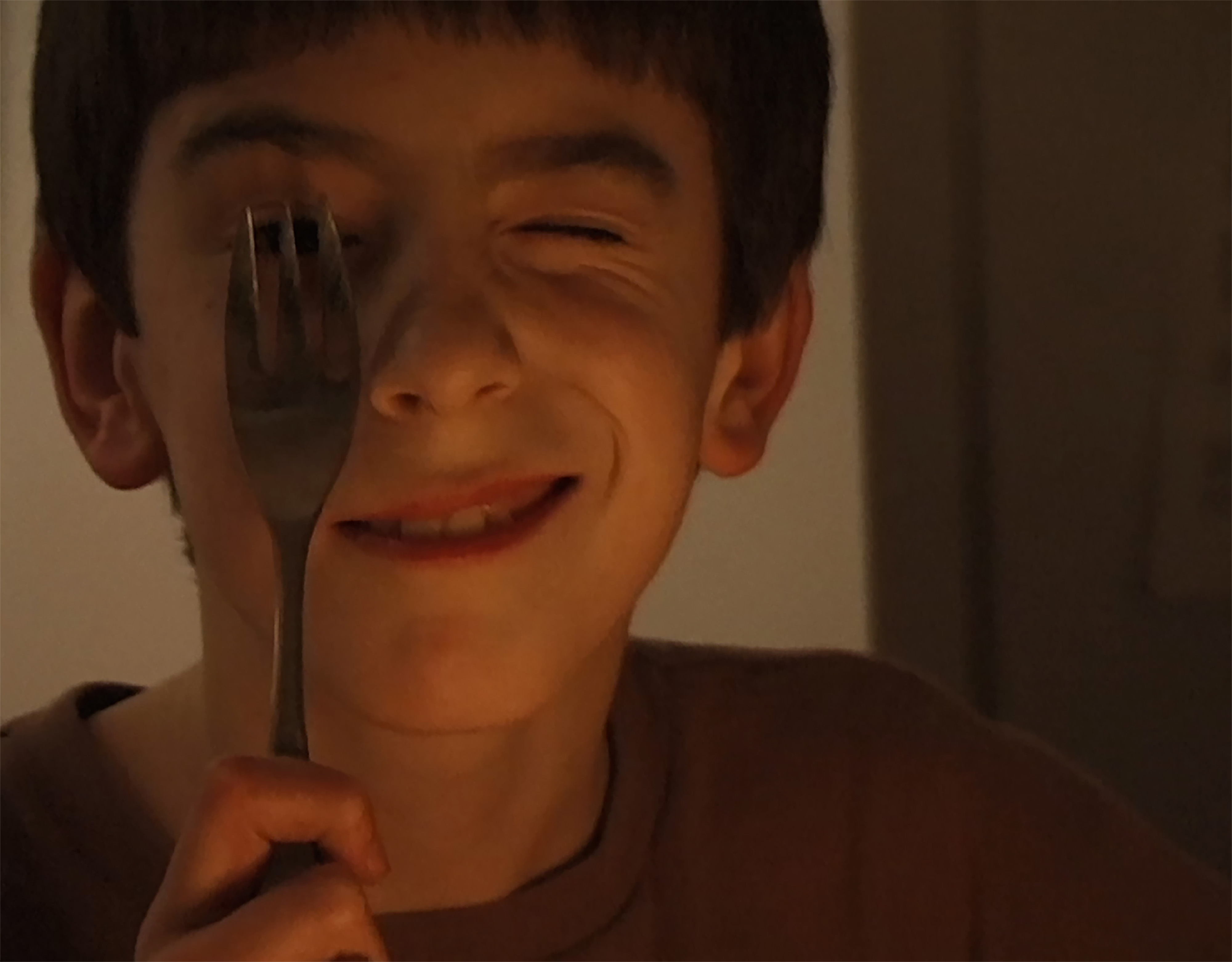
That’s exactly the tangled trail Ross McElwee navigates with Remake, which is both a reflection on his career as a documentary filmmaker and, more significantly, an act of mourning for his son, Adrian, who died in 2016 at age 27 after years of struggling with drug and alcohol addiction. Adrian himself was an aspiring filmmaker; he left behind hours and hours’ worth of footage that his father couldn’t bring himself to look at for several years. It also took McElwee some time to reckon with the images he’d recorded of his son since childhood; he’d filmed a few minutes every month, randomly, obviously not knowing how potent these small, intimate moving pictures would eventually become. Remake opens with some of this footage: we see an obviously bright, enthusiastic kid of eight or so catching crawdads in a netted trap he’d designed himself. Adrian loved all kinds of fishing, and when his father asks him, off-camera, why he likes it so much, his response shimmers with minnowlike poetry: “The deep surprise of the ocean—you never know what you’ll catch.”
How, you wonder, does such a beautiful, smart, open-hearted kid end up so troubled he can’t stay away from drugs? But that’s always the question—because every human being starts out as a child, a sketched promise. With Remake, McElwee interlaces that promise, as best he can, with the charming but anxiety-ridden adult his son grew up to be. The movie is at times painful to watch. But it’s also funny, reflective, endearing in an off-kilter way—a little like the film that brought McElwee to prominence in 1985, Sherman’s March, in which McElwee, at the time a young man, sought to make a documentary about Gen. William Sherman’s sojourn through the South and ended up with a more personalized account of his own romantic travails, all in the context of modern life—including the threat of nuclear war.
McElwee at work —Courtesy of Music Box FilmsSherman’s March—itself being re-released, by Music Box Films, in a 4K restoration—plays a big part in Remake, too. This isn’t just an elegy for a lost boy, but also a way for McElwee to put his own career into the larger context of his life. Years after the release of Sherman’s March, McElwee was approached by filmmaker Steve Carr (director of comedies like Daddy Day Care and Paul Blart: Mall Cop), who loved the movie and wanted to remake it as a fiction feature. McElwee was skeptical, but eventually agreed, with the stipulation that he be allowed to make a documentary about the remaking of his own film.
The project shifted shape over the years: at one point, it was set to become a TV mini-series, then a half-hour sit-com. Eventually, the enterprise fell through altogether, pretty much to McElwee’s relief. But at the time McElwee was considering the idea of the Sherman’s March remake, Adrian was a young man, hoping to make his own way as a media entrepreneur (including plans for a clothing line—if his ambitions were a bit scattershot, they were at least imaginative). Remake includes footage of Adrian urging his father to consider Carr’s offer, and gently scolding him for having passed up certain opportunities to make money—money that would have made the family's life better—off his filmmaking acumen. He points out that his dad once refused an offer to make a Jaguar commercial, and though McElwee is off-camera, you pretty much feel him weighing the wisdom of this criticism. Would making that commercial really have been selling out? The moment is complex, amusing, piercing. Adrian, at this point, is a bit of a bratty know-it-all, but he isn’t totally wrong, and McElwee knows it.
Bits of other McElwee films, including Time Indefinite (1993) and Photographic Memory (2011), weave through Remake: This isn’t solely a movie about grief, but about the ways grief must fit into our lives. We learn a lot about McElwee not just as a dad, but as a person, a man who’d been married, divorced, and remarried, and who’d undergone surgery for a brain tumor. With Remake, we see him figuring out how Adrian’s story, in all its sadness, has melded with his. He uses footage shot by Adrian to reckon with the mysteries his son left behind: there’s a mini-movie the younger McElwee had made about attending the Venice Film Festival in 2011 with his father, a tiny music-video opus in which Adrian shows himself lining up shots at the bar and partying it up with babes. In voiceover, McElwee thinks aloud about what he, and we, are watching: was it Adrian's version of self-parody, or was it a reflection of the kind of high-gloss life he'd wanted for himself? There’s no conclusive answer, and that’s something McElwee will have to live with.
Most affecting is McElwee’s inclusion of some skiing footage Adrian shot after he moved from Boston to Colorado in the later years of his life. As we watch some unnamed skier glide down pillowy-soft mounds of snow, McElwee whispers on the soundtrack, “I used to call myself a filmmaker. I used to call myself your father.” No parent who ever loses a child to drug addiction ever says, “I intervened too much.” It’s always, “Did I do enough to help?” and that’s the question McElwee asks over and over again here, often without words. You can always remake a movie, but there’s no way to remake a life. The best you can do is assemble and reassemble images and words until they form the fleeting shape of the person you knew. That's what a memory is, a film we make and replay in our heads, and in our documentarian hearts.
Hence then, the article about with remake a documentarian maps the shape of his grief and career was published today ( ) and is available on Time ( Middle East ) The editorial team at PressBee has edited and verified it, and it may have been modified, fully republished, or quoted. You can read and follow the updates of this news or article from its original source.
Read More Details
Finally We wish PressBee provided you with enough information of ( With Remake, a Documentarian Maps the Shape of His Grief, and Career )


Also on site :
- Iconic Actress Is Opening Her First-Ever Sit-Down Restaurant in California—and the Menu Has a Healthy Twist
- Shoppers Walked 15,000 Steps in These ‘Cute’ and ‘Comfortable’ $28 Pointed-Toe Knit Flats With No Break-in Required
- David Letterman Banned Controversial Guest From ‘Late Show’ After Catching Him Rifling Through Meryl Streep’s Purse: ‘Put Her Things Back and Get Out’