
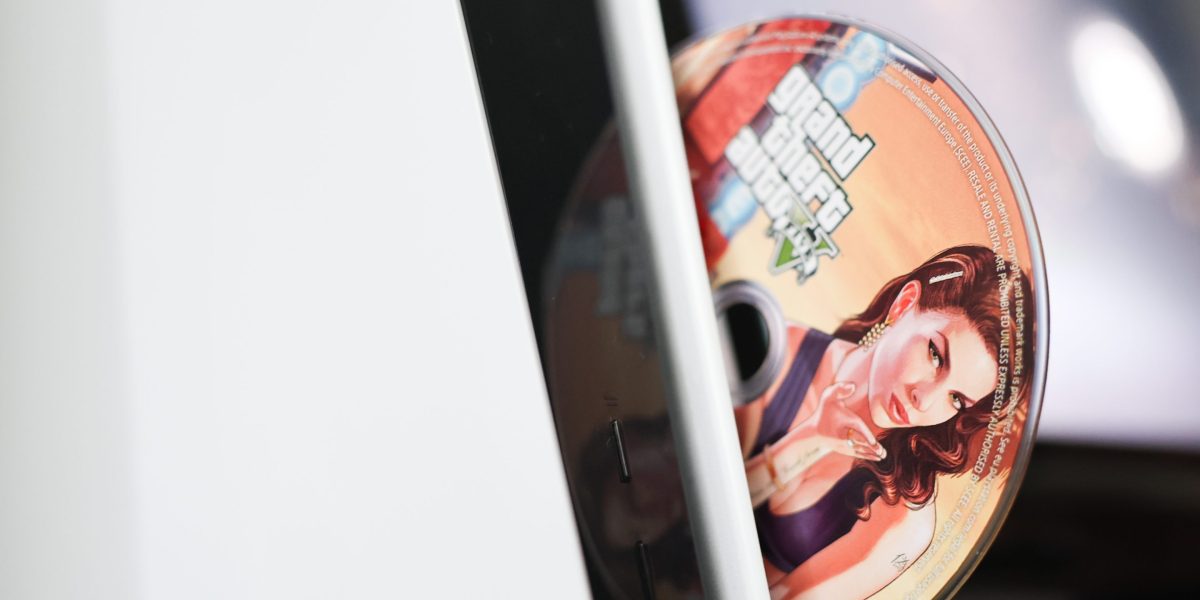
Sony’s plan to phase out physical PlayStation 5 discs by January 2028 has moved from a public relations problem to a legal one.
Dutch consumer group Stichting Massaschade & Consument has filed a $457 million lawsuit on Tuesday on behalf of 1.7 million Dutch PlayStation users, arguing Sony’s 30% PlayStation Store commission will inflate game prices once physical alternatives disappear.
This comes amid backlash to Sony’s move to get rid of physical games, with thousands of gamers flooding Sony’s Playstation blog announcement to vent their anger—ranging from disappointment to threatening to stop supporting Playstation altogether. This is because Sony now has control because without physical discs, there won’t be a resale market that puts money back in gamers’ hands or lets them get games more cheaply.
How killing discs undercuts Sony’s own legal defense
But that control is exactly what makes the disc phase-out riskier than Sony may have anticipated.
Andrew Ching, the marketing chair at Johns Hopkins Carey Business School, who studies video game demand, told Fortune the 30% “Sony tax” applies only to digital downloads sold through the PlayStation Store.
Ching explained physical retailers, in contrast, pay Sony a lower, flat royalty based on how many copies they manufacture, not how many they actually sell. That structure makes physical games cheaper, especially second-hand ones, since a game’s resale value depreciates as it loses its “freshness.”
Sony has historically pointed to that physical marketplace when defending itself against antitrust claims, treating retail competition like used games in resale markets as evidence it wasn’t a monopoly.
“However, by phasing out physical discs, Sony essentially destroys its own defense,” Ching told Fortune.
Without a physical option, Ching said, price-sensitive consumers have nowhere to go but Sony’s own storefront, absorbing the full price with no alternative in the resale space.
The backlash Sony didn’t fully price in
Sony has framed the move to get rid of physical discs as simply following consumer behavior: Roughly 85% of PlayStation game sales are already digital. But that leaves a “non-trivial” 15% still buying physical copies, according to Ching, who has studied the used-game resale market using historical data out of Japan.
“From a strictly economics viewpoint, making the physical disk is costly,” Ching said, noting consumers reacted aggressively to Sony eliminating physical discs because the resale market is still robust.
“There are people who are diehard, [who] grow up with Sony, with Xbox, and they still very much enjoy the flexibility of having a physical copy and the possibility that they can resell it,” he said.
There’s math behind the nostalgia, too. A buyer who knows they can trade in a $60 game for roughly $20 is effectively paying $40 for it, Ching said. But once Sony removes that option, “their willingness to pay is going to decrease,” pushing some players toward switching consoles or simply buying fewer games.
Analysts say killing the resale market also hands Sony full control of the secondary market—something it has wanted, given how resale competition erodes its own pricing power.
“Every resale and rental is value flowing to players and retailers instead of to the platform,” Rhys Elliott, games analyst at Alinea Analytics, told GameSpot. “Without discs, that converts into a fresh full-price digital sale or it doesn’t happen at all, and both outcomes obviously suit Sony better than a thriving second-hand market.”
Ching’s research suggests that fear has been overstated in practice since buyers value a game’s “newness” enough that used copies are a weaker substitute than publishers assume. But he said the backlash is less about that substitution math and more about consumers losing an option they’d come to expect.
“It’s always something that makes it very difficult for people to accept,” Ching said.
Xbox’s opening, complicated by its own crisis
The backlash was supposed to hand a rare opening to Sony’s oldest rival: Microsoft’s Xbox.
“They should entertain this strategy of reassuring their customers that they’re not going to abandon the facilities anytime soon, and then they can potentially get people switched from PlayStation to Xbox,” Ching told Fortune.
And it wouldn’t be the first time. In 2013, Microsoft proposed similar restrictions for the original Xbox One, and Sony publicly committing to keep discs while Xbox users revolted.
“The slide was very real” for Xbox at the time, Ching said, and he sees a mirror-image opportunity now.
There’s just one potential problem: The same week that opening appeared, Xbox also announced major changes.
Microsoft Xbox CEO Asha Sharma announced the gaming division’s largest restructuring ever —roughly 3,200 layoffs, or 20% of staff—and the spinoff of four studios as part of broader Microsoft cuts.
Sharma exclusively told Fortune in the pursuit of growth, Xbox “made a bunch of bets” and “simply spread ourselves too thin.” Gaming revenue fell, driven by a 33% drop in Xbox hardware revenue, with operating margins Sharma described as “three to 10 times lower than comparable businesses.” Despite more than $20 billion invested in content and hardware over five years, annual revenue has fallen by nearly half a billion dollars.
Ching describes the two brands as “neck and neck” in competition, but whether Sony’s stumble becomes Xbox’s opening—or whether Xbox is simply too busy fixing itself to take it—remains an open question.
Microsoft and Sony did not respond to Fortune’s requests for comment.
The end of the finished game, another squeeze
Ching points to a related shift reshaping how both companies treat the customers they already have. Sony and Xbox publishers increasingly lean on downloadable content (DLC) for existing hits rather than greenlighting new games.
A high-quality new title can take up to six years and hundreds of millions of dollars to build, while a DLC expansion for a proven success is a far safer bet, since demand is more certain, he said.
“But this also means that the shift leads to fewer new games, less R&D devoted to developing innovative storyline and original game features,” Ching told Fortune.
It also changes what buying a game feels like, Ching explained. Consumers increasingly describe the initial purchase as an “entry fee” that keeps requiring payment with no end in sight, rather than the traditional model in which a player finishes a standalone game, feels a sense of accomplishment, and moves on to the next challenge.
“The consumer satisfaction of being accomplished has been sacrificed in this new DLC add-ons model,” Ching said.
This story was originally featured on Fortune.com
Hence then, the article about sony essentially destroys its own defense how its disc free ps5 plan triggered a 457m lawsuit and undercut its antitrust defense was published today ( ) and is available on Fortune ( Middle East ) The editorial team at PressBee has edited and verified it, and it may have been modified, fully republished, or quoted. You can read and follow the updates of this news or article from its original source.
Read More Details
Finally We wish PressBee provided you with enough information of ( ‘Sony essentially destroys its own defense’: How its disc-free PS5 plan triggered a $457M lawsuit and undercut its antitrust defense )


Also on site :
- Trinity Tatum Shares Her Love Island Villa Fashion Inspiration & What’s Next For Her .. Victoria Secret Fashion Show 2026
- Megan Moroney Turns Heads in Pink Perfection on Victoria’s Secret Runway, Reveals ‘Outrageous’ Undergarment Snafu: ‘They Fell Off’
- Donnie Wahlberg’s Plane Skids Off Runway & Hits Fence After NKOTB’s Final Las Vegas Concert: ‘These Pilots Saved Our Lives’