
From Nantucket’s cottages to Malibu’s beaches, from urban parks to Midwestern hammocks: it’s time to pick a spot and hunker down with summer’s most ideal companions: books. This season’s new fiction and nonfiction illuminate our manic world while offering riveting escapes.
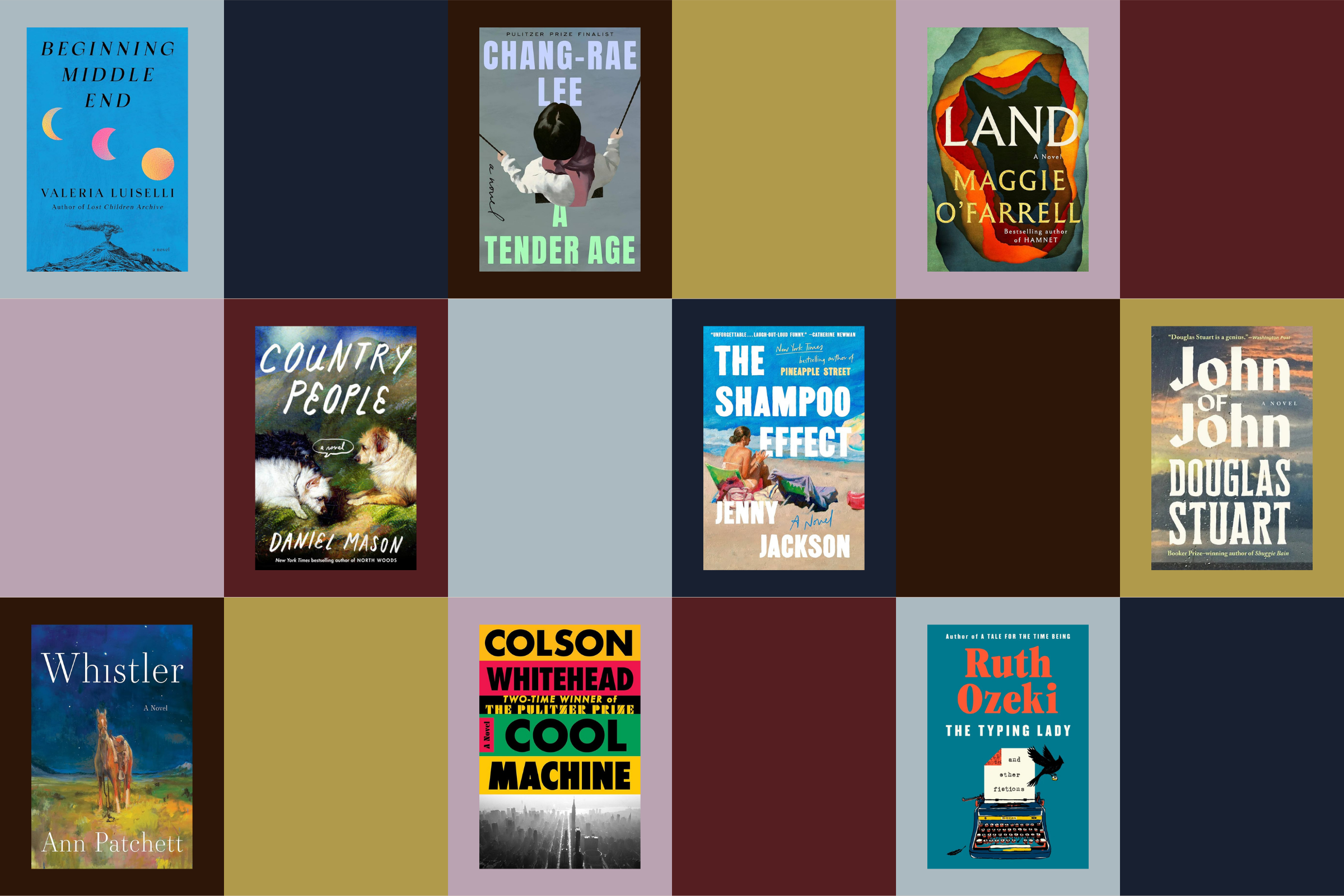
Stellar fiction dominates across genres—consider Veronica Roth’s futuristic world-building; Maggie O’Farrell’s new historical novel; Douglas Stuart’s queer working-class epic; the final act in Colson Whitehead’s acclaimed Harlem trilogy; David Heska Wanbli Weiden’s thriller set on a Lakota reservation; superb story collections from Ruth Ozeki and Sigrid Nunez; and Paul Yoon’s Odyssey-inspired fable.
Nonfiction is a similar embarrassment of riches, among them David Epstein’s counterintuitive theory of creativity; Ada Ferrer’s memoir about her Cuban immigrant family; the neurobiology of fatherhood from researcher Darby Saxbe, PhD; Pamela Colloff’s outlandish true-crime set (where else?) in Florida; and Pulitzer-Prize laureate Jill Lepore’s study of democracy in an age of disinformation.
Here are the best new books to read this summer, including several titles you can read now and the works arriving over the next few months.
The Calamity Club, Kathryn Stockett
The bestselling author of The Help, Kathryn Stockett serves up a yarn set in the Mississippi Delta during the Depression, when tea was sweet, cafés were segregated, and a fourth of the state’s private property had been repossessed. In the college town of Oxford three lives converge: Meg, a child raised in an orphanage; twenty-four-year-old Birdie, “churchy and chinless,” soliciting a handout from a sister who’s married up; and Charlie, a young woman with a horrific secret. Come for the sisterhood, stay for allusions to William Faulkner and Donna Tartt.
An Oprah Book Club pick, Douglas Stuart’s new novel is both a dissection of a troubled family and an eulogy for dying folkways in the Hebrides islands. It’s 1996: John-Calum (“Cal”) Macleod, a 22-year-old closeted gay man and graduate of an arts school, returns to his childhood farm, or “croft,” to help out his religious, taciturn father and sharp-tongued grandmother. His mother had left them when he was a child but lives close by, tugging at his stability. As he adapts to a rural routine—tending sheep and looming tweeds—desire stirs, unspooling a skein of secrets.
One Leg on Earth, ‘Pemi Aguda
A bizarre epidemic is sweeping Lagos: pregnant women are drowning themselves in the city’s lagoons and canals. These suicides haunt an ambitious young architect, Yosoye, who is beginning work on a luxury development heralded as a symbol of Nigeria’s emergence onto the world stage. After a hook-up, Yosoye discovers she is pregnant and starts questioning everything, including “unsensible, unapologetic” motherhood itself. Soon, she realizes the unseen menace felt throughout Lagos is stalking her. A bold stroke from ‘Pemi Aguda, a National Book Award finalist for Ghostroots.
The godmother of intersectionality and self-described “race warrior at three,” Kimberlé Williams Crenshaw tells her own story with warmth, candor, and provocation. She writes about her awakening as a Black girl in Canton, Ohio; the early loss of her father and violent murder of her brother; developing a passion for debate in high school; her immersion in African American scholarship at Cornell; the challenges of Harvard Law; and becoming a champion of critical legal studies. At each step she has spoken her mind: “Being a backtalker is like being lactose intolerant. There are things I cannot digest.”
Inside the Box: How Constraints Make Us Better, David Epstein
An instant New York Times bestseller, Inside the Box unlocks creative potential in limitations, or “guardrails,” blending cutting-edge data with savvy reporting. Journalist David Epstein interviews business figures at all levels: Silicon Valley techlords, Hollywood animators, mom-and-pop retailers with little more than a dollar and a dream. He uncovers a key insight: companies should start small and go slow, which yields superior results to rapid-scale ups. It may seem counterintuitive—the less freedom, the greater the potential for success—and yet the tortoise wins the race each time.
Publisher and novelist John Glynn reimagines Arthurian legends as queer saga and passage into manhood. A nameless boy grows up the only male on the Isle of Women; for him Camelot is a story in a book. A chance encounter with the handsome Galehaut inspires him to seek a keener understanding of the Round Table and his own identity; a gold sword in a lake acts like a transmitter from another dimension, revealing him to be Lancelot, whose embrace of his feelings for another man expands the tradition of royal knights and ladies fair.
Men Like Ours, Bindu Bansinath
On a steamy Sunday evening in suburban New Jersey police officers discover the body of Matthew Pillai slumped over the steering wheel of his BMW; one photographs him with an iPhone camera “as one might document the position of plants for a still life.” Word of his death spreads along nearby Willow Road, where an immigrant Hindu enclave, embroiled in feuds amid Pathways and Cash & Carry, is shattered by the mystery at the heart of Bindu Bansinath’s debut. It’s left to the women—including Anita Sharma, a striver, and her rebellious daughter, Leila—to find a way forward.
Ancient myths and science fiction mingle in Veronica Roth’s new dystopian fantasy series, set in a future world both alien and strangely familiar. Elegy Ahn, a hardened soldier and daughter of the Sword, monarch of the Cedre, maneuvers around a ceasefire with the Talusar empire whose rule derives from a highly lethal pathogen. Those who survive are gifted with mystical powers. She’s sustained by her love for her husband, their home in the megacity Losan (strikingly similar to Los Angeles), until a prophecy draws her to an enemy and a clash that will determine the fates of their peoples.
On Witness and Respair: Essays, Jesmyn Ward
A two-time winner of the National Book Award in fiction, Jesmyn Ward gathers previously published pieces and public addresses into a collection that limns arcs found in Black art, from Ta-Nehisi Coates’s moral manifestoes to Ava DuVernay’s stylish films to the canon of Toni Morrison, whom she eulogized in 2019: “She called us out of our wandering, her voice a high, clear music in the star-suffused desert air.” Ward also finds meaning in the agonized history of her native South, illuminating our most misunderstood member of the American family.
The 17-year-old son of eminent Washington journalists, Theo Baker had just matriculated at Stanford, eager to pursue coding, when he was tapped for a seminar not found in the renowned university’s course catalog. Armed with natural curiosity, he uncovered a shadow Stanford designed to funnel our best and brightest away from Descartes and Shakespeare and toward Silicon Valley’s billionaires, grooming select students for roles in an oligarchy beyond the reach of law. Baker’s investigation for the Stanford Daily toppled the university’s money-tainted president and won him the coveted George Polk award, expanded here in a briskly written, Gen-Z morality tale.
Keeper of My Kin: Memoir of an Immigrant Daughter, Ada Ferrer
In this intimate memoir, Ada Ferrer, author of the Pulitzer Prize-winning Cuba, delves into her past: her mother’s flight with her infant daughter to Miami, following Castro’s rise as dictator; a reunion with her father, who steered them to Brooklyn; and two older brothers left behind. Caught between two opposing cultures, drawing on a cache of letters, documents, and remembrances, Ferrer meticulously recounts the travails of one migrant family and a punitive legal system that dogged them, skewering ideals of equity and fairness.
Throughout the late 1970s and early ‘80s, Manhattan’s Lower East Side was a nonstop carnival until the AIDS epidemic devastated a generation of defiant gay men and trans women. Renata, the lesbian narrator of Natalie Adler’s impressionistic debut, is literally haunted by ghosts after losing so many friends. When another friend, handsome blonde Mark, dies, she’s surprised he’s really and truly gone, unlike the others who remain with her. From shabby apartments to art experiments to filthy needles—with echoes of Patti Smith and Rebecca Makkai—Adler conjures an era of sorrow borne by too many, too young.
Midnight Train, Matt Haig
The bestselling author of The Midnight Library opens his new novel on a note of joy: an English couple, Wilbur Budd and his wife, Maggie, celebrate a blissful honeymoon in Venice, ferried across lagoons in water taxis, sipping wine in cafés. More than five decades later, Wilbur drops dead of a heart attack and finds himself on a midnight train going anywhere, a ghost hurtling back toward a lost love. Matt Haig blends the poignant drama of a Douglas Sirk movie with speculative twists straight out of Dickens.
In this golden age of historical fiction, Ruta Sepetys lends her own shine. Her new novel recreates the Jazz Age in all its glory and tarnish as Grosse Pointe socialite Marjorie Lennox—known for “a chestnut bob . . . wide eyes edged in smoky kohl”—seeks freedom from her wealthy family. She enrolls in a Detroit artists’ residency program funded by a mysterious patron only to discover a darker reality far removed from her fantasy: locked doors, silver keys, hints of madness, “the silence of abandon.”
Whistler, Ann Patchett
Ann Patchett’s new novel finds the prolific author in a contemplative mood as her protagonist, 53-year-old Daphne Fuller, a private-school teacher married to a retired hospital administrator, unexpectedly crosses paths with her former stepfather, Eddie Triplett, in Manhattan’s Metropolitan Museum of Art. Daphne hasn’t seen Eddie since her childhood, when a car accident derailed his marriage to her mother; now she’s drawn inexorably into his glamorous circle of friends, seduced by their dazzle and social status. Long-buried memories surface against a backdrop of publishing lore, exclusive clubs, and secrets coiled like rattlesnakes, poised to strike.
Novelist, Winner of the Women’s Prize for fiction, ordained Buddhist monk: the versatile Ruth Ozeki now adds author of a short-story collection to her CV. Her first outing with the form teems with trivia about typewriters: a Smith Corona, a Remington Rand, a “sleek” Olivetti Lettera. From a professor’s biracial daughter to best friends in a New England town to a female European academic–“posture languid, expression dry”—Ozeki probes lives both mainstream and marginalized, underscoring why language offers the best tools to affect growth and change.
The Children, Melissa Albert
YA author Melissa Albert’s adult fiction debut probes the legacy of a long dead bestselling fantasy author who left behind many dark secrets. In The Children, sister and brother Guinevere and Ennis grow up under the shadow of their mother, Edith Sharpe, whose Ninth City children’s book series transfixes the world until Edith perishes in a mysterious fire in Vermont. Decades later, Guinevere brings out her ghostwritten memoir at the exact moment her estranged sibling announces an art installation called Mother. Dual plots twine around each other like a helix of DNA—which tells the real story?
The bestselling author of Hamnet, Maggie O’Farrell now shifts her authorial gaze to the Irish coast in 1865, as Tomás, a cartographer, and his ten-year-old son, Liam, map an Irish peninsula while under pressure from the British Crown. The Great Hunger and subsequent Irish migrations still burden those scattered among cliffs and bogs; and when Tomás emerges from a wood, transformed by a mystical encounter, Liam must push them to finish their task. O’Farrell once again invigorates the historical novel, probing characters stretched to the limit by forces beyond their control.
Villa Coco, Andrew Sean Greer
A gay American college graduate decamps for an archivist job at a Tuscan villa, assisting an enigmatic Baronessa as she inventories her collection of books and art. He also can’t help cataloging the characters he meets: a Sri Lankan cook, a British expat, a Lebanese handyman, a handsome Italian, and titled if jaded Europeans with their heads held high. Meanwhile, Cupid lurks in the shrubbery, shooting his darts. Pulitzer Prize-winning Andrew Sean Greer declares his passion for a country “the opposite of America. Not a colonizer’s canvas cut into political states but ancient kingdoms brought together into one nation.”
A prominent researcher peers deep into the biology and sociology of fatherhood, a neglected field, she asserts, whose time has arrived. Darby Saxbe, Phd, one of the few scientists who has analyzed neuroimaging on men as they become fathers, leaves no brain scan or hormonal reflex unturned, examining the ways men experience pregnancy (a real thing!) to how dad bods attract mates (also a real thing!). She demystifies taboos surrounding male parenting: “Father care is a little like that extra pair of hands, coming on board when needed and helping to ensure that children thrive to adulthood.”
The Traveler: One Man’s Quest for Humanity from the South Seas to Revolutionary Paris, Andrea Wulf
For vacationers and staycationers alike comes the saga of George Forster, the eighteenth-century German-British globetrotter whose life embodied seismic changes in travel, technology, and government. The acclaimed author of The Invention of Nature, Andrea Wulf brings erudition and flair to Forster’s peripatetic career as teenaged crewman on Captain Cook’s global voyage. He later studied the French Revolution up close and advocated for human rights as monarchies faltered and capitalism began its steady conquest of the world. Wulf pays overdue homage to an intellectual titan and forefather of linguistics and natural history.
Leila Slimani draws from her own life in this postcolonial epic. Mia Daoud bounces among female lovers, using sex to compensate for a grief she can’t confront. After a bout with Covid she struggles with brain fog and writer’s block, but discovers her Proust-like “madeleine”: her family’s history in Rabat, and the story of her parents, her father an alpha-male Arab politician, mother a prominent feminist originally from Alsace. Mia finds refuge in Paris, “cold mornings and bad coffee sipped by the condensation-covered window of her little studio apartment,” determined to make a difference, a small but vital player in a world on the cusp of transformation.
Pool House, Mary H.K. Choi
Mother-daughter ties are fierce but can cut like razors. Just ask Stevie, a Korean-American teenager in Mary H.K. Choi’s darkly funny novel. Back in the ‘90s her mother, Moon, had appeared in a variety of Hollywood B-movies and even played a mother on Wabi-sabi, a blended-family sitcom; in her daughter’s estimation she was “a trailblazer and an iconoclast.” Now Moon juggles her domineering personality and the family’s poor finances. When Adam, her former TV son and Stevie’s longtime crush, moves in, hijinks ensue in a sendup of identity, generational friction, and pop culture.
In the fall of 1969, a three-year-old girl in an upscale Calcutta neighborhood shocks her vegetarian parents when she demands fish for dinner. Anecdotes about a former life dribble out: was she once an impoverished child in a fishing village? The Guptas have risen “from modest to quite extravagant wealth” and fear something supernatural may threaten their hard-won status. They commence their own investigation, consulting baffled clinicians to no avail, a calamity that spills across generations and continents. With wit and élan Amitav Ghosh explores India’s own reincarnation as a democracy, brilliant societies emerging from tangled layers of the postcolonial era.
The Shampoo Effect, Jenny Jackson (June 30)
There’s no more quintessential beach read than a buzzy novel set in a coastal town. Consider Greenhead, Massachusetts, where Caroline, a twenty-eight-year-old writer, settles into a residency and a relationship with sexy environmentalist Van, “a real person instead of some impossible man-child.” Except this real person has a kid on the way: his former girlfriend is pregnant. Against her better judgment Caroline falls in with Van and his high school crew. Doubts linger in Jenny Jackson’s rocky romance–will love triumph? As she texts a friend: No Hallmark movie has the Good Guy knock up his ex-girlfriend from high school.
What’s summer reading without a dash of dark academia? Pulitzer-Prize finalist Daniel Mason molds his new novel around Miles Krzelewski, married to a Stanford academic superstar, twelve years tardy on his dissertation. When his wife takes a job at a prestigious college in rural Vermont, Miles heads into a “child-care desert,” content to play Mr. Mom to the couple’s children while falling in with a crowd of local eccentrics. But there’s something dark lurking in the woods that surround them, threatening Miles’s sanity: “skeleton hanging from the rafters, Baba Yaga, and old man in overalls . . . rifle propped upon his elbow.”
Wisdom Corner, David Heska Wanbli Weiden
A citizen of the Sicangu Lakota nation, David Heska Wanbli Weiden delivers chills and thrills in a new installment of his award-winning Virgil Wounded Horse series. The Rosebud reservation’s world-weary enforcer, “the guy you hired when you couldn’t get justice from the courts or the tribal council,” Virgil once again gears up for duty, pulled into a high-profile murder case and a long-suppressed connection to native children disappeared from a notorious Indian boarding school. A combative gang and a duplicitous politician complicate his search for truth, but nevertheless, he persists.
Catch the Devil: A True Story of Murder, Deception, and Injustice on the Gulf Coast, Pamela Colloff (July 14)
The ultimate Florida Man stars in this true-crime caper from two-time National Magazine Award laureate Pamela Colloff. For years Paul Skalnik—charming confidence man, small-time swindler, deadbeat husband to nine women (a few simultaneously)—evaded legal consequences by working the refs: while jailed he lured confessions from fellow inmates, becoming an invaluable mole for law enforcement. Police released him after he’d helped to pin the murder of a fourteen-year-old girl on a Vietnam vet, but something just didn’t add up. Thereby hangs Colloff’s spellbinding tale of a justice system derailed by biases.
Priya Guns, the author of Your Driver Is Waiting, puts a playful spin on the diaspora novel. It’s 2000 and teenaged Dilo, a Sri Lankan immigrant in northern England, navigates homework and family duties, tending to her cousin and maneuvering around her born-again mother and ex-commando aunt, refugees from the island nation’s bloody civil wars. Despite promises of social mobility, they hover on the brink of poverty, susceptible to a day trader who presents himself as their savior while giving sketchy vibes, “an obnoxious cockiness that could make even one of Jesus’s disciples want to slap him.”
It Will Come Back to You, Sigrid Nunez (July 14)
A therapist treats a patient who hears voices only to discover unsettling truths inside his own skull. A juror recognizes a kinship with a young man on trial. A married man plots an intimate, horrific crime. In her first-ever story collection the celebrated novelist Sigrid Nunez embeds her characters amid moral dilemmas, blending musings with lives teetering on the edge of disaster: “The smallest detail was the one that would bust you, like the sneeze that busts the last hijacker at the end of The Taking of Pelham One Two Three.”
For a handsome schemer in Mexico during the 1940s, love and longing may be the best way to an income. Through letters, Ulisses charms lonely women, bilking them of money and possessions. He targets his next victim: a fortyish spinster in the town of Puerco Ahogado, with its “formidable carved wooden doors and elaborate interior patios studded with flowers.” Here he finds Perla and her comely niece, Inés: they form a love triangle with dueling plots, pitting hearts and minds against each other. Silvia Moreno-Garcia’s textured caper conjures a singular place and time, timeless themes.
Cool Machine, Colson Whitehead (July 21)
The two-time Pulitzer Prize-winning novelist concludes his lauded Harlem Trilogy, bringing Ray Carney—plus a cast of family, friends, enemies, and frenemies—into a gentrifying 1980s Manhattan. Glittering towers and real-estate values soar; the East Village teems with club kids and graffiti artists; yet something has been lost. “The city didn’t do public works like Grand Central anymore,” Ray observes, “the coffers were empty, the imaginations bankrupt.” There’s always the temptation of an easy score, though, a con game suited to the great metropolis, captured here in Colson Whitehead’s signature deadpan.
Valeria Luiselli’s inventive work depicts a divorced writer and her daughter as they journey, pilgrim-like, through Sicily, from the shadow of Mount Etna to other places that hold memories, where time warps like a Möbius strip, “bending, sinuous, flowing back into itself,” as human lives are measured against the planet’s vast geological chronology. Each seeks a vita nuova in a landscape drenched with myths of desire and betrayal, classical writers like Ovid as tangible as the volcano’s rumbles. Luiselli crafts a novel of ideas that challenges the very idea of narrative, yet one that bristles with raw feeling.
Etna, Paul Yoon (Aug. 4)
As Christopher Nolan’s The Odyssey tees up to be this summer’s cinema blockbuster, another Homeric trek unfolds in Paul Yoon’s somber novella: after years of war, the titular Etna, a trained military dog, flees his unit and circles back to the home he can barely remember, meandering through battle-scarred towns and rubble ruins, aided by a network of humans and other canines who reject the violence passed onto them like a prison sentence: “The collapse. The bombs. The smoke. The terrible noise.” They dare to imagine a better world.
As the only Black girls on a 2004 study-abroad trip in France, Val and Milly bond over baguettes and chocolate mousse and their affection for an American expatriate. Some fourteen years later adulthood has further cemented their connection: they still rely on each other, despite marriages and careers and other family obligations. Their pregnancies reunite them together in Brooklyn, impending motherhood and bourgeois expectations and sudden tragedy exposing a fault line: “They had learned to pretend to be satisfied with one another, then they waited until they were.” Naima Coster sifts through female friendships to uncover enduring truths.
Sunrise, Téa Obreht (Aug. 11)
In the late summer of 2024, a bird strikes a Cessna in midflight; the airplane plunges into a deep Wyoming lake. Nina emerges, dazed but uninjured, her cellphone intact, her boyfriend Ben vanished. Her link to the world beyond the wilderness is tenuous. She stumbles into a beautifully preserved ghost town and discovers a book written twenty years earlier, a young man’s account of a renegade gunfighter from 1902, who may know more beyond his own timeline. Téa Obreht connects her three characters across disparate realities, a speculative marvel and a parable of a nation in the throes of change.
Pulitzer finalist Chang-rae Lee reinvents the coming-of-age novel, evoking Westchester County’s working-class neighborhoods and ritzier suburbs during the 1970s. Jeon-Gi lives with his Korean family in Building A, scrapping with kids from other immigrant families in a weedy playground. His idyll ends abruptly when he carries a knife to school, prepared to confront a bully but instead triggering psychic evaluations and a trip to Christian camp. J.-G. recalls Scout Finch and Huckleberry Finn but with his own yearnings and apprehensions, a spirited boy grappling with the mixed messages of the American Dream.
The Black Shield: An American Memoir of Family and Power, Wilbert L. Cooper (Aug. 25)
In the wake of George Floyd’s murder at the hands of Minneapolis police, African American officers in Cleveland formed the Black Shield, crossing the thin blue line to join enraged activists and inspiring native son Wilbert L. Cooper to engage his own entwined political and personal stories. The son of Black cops, he’d grown up among guns: as a kid he’d spy a 9-millimeter in his father’s belt while the man “doused himself in spicy cologne and sliced a plastic comb through the waves of his jet-black Jheri curl.” Here, he questions whether a reckoning would spark a radical shift in systemic brutality.
The author of the Outline Trilogy reprises her cool, cerebral technique in a novel about a film actor, M, and an acquaintance who pitches the idea of an “as told to” autobiography. M’s often recognized by her fans in public while the narrator is just another face in the city where they live. Yet their identities seem to merge in curious ways, and their project evolves. Rachel Cusk balances the trappings of M’s life—luxurious hotel rooms, Italian coffee machines, desserts swimming “in pools of sweet sauce”—with philosophical musing on what it all means.
Dèy, Edwidge Danticat (Aug. 25)
Magnolia, a Miami real-estate agent, rushes to take shelter when gunfire strafes the air outside a mall restaurant. The horrific tragedy pushes her to reconsider the life she’s built with her ten-year-old daughter, Zoë, her tensions with Zoë’s father, Harrison, and the city’s contradictions: “a sweltering and glamorized place full of beaches and private islands . . . unhoused people and families sleeping under bridges and underpasses.” In graceful, gimlet-eyed prose, Edwidge Danticat stares down preconceptions of family and belonging, lending her novel propulsion and promise.
Winner of this year’s Pulitzer Prize in history, Harvard professor and New Yorker journalist Jill Lepore trains her formidable powers on our information culture and its bad-faith actors, such as oligarchs, Russian bots, and AI, jet-fueled by real and crypto currencies. Our republic’s health depends on consensus, grounded in a social compact; yet the United States and other democracies now face unprecedented threats as predatory technology creates alternative realities: “Robots are our Ahab, and we are the whale.” Does the future truly belong to machines or can we avoid the techpocalypse?
Big Little Truths, Liane Moriarty (Aug. 25)
The Sydney gang’s all back in Liane Moriarty’s sequel to her mammoth bestseller, Big Little Lies, showcasing the midlife foibles of Renata, Jane, Bonnie, Madeline, and Celeste. In the past decade they’ve broached fresh challenges: divorce parties and romantic entanglements, rebellious teenagers and aging parents, WhatsApp mishaps and “a flurry of apologetic messages to everyone.” The author rotates in and out of the lives of her cast, teasing out perspectives, manifesting the notion that friendships are what hold us together, year in, year out.
Hence then, the article about the best new books to read this summer was published today ( ) and is available on Time ( Middle East ) The editorial team at PressBee has edited and verified it, and it may have been modified, fully republished, or quoted. You can read and follow the updates of this news or article from its original source.
Read More Details
Finally We wish PressBee provided you with enough information of ( The Best New Books to Read This Summer )


Also on site :
- While consumers are angry about high-tech ways to set prices, a study of dynamic pricing found half the U.S. changes it recorded were decreases
- Curtain Up: ‘La Bola Negra’ Shines As Netflix Shares Grosses In Historic First — Specialty Box Office
- In 1883, a stampede on the new Brooklyn Bridge killed at least 12; the next May, P.T. Barnum marched 21 elephants across it