
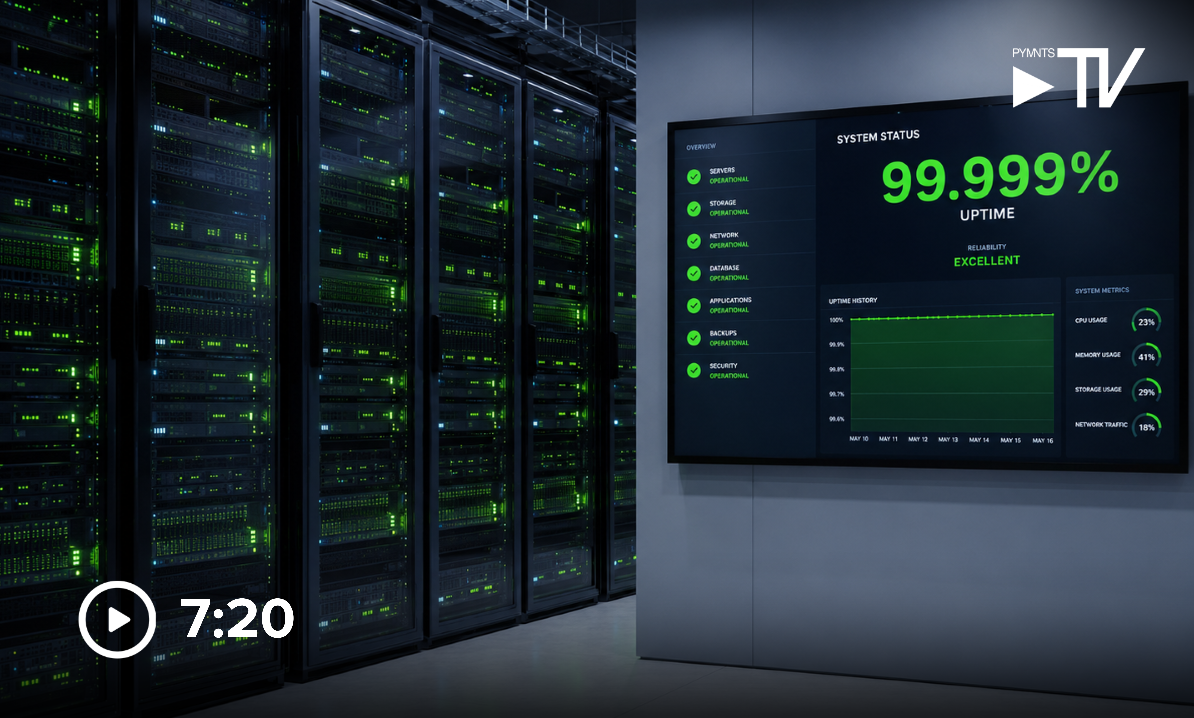
For years, payment processors competed on uptime, scale and cost.
Artificial intelligence (AI) is changing those dynamics, pushing providers to demonstrate that they can help financial institutions make better decisions at the speed of commerce while preserving customer trust.
In a conversation with PYMNTS, Matthew Pearce, vice president of fraud risk management & dispute operations at i2c, described an industry where processing transactions is becoming only one piece of the value proposition. Institutions increasingly expect partners that can interpret data, reduce fraud, improve approval rates and support growth without introducing unnecessary friction.
The shift begins with changing client demands. Conversations that once centered on reliability and operating costs now focus on execution speed and adaptability, Pearce said.
That expectation extends beyond launching products. Financial institutions want to act on transaction data before opportunities disappear, update risk controls and respond to changing market conditions without waiting through lengthy development cycles.
Advertisement: Scroll to Continue
Architecture plays a central role in that effort. Fragmented systems create blind spots that limit AI’s effectiveness, while unified platforms allow information to flow more freely across fraud, disputes and risk management functions, Pearce said. The broader payments industry has been moving in the same direction.
AI is also changing how institutions measure success.
Pearce cited research from LexisNexis showing that financial institutions incur more than $5 in associated costs for every dollar directly lost to fraud, underscoring that operational expenses often exceed the losses themselves.
Yet reducing fraud cannot come at the expense of customer relationships.
“If the customer experiences too much friction, that’s painful for them, and they put you at the back of the wallet,” Pearce said, adding that the same thing happens if they experience fraud.
That observation captures one of the industry’s central dilemmas. Strong authentication protects accounts but may discourage legitimate purchases. Relaxed controls may preserve approvals while increasing financial losses and customer dissatisfaction.
The objective is precision rather than severity, introducing friction only where evidence suggests it is warranted while allowing legitimate transactions to proceed uninterrupted. Conversion rates, fraud losses and customer loyalty therefore become interconnected measures rather than separate performance indicators.
Models Must Adapt as Quickly as Fraudsters
AI is also shortening the useful life of static fraud rules. Pearce distinguished between routine decisions that can be automated through established logic and adaptive systems that learn continuously from new transaction patterns.
He said i2c combines data scientists and fraud analysts in ongoing feedback cycles designed to refine models while preserving high approval rates. The goal is to reduce false positives without sacrificing fraud prevention.
That philosophy reflects a wider industry trend. Fraud organizations increasingly recognize that periodic model updates cannot keep pace with criminals who rapidly adopt new techniques and technologies.
Success depends less on creating perfect rules than on building systems capable of learning from fresh information and adjusting before emerging schemes become widespread.
Agentic AI Introduces New Questions
The next challenge may come from purchases initiated by software rather than people.
As agentic AI assumes a greater role in commerce, Pearce said he believes authentication alone will not resolve every dispute.
“What is the intent of the purchase?” he asked. “Did the customer really intend to buy that?”
Determining intent could become one of the defining issues of the next generation of payments. Credentials may be authentic and tokens valid while the underlying authority behind a transaction remains uncertain.
Fraudsters are already adopting AI aggressively, and financial institutions must develop equally sophisticated defenses, Pearce said.
Transparency is also important, he said. Organizations need to understand and explain how AI reaches decisions, particularly when automated systems influence approvals, declines or account actions that directly affect consumers.
Those governance questions are likely to become more pressing as AI agents participate more actively in commerce.
Pearce said he expects processors to contribute intelligence alongside infrastructure by the end of the decade. Real-time product configuration, continuously updated fraud controls and dynamic personalization may become standard expectations rather than premium capabilities. Shared behavioral insights and explainable models could prove as valuable as transaction processing itself.
“Speed, precision and transparency have to rise together,” Pearce said. “If any one of those slip, the process really goes off the track.”
Watch the full interview with Matthew Pearce to learn more about:
Why processors are increasingly judged on intelligence, adaptability and speed rather than transaction routing alone. How fraud teams are using AI to improve approval rates while reducing false positives and preserving customer loyalty. Why agentic AI could force banks and payment providers to rethink consumer intent, governance and accountability before 2030.Payment Processors Can’t Win on Uptime Alone Anymore | PYMNTS.com Top World News Today.
Hence then, the article about payment processors can t win on uptime alone anymore pymnts com was published today ( ) and is available on TOP world News today ( Middle East ) The editorial team at PressBee has edited and verified it, and it may have been modified, fully republished, or quoted. You can read and follow the updates of this news or article from its original source.
Read More Details
Finally We wish PressBee provided you with enough information of ( Payment Processors Can’t Win on Uptime Alone Anymore .. PYMNTS.com )


Also on site :
- French President Emmanuel Macron Calls on YouTube to Finance Content and Warns of Growing Threat to Cultural Model (EXCLUSIVE)
- President Trump Posts Photo of Hollywood Icon Who Has Slammed Him for Years: ‘Even This Jerk Is Beginning to Get It’
- Macklemore Says His Call to ‘Free Palestine’ Is Not a ‘Criticism’ of Jewish People: ‘None of Us Will Be Free Until We Are All Free’