
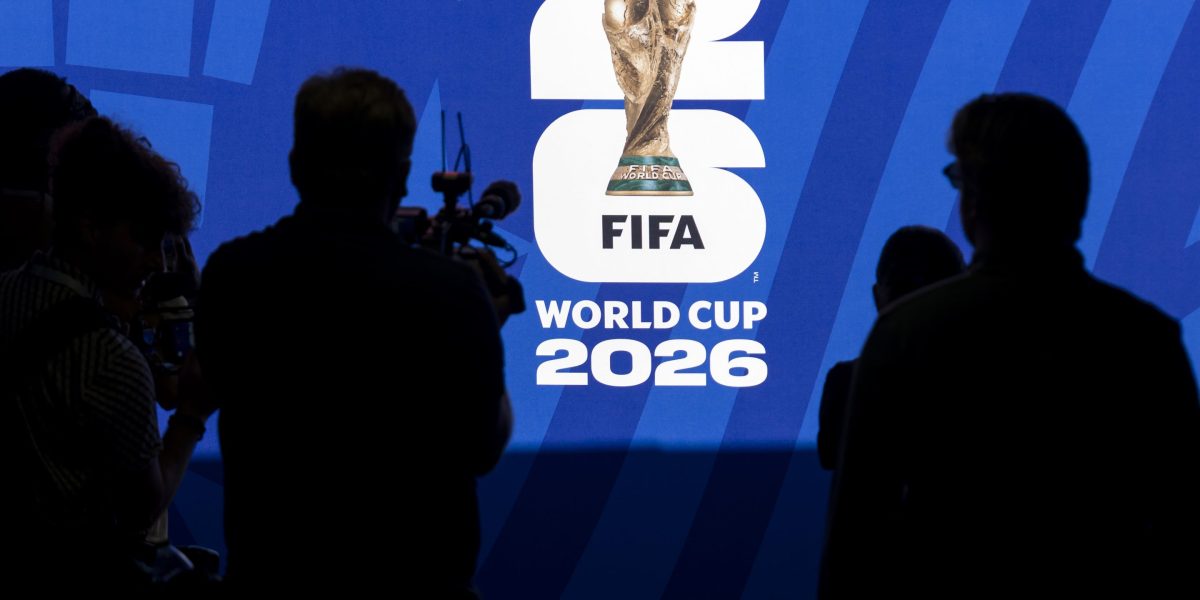
A controversial spy powers law has become the latest political casualty of President Donald Trump’s second term, injecting uncertainty into US intelligence gathering in a summer dominated by the World Cup and high-profile events celebrating the country’s 250th anniversary.
Republicans have painted a dire picture of the consequences of the lapse in the law, which expired on Friday, with Senator Mike Rounds warning that it “makes our country a lot less safe” at a critical time.
The standoff over renewing the surveillance authority appeared set to drag on as Trump moved on Wednesday to delay Senate confirmation of his nominee to be national intelligence director, Jay Clayton. He also demanded this week that partisan immigration policies be attached to any extension of the law, complicating prospects for a bipartisan deal.
Read more: Trump Says Nomination of US Intel Director Should Be Delayed
Even with the lapse, though, surveillance activities can continue through next March, thanks to authorization from the secretive Foreign Intelligence Surveillance Court. The intelligence community can also continue to keep tabs on their targets, something that will help with security around events like the World Cup, for which agencies prepare months in advance.
The specialized court can compel compliance, as it did in 2008 when Yahoo Inc. refused to cooperate during a brief lapse in the statutory authority. The US government won a court battle to force Yahoo into compliance.
Whether this type of intelligence gathering continues will hinge on the response of telecommunications companies and online providers like AT&T, T-Mobile US, Verizon and Alphabet Inc. and whether they choose to continue to cooperate with the government to speed intelligence gathering. Losing their cooperation risks slowing intelligence gathering and creating information gaps.
“We don’t know the answer to that,” said Senator Mark Warner, the top Democrat on the Intelligence Committee. “It is obviously a high-risk proposition.”
Later, in a Wednesday afternoon press conference, Warner said “so far” telecommunications companies are continuing to allow US intelligence agencies to conduct surveillance of communication on their networks.
Spokespeople for Verizon and AT&T declined to comment. Representatives of Alphabet and T-Mobile didn’t respond to requests for comment, nor did the Telecommunications Industry Association.
FBI Director Kash Patel on Tuesday said the agency and law enforcement arrested “multiple individuals” planning an attack on the UFC America 250 Event at the White House on Sunday evening. The FBI acted on a tip from a family member of one of the suspects, rather than surveillance, but the plot underscores the appeal high-profile events present as targets for terrorist attacks.
Section 702 of the Foreign Intelligence Surveillance Act, which grants spy agencies broad authority to monitor the communications of foreign individuals, expired Friday amid a standoff between Trump and congressional Democrats over the president’s appointment of political ally, Federal Housing Finance Agency Director Bill Pulte, as acting director of national intelligence.
Trump later nominated Clayton, a more palatable option for Democrats, to serve in the post long-term. Warner had pushed to approve him as soon as this week to limit Pulte’s time on the job. But Trump’s move to delay Clayton’s confirmation and extend Pulte’s time as the nation’s intelligence chief is sure to stoke Democrats’ concerns about misuse of the surveillance data.
Democrats have pointed to his lack of experience on intelligence and military issues and his history of investigations targeting the president’s perceived enemies as director of the housing agency.
Civil liberties advocates in both parties have long criticized the surveillance program since information of US citizens can be accessed without a warrant when they are communicating with foreigners outside the US.
It is unclear whether telecommunications providers or other companies could successfully challenge government demands for data under the expired law.
“It seems like we are rolling the dice with national security. I am not saying it is going to result in disaster, but we are taking a chance,” said Glenn Gerstell, a former National Security Agency counsel. “We are shooting ourselves in the foot here.”
Risky Endeavor
Typically, intelligence agencies identify foreign “targets” for surveillance and direct US companies turn over the target’s phone calls, emails, and text messages. The government doesn’t need a court’s approval to target a particular foreigner. Instead, the specialized Foreign Intelligence Surveillance Court approves general procedures for the surveillance on an annual basis. Companies that refuse to comply face hefty fines.
A lapse in statute can also prompt a series of lawsuits from US citizens and organizations that have long claimed the program represents a serious violation of privacy.
Some of the providers could insist on a court order to be specifically compelled, said Gerstell.
“No one knows whether they will in fact sue or in fact slow walk a request,” he said. “The question is, what are we going to miss?”
Advance Prep
Even with the expiration and possible difficulty extracting information from communications providers, the extensive preparations security agencies usually make for high-profile events would mitigate the risks.
“These kind of events from the intelligence community point of view are being tracked months and years in advance,” Gerstell said. “They are not going blind.”
Justin Miller, associate professor of cybersecurity at the University of Tulsa and a former Secret Service agent, said a lapse wouldn’t create new threats but would reduce visibility into foreign actors.
“The World Cup presents kind of a uniquely attractive target because it’s a global audience and their symbolic value,” Miller said. “Security isn’t just about stadiums, it’s about securing the ticket systems, the travel infrastructure, the hotels, the telecommunications, the credentialing, the financial fraud. We want to avoid that.”
Senator Ruben Gallego, an Arizona Democrat, said when his state hosted the Super Bowl much of the work was done in advance.
“A lot of the prep work that is done ahead of time is going to be important,” he said. “While FISA is important and we should make sure that we get it right, it is not going to hamper the capabilities of our domestic intelligence system to be able to keep people safe.”
This story was originally featured on Fortune.com
Hence then, the article about world cup america 250 face new risk with spy law lapse was published today ( ) and is available on Fortune ( Middle East ) The editorial team at PressBee has edited and verified it, and it may have been modified, fully republished, or quoted. You can read and follow the updates of this news or article from its original source.
Read More Details
Finally We wish PressBee provided you with enough information of ( World Cup, America 250 face new risk with spy law lapse )


Also on site :
- I Tried Every Single Disney Vacation Club Perk—Here’s What Disney’s Most Exclusive Club Is Really Like
- This Jersey Shore Gem Was Just Ranked No. 1 Hotel Restaurant in the Country—Here’s What It’s Really Like
- ATTACK SHARK Unveils R86 HE Carbon Fiber Magnetic Switch Gaming Keyboard, Redefining the 75% Competitive Keyboard Experience