
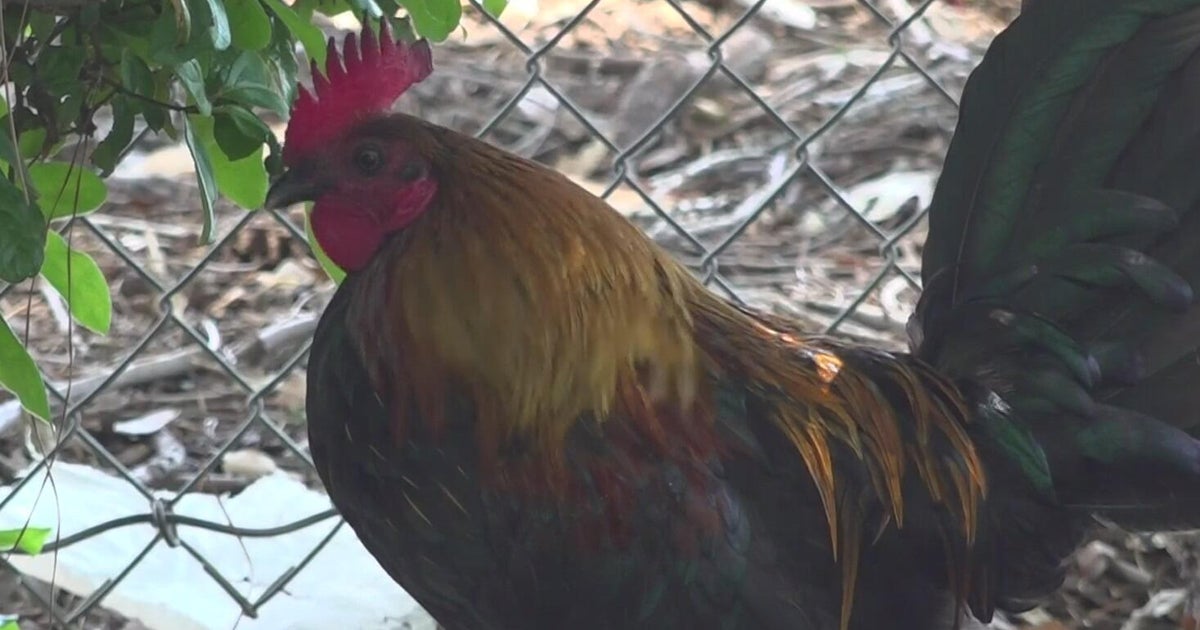
Chickens are a common sight in the Yuba-Sutter region — wandering neighborhoods, perching in trees, and sometimes causing a little trouble. But some have a much bigger job.
During this time of year, the Sutter-Yuba Mosquito and Vector Control District uses them to test areas of the region for West Nile virus.
"They all sound completely different and have very different personalities," said Moriah Garrison, an entomologist with the control district.
From April through November, Garrison is chasing chickens to test their blood. She teams up with Zach Samay, an ecologist, to get the task done.
"We do a quick alcohol swab, we take a sterile lancet and he'll poke to try to get a blood sample," Garrison said.
The control district partners with landowners and farmers. Farmers supply the chickens and there are seven coops strategically placed around the Yuba-Sutter area to test from.
"Usually, we will see chickens get infected before we see people, so this gives us an extra bit of knowledge to be extra vigilant. We need to tell the public to wear long sleeves, use repellent, stay indoors dusk to dawn," Garrison said.
The process allows the control district to know which areas to focus on. After the rainbow-colored samples are collected, the chickens go back into the coop for the night.
"Then Zach will package up everything and send off the samples. In about a week, we'll find out if any of them have tested positive," Garrison said.
So far, so good this season, but Garrison said they don't usually start seeing positive samples come in until July.
Once the chickens retire for the season, they go to good homes.
"There are a few of them I can identify by just the sound of their voice," Garrison said.
After last year's chicken program ended, Garrison took home three of them, who are now her pets.
"They're kind of doing an extra special little favor for us. They're our little working chickens. Not only do they lay eggs and pay rent that way, but they also make it so we can find West Nile in areas where we might not by just capturing mosquitoes and testing them," she said.
Mosquitoes that prefer feeding on birds are also more likely to carry West Nile virus. So if they're biting these chickens, it's a sign the virus could be circulating in the area.
Between 2003 and 2021, there were 74 cases across Yuba-Sutter.
"It's kind of a debilitating disease. Some people, when they get it, are asymptomatic. But for some people, it can be fatal. So I love having a part in making sure more people don't get infected," Garrison said.
Hence then, the article about how yuba sutter chickens serve on front line against west nile virus was published today ( ) and is available on CBS sacramento ( Middle East ) The editorial team at PressBee has edited and verified it, and it may have been modified, fully republished, or quoted. You can read and follow the updates of this news or article from its original source.
Read More Details
Finally We wish PressBee provided you with enough information of ( How Yuba-Sutter chickens serve on front line against West Nile virus )


Also on site :
- EU open to reversing Brexit after Burnham speech – but at a price
- Six Flags Magic Mountain Permanently Closes World-Famous X2 Roller Coaster Following Mounting Safety Concerns
- Jimmy Fallon Just Dropped a Brutal Title for Karoline Leavitt’s Hypothetical Memoir, and the Internet Is Having a Field Day