
The Gulf’s private credit market remains at a nascent stage of development, relative to global peers, but a confluence of structural forces is accelerating its growth.
Governments across the GCC (Gulf Cooperation Council) are implementing ambitious economic diversification strategies—including Saudi Arabia’s Vision 2030, UAE 2031, and the Dubai Economic Agenda (D33)—with increased privatization and supporting the expansion of local SMEs being central to much of this growth.
With GCC banks typically prioritizing lending to large corporates and government-related entities, SMEs currently account for less than 10% of total bank lending in the GCC, which has led to a substantial credit gap estimated at approximately $250 billion—a gap that global private credit is seeking to close.
Partners for Growth is a prime example. Headquartered in San Francisco, with an office in Dubai, the firm specializes in providing custom debt solutions for high-growth companies and was one of the early entrants on the scene when it provided its first funding to a Gulf entity back in 2020.
Since then, it has deployed around $450 million in commitments into the Gulf—predominantly across Saudi Arabia and the UAE—helping to scale some of the region’s most prominent technology companies, including Saudi fintech unicorn Tabby, Trukker, Bayzat, Syarah, Huspy, and Silkhaus.
PFG provided $10 million in funding to Tabby after its seed round and played a key role in its subsequent meteoric growth; it continues to be a lender to it today.
“Our focus is on lending to emerging tech and innovation companies,” Armineh Baghoomian, managing director of Partners for Growth, told Fortune.
“Many companies we lend to have been around for maybe a year or two. Most banks are still trying to get their heads around lending against very few years of financial history and little to no profitability. So that opens up a whole window of opportunity—that’s predominantly what we look at.”
The firm’s specialty is providing highly structured facilities to asset-heavy businesses, with most of the deals that PFG has worked on in the region being sharia-compliant.
“The birth to death of a transaction has been tested under sharia-structured instruments,” said Baghoomian. “The entrepreneurs tend to like and request them. A lot of investors request them as well.”
To date, PFG has partnered with entities such as Dubai International Financial Centre (DIFC); as well as Saudi Venture Capital; Sukna Capital, which offers sharia-compliant financing and investment solutions to support SMEs; and Jada, an investment vehicle created by Saudi sovereign wealth fund PIF.
“The Gulf is one of the few places where you see national agendas that are pushing economic diversification from a centralized source of revenue,” said Baghoomian.
“And so that’s really the driver of a number of very strong innovation ecosystems in each country. There’s a lot of international institutional capital that’s now come in as well because the fundamentals are sound.”
Global private credit firms enter the field
In April, PIF announced it would anchor a new private credit fund managed by King Street Capital Management, which will provide capital to corporates and conduct asset-based lending across the region.
King Street, a leading global alternative asset manager that manages $30 billion in assets, has been expanding its regional presence in recent years as it seeks to capitalize on new investment opportunities.
“We believe the regional private credit market will need to grow by at least 15% to 30% annually over the next five years to finance economic development in Saudi Arabia and the MENA [Middle East and North Africa] region,” said Brian Higgins, founder and managing partner of King Street at the time of the announcement, adding that it is currently in the process of opening an office in Riyadh.
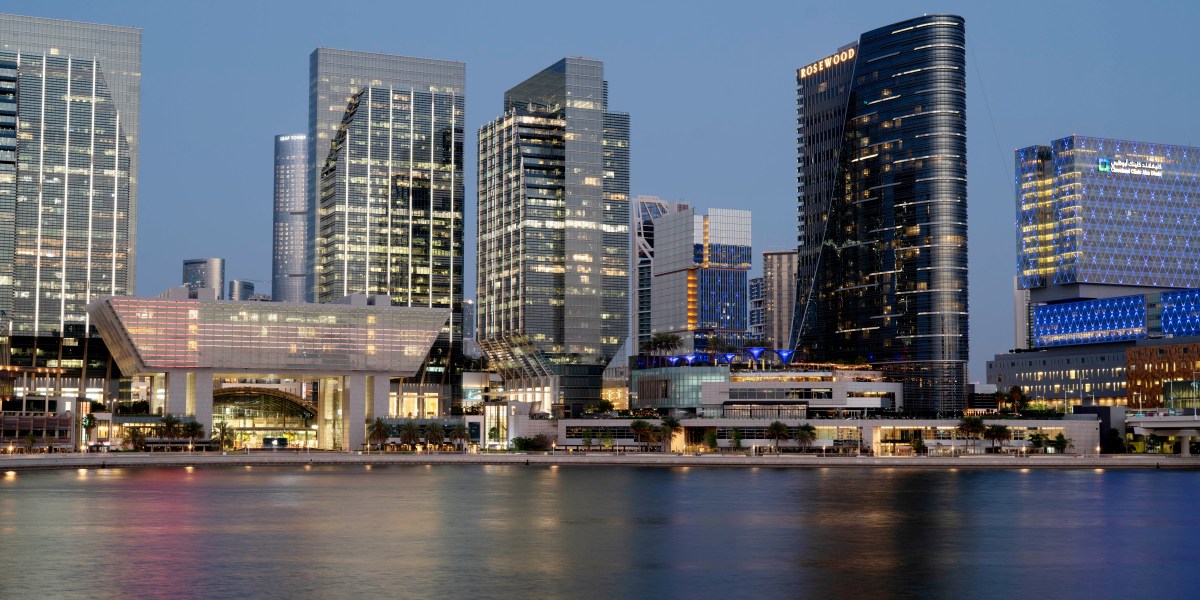
Last week, Blue Owl Capital expanded its Middle East footprint with the launch of a new regional headquarters in Abu Dhabi Global Market (ADGM)—the emirate’s international financial center. The firm already has an office in Dubai.
Haitham Abdulkarim, managing director of Blue Owl’s Abu Dhabi office, told Fortune: “Over the last decade, the Middle East has emerged as both a strategic global market and a sophisticated investor across asset classes, particularly alternatives.
“We continue to see strong interest in areas such as digital infrastructure, private credit, asset-backed finance, real assets, and General Partner strategic capital.”
Housing teams from the firm’s Institutional Capital and General Partner (GP) Stakes divisions, the opening marks Blue Owl’s seventh office in the EMEA region and its 23rd globally.
Blue Owl has been steadily stepping up its investment activity in the Gulf. Last September, it partnered with the Qatari sovereign wealth fund, the Qatar Investment Authority, to launch a $3 billion digital infrastructure platform designed to accelerate computational capacity for hyperscalers.
Large global asset managers that partner with sovereign funds have historically focused on raising capital regionally; while local transactions may previously have been too small for their mandate, this is now changing.
However, Baghoomian said that it is not uncommon that a sovereign fund will require them to redeploy into the local ecosystem. “For every dollar you raise from sovereign funds, certainly development-oriented ones, you should expect that there may be a requirement to reinvest in the local ecosystem,” she said.
Impact of the Iran war
While PFG initially saw a slowdown in business owing to the Iran war, Baghoomian said it has since seen a pickup as a result of other lenders feeling the strain and has signed two new term sheets over the past few months.
“We’re still looking at deals and doing deals, but a situation like this really tests the capital providers in the region,” she said.
“Some funds have paused lending while we’ve heard of others that have said they’re going to pull out.”
At approximately $5 billion, the size of the Gulf’s private credit market remains modest compared with that of the U.S., which is estimated at $1.3 trillion to $1.6 trillion in assets under management, representing roughly three-quarters of the global market.
However, a PwC study published last year noted how the market is becoming increasingly sophisticated and is transitioning toward more specialized and targeted product offerings such as distressed debt.
“We’re seeing a lot of products being developed and launched and issued here that you would not have seen even a year ago,” said Baghoomian.
“There’s more NAV [net asset value] financing, and we’re definitely seeing some distressed deals get done, as well as some general partner financing being done. So the pace of development is picking up now, and we’re seeing structures that you might see in the U.S. and Europe become available here.”
This story was originally featured on Fortune.com
Hence then, the article about gulf private credit opportunities shine amid global volatility was published today ( ) and is available on Fortune ( Middle East ) The editorial team at PressBee has edited and verified it, and it may have been modified, fully republished, or quoted. You can read and follow the updates of this news or article from its original source.
Read More Details
Finally We wish PressBee provided you with enough information of ( Gulf private credit opportunities shine amid global volatility )


Also on site :
- Israel ‘stealing’ UN property – Palestinian-American journalist (VIDEO)
- Louis Partridge & Anson Boon Set For British Coming-Of-Age Film ‘Andy & Orson’; MetFilm Launches Sales For TIFF Market
- Online Gaming Drives the Search for a Missing Roommate in Dong Jie’s Venice Critics’ Week Debut ‘Zoom In, Zoom Out,’ Clip Unveiled (EXCLUSIVE)