
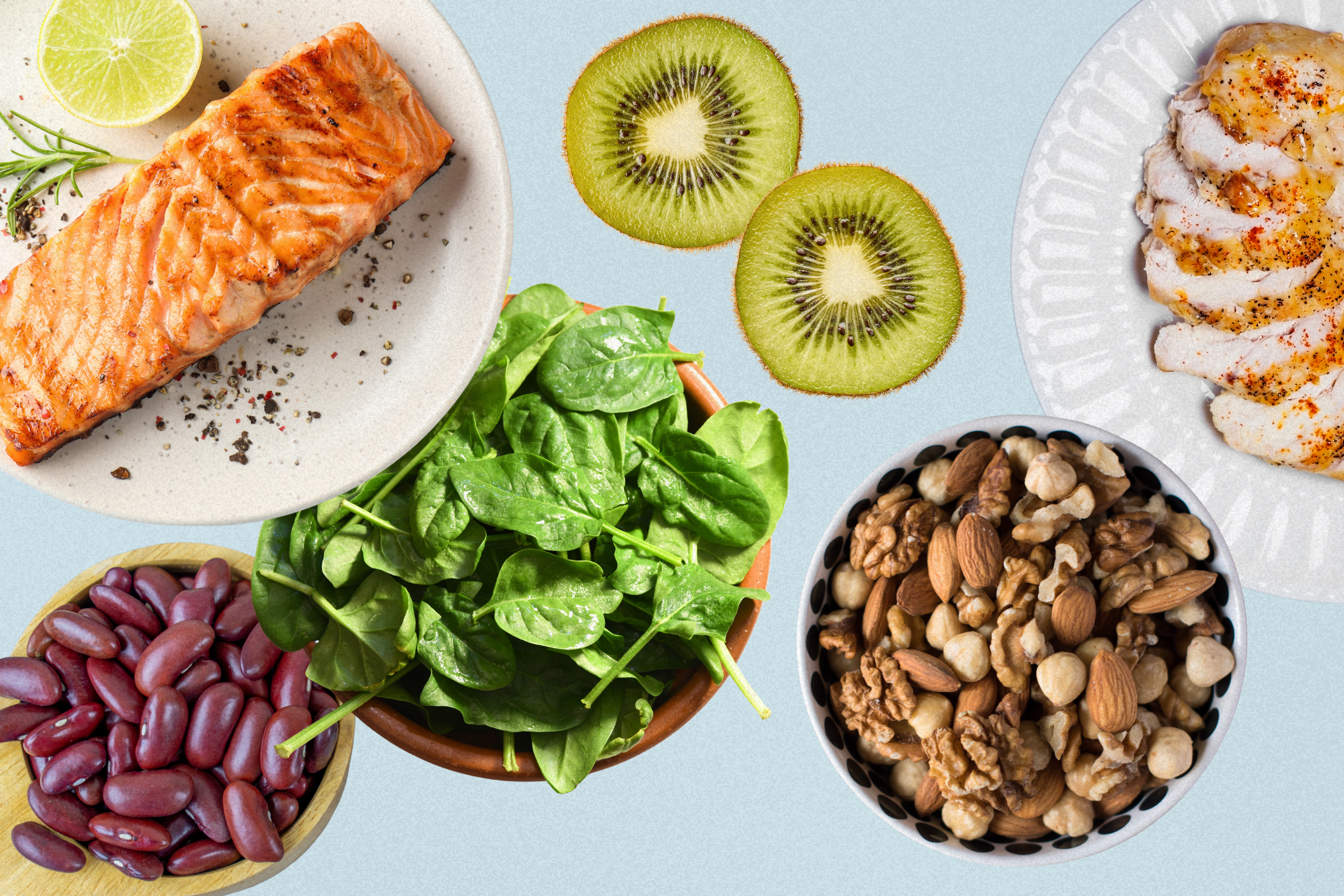
There are plenty of ways to keep your brain sharp as you age, from staying socially engaged to getting enough sleep. Research increasingly shows that what you choose to put on your plate can also help strengthen memory and slow cognitive decline.
Many of the best foods for a healthy brain are featured in the MIND diet, which is “like if the Mediterranean and DASH diets had a baby,” says Liz Weinandy, a registered dietitian and instructor of practice in dietetics and nutrition at the Ohio State University. “It’s taking the best parts of both sides, and both sides are super healthy.”
The MIND diet (short for Mediterranean-DASH Diet Intervention for Neurodegenerative Delay) was introduced in 2015 when researchers from Rush University Medical Center and the Harvard T.H. Chan School of Public Health published two papers exploring whether this style of eating could slow the onset of dementia. Their findings suggested that a diet which limits saturated fat and emphasizes foods such as vegetables, whole grains, nuts, beans, fish, berries, lean proteins, and olive oil was associated with slower rates of cognitive decline.
These foods offer a number of protective benefits when it comes to the long-term health of your brain, says Lauren Ptomey, a registered dietitian and associate professor in the department of internal medicine at the University of Kansas Medical Center. That includes helping reduce inflammation and oxidative stress, as well as providing brain-boosting omega-3 and omega-6 fatty acids. “Those are going to be some of the key things we're looking for” to support brain health, she says.
These six foods are especially beneficial when it comes to preventing cognitive decline—plus a few foods to limit for a healthy brain.
Such as: Kale, spinach, Swiss chard, arugula, collard greens
How often: At least six servings a week, according to the MIND diet
When choosing foods to support your brain, leafy greens like kale and spinach “have the most research behind them [and] are shown to be the most powerful,” says Jennifer Ventrelle, a registered dietitian and assistant professor in the departments of family and preventive medicine and clinical nutrition at RUSH University.
In one 2018 study, people who reported eating lots of leafy greens—a little more than a serving per day—had slower cognitive decline than people who rarely ate it. “The difference was equal to having a brain function that was 11 years younger, so it was a huge impact,” says Julia Zumpano, a registered dietitian at the Cleveland Clinic’s Center for Human Nutrition.
Leafy greens are packed with vitamin K, folate, and lutein, which play an important role in the health of your brain, adds Zumpano. Other research, such as a 2021 systematic review, linked diets higher in lutein with improved brain function and structure in older adults.
Research also increasingly suggests that a healthy gut microbiome supports a healthy brain; imbalances in the gut microbiome or certain pro-inflammatory bacteria have been linked to cognitive impairments and depression and anxiety. To support a healthy gut, “the most important component, we think, is the fiber,” says Ventrelle, and eating a variety of vegetables, including leafy greens, is an excellent way to keep up your fiber intake.
When choosing greens, “the darker the better,” says Ventrelle. Iceberg and romaine lettuces do offer some benefits, but “kale, spinach, arugula—the deep, dark leafy greens—are going to be the best,” she says. These darker-hued greens are a richer source of brain-supporting nutrients.
Berries
Such as: Blueberries, raspberries, blackberries, and strawberries
How often: At least two servings a week, according to the MIND diet
All types of fruit are good for you, but berries seem to be particularly supportive for your brain as it ages. “The flavonoids are going to be the reason for that,” says Ventrelle.
Flavonoids, plant-based compounds found in a variety of fruits and vegetables, have been linked to a number of mind-health benefits. Researchers measured the cognitive function of more than 2,000 people in one 2020 study and observed that those who consumed more flavonoids were 40% less likely to have developed dementia, compared to those who ate the least.
Anthocyanins are one type of flavonoid found in berries and are responsible for those deep red, purple, and blue pigments. “They have been shown to help protect and improve brain function,” says Zumpano. A large 2012 study of more than 16,000 nurses found that those who consumed more blueberries and strawberries experienced slower cognitive aging by up to two and a half years compared to those who rarely ate them. The researchers observed that higher anthocyanidin intakes seemed to support this slower cognitive decline.
Such as: Salmon, tuna, mackerel, sardines, herring
How often: At least one serving a week, according to the MIND diet
Omega-3 fatty acids are “so important” for your brain, says Weinandy. These polyunsaturated fatty acids, which are found in certain fish and plant oils, play a critical role in maintaining the structure of membranes around cells in the brain. “Our brain cells need an extra large amount of that fat to make those membranes,” she explains, and healthy fatty acids in your diet can support this process.
Fatty fish like salmon, tuna, and mackerel have some of the highest levels of omega-3 fatty acids in food. They also contain a type of omega-3s called docosahexaenoic acid, or DHA, which may be especially protective for brain health. Higher intake of omega-3 fatty acids through diet was linked to a lower risk of dementia and cognitive decline in a 2023 systematic review, with some of the strongest protective effects coming from DHA intake.
Less-fatty seafood varieties, such as shellfish and cod, contain lower levels of omega-3 fatty acids but can still be beneficial. Some research has suggested that “all fish and seafood, even the ones that aren't super rich in omega-3 fatty acids, were associated with brain health benefits,” says Ventrelle.
Nuts and seeds
Such as: Walnuts, ground flax seeds, chia seeds, hemp seeds, pumpkin seeds
How often: At least five servings a week, according to the MIND diet
DHAs are one of three types of omega-3 fatty acids. If you don’t like seafood or can’t commit to eating fatty fish on a regular basis, “there are great ways to get a plant-based omega-3 called alpha-linolenic acid into your diet,” says Zumpano. Nuts and seeds such as walnuts, flax seeds, and chia seeds are rich sources of these ALAs.
Studies on walnuts suggest they may be particularly good at supporting the health of your brain and reducing cognitive decline, possibly by helping to minimize inflammation and oxidative stress. Researchers from the University of Reading in the U.K. found that participants in a 2025 study who ate walnuts as part of their breakfast had faster reaction times and better memory performance later in the day compared to those who had muesli and yogurt for breakfast.
The MIND diet suggests five servings of nuts a week, but “I would encourage one source of these [ALAs] every day,” says Zumpano.
How often: Use it as your main cooking fat, according to the MIND diet
“One of the foods on the MIND diet that seems to be really beneficial is olive oil,” says Ventrelle. Olive oil contains a number of monounsaturated and polyunsaturated fatty acids, other types of healthy fats, as well as vitamin E, she says. And extra-virgin olive oil, in particular, has “very powerful” antioxidants called oleocanthal that are anti-inflammatory, adds Zumpano.
Research has linked olive oil intake to better cognitive performance and lower dementia risk. People who consumed at least 7 grams a day of olive oil showed a 28% lower risk of dementia-related death over 28 years in a large 2024 study.
Ideally, olive oil would be your main fat when cooking, according to the MIND diet. “I do recommend if you are going to do a higher-heat cooking, you use more of a refined olive oil” or avocado oil, says Zumpano. But for other uses, extra virgin olive oil “is going to be your best choice,” she says.
Eggs
How often: About six a week if you have normal cholesterol levels, says Zumpano
The early MIND diet studies “didn't show an association positively or negatively for eggs, so we used to just say, you know, eggs are great protein, eat eggs as a part of a whole healthy diet, but they may not necessarily be brain healthy,” says Ventrelle. But more recent research has found that eggs may offer a number of brain benefits, she says, such as lowering the risk of Alzheimer's dementia and improving memory. A 2024 study found that eating at least two eggs a week was associated with a decreased risk of dementia.
“The thought is that the component that is so beneficial is the choline contained with them,” says Ventrelle. And like fatty fish, eggs also have some DHA.
When eating eggs for a healthy brain, don’t skip the yolks. This yellow interior contains much of that choline along with vitamin D, says Zumpano. “Sometimes people are surprised by that because of the old weight-loss tips of just eating egg whites,” adds Ventrelle, but “you want to eat the yolk when it comes to brain health.”
If you have higher cholesterol levels, “you want to be just a little more cautious on how many yolks you're eating in a week, but that doesn't mean you have to avoid or limit them,” says Zumpano.
Foods to limit for brain health
Other foods have been associated with poorer cognitive outcomes. This includes foods that are ultra-processed or contain lots of saturated fats, such as fried foods, red meat, cheese, butter, and sweets. The original MIND diet paper found that people who ate the highest levels of these kinds of foods had almost double the risk of dementia of those who ate the least, notes Ventrelle.
The good news, though, is that if you love a steak or side of fries, you don’t have to give them up entirely. In that same study, people who consumed these foods but “at moderate levels still had healthy brains,” says Ventrelle. “So essentially, the message is you don’t have to completely cut those foods out in order to live a brain-healthy lifestyle.”
Hence then, the article about the 6 best foods for brain health was published today ( ) and is available on Time ( Middle East ) The editorial team at PressBee has edited and verified it, and it may have been modified, fully republished, or quoted. You can read and follow the updates of this news or article from its original source.
Read More Details
Finally We wish PressBee provided you with enough information of ( The 6 Best Foods for Brain Health )


Also on site :
- Hayley Williams Brings Jenny Lewis, Jack Antonoff & More Surprise Guests to the Stage at Newport Folk Fest
- ‘Avengers: Doomsday’ Trailer Rocks Comic-Con: Doctor Doom Raises Army of Sentinels to Take Down Avengers, Fantastic Four and X-Men
- California restringe los cortes de servicios públicos mientras una ola de calor peligrosa se extiende por el estado