
On June 20, 75 years ago, the United Nations adopted the Refugee Convention. Every year, we honor that occasion by celebrating World Refugee Day. This year, the Convention’s diamond anniversary may be marred by dire consequences for people seeking refuge. The United States Supreme Court is poised to rule on a case that could slam the door shut on asylum seekers who are lawfully seeking refuge at U.S. ports of entry, undermining our own laws and treaty obligations toward refugees.
It is bad enough that we have to contend with President Donald Trump’s extreme hostility to immigrants and refugees. This contrasts starkly with the views and actions of other U.S. presidents starting with George Washington, who asserted that “the bosom of America is open to receive not only the Opulent and the respectable stranger, but the oppressed and persecuted of all Nations and Religions."
Indeed, while other presidents have issued proclamations celebrating World Refugee Day, Trump has attacked refugees relentlessly, gutting humanitarian relief, accelerating deportations of people seeking asylum, and moving to admit only White Afrikaners as refugees. Through these actions, Trump shows utter disdain for the Refugee Convention and for the Refugee Act of 1980, which created the first comprehensive statutory framework for the admission and resettlement of refugees to and in the U.S., with no place for bigotry or racism.
The government’s arguments in the Supreme Court case of Mullin v. Al Otro Lado are based on the Trump administration’s warped and improper claim that our laws empower it to turn away those seeking asylum right before they reach our borders. This is a distortion of the law, and a display of callous indifference to the tragedies that moved Congress to pass the Refugee Act.
On June 6, 1939, the St. Louis, a ship filled with 907 Jewish refugees fleeing Nazi Germany, came to our shores. Although it was within U.S. territorial waters, just five miles off the Florida coast, with the lights of America visible from the ship, the St. Louis was denied entry. Coast guard vessels surrounded the boat to ensure that no one tried to swim ashore. The St. Louis was forced to turn back to Europe, where 254 of its passengers perished in the Holocaust.
The plight of the passengers aboard the St. Louis has haunted, and should continue to haunt, U.S. refugee policy. Many Americans have vowed never to allow another St. Louis to happen again. Indeed, it was against the background of World War II and the St. Louis catastrophe that the U.S. signed onto the 1967 Protocol to the Refugee Convention, barring the U.S. from expelling or returning “a refugee in any manner whatsoever to the frontiers or territories where his life of freedom would be threatened on account of his race, religion, nationality, membership of a particular social group or political opinion.”
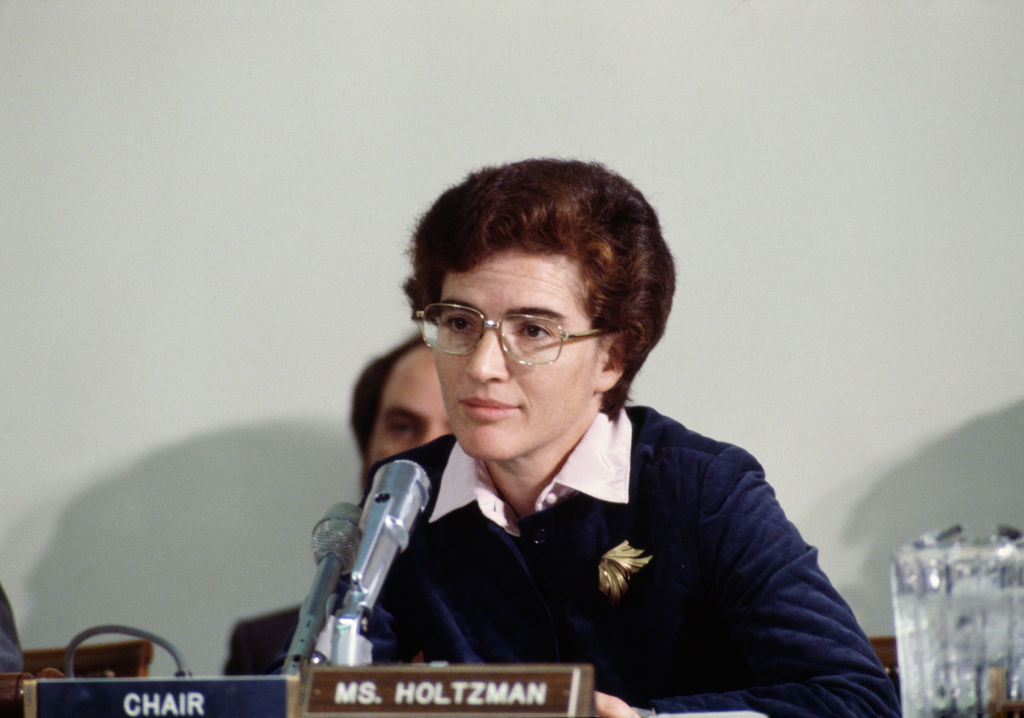
As I worked with others to author the Refugee Act of 1980, the memory of the St. Louis nagged at me. That is why I am particularly troubled by the prospect that the Supreme Court may, this very month, rubber-stamp the government’s misinterpretation of our laws governing asylum and legitimize turning away asylum seekers like those aboard the St. Louis.
The issue should be a no-brainer for the Supreme Court. The plain language of the 1980 refugee law prohibits turning away asylum seekers at our borders without first determining whether they have a valid asylum claim.
The 1980 act derived not just from the experience of World War II and the St. Louis, but also from events in Southeast Asia. The fall of Saigon in 1975 triggered a massive exodus of refugees from Vietnam, Laos, and Cambodia. Many were fleeing persecution in Laos and Vietnam because of their association with or support for the U.S. during the Vietnam War; others were fleeing Vietnam’s ethnic cleansing of its Chinese citizens. Still others were escaping the horrors of the Pol Pot regime in Cambodia.
Desperate refugees risked their lives on small, unseaworthy vessels, hoping to reach the shores of neighboring Indonesia, Malaysia, Thailand, or Hong Kong. Tens of thousands drowned, while others were raped, robbed, and murdered by pirates, finding vulnerable prey. I saw these tragedies unfold with my own eyes, as I slogged through refugee camps in Southeast Asia.
To encourage countries in the region not to condemn refugees from Southeast Asia to the same fate as the passengers of the St. Louis, we knew the United States had to act boldly and decisively. Congress did so by adopting the Refugee Act of 1980, to ensure the U.S. would relieve pressure on countries of first asylum by vetting and resettling a significant number of these refugees to the United States. In addition, as the United States was urging the countries of Southeast Asia and elsewhere to provide asylum to these refugees, we in Congress decided to lead by example and establish a U.S. asylum system as well, codifying U.S obligations under the Refugee Convention.
The Refugee Act of 1980 was not politically controversial. The Senate passed the bill unanimously, and it received strong bipartisan support in the House as well.
One reason the Refugee Act was so popular: the language in the bill on asylum was simple and clear: “The Attorney General shall establish a procedure for an alien physically present in the United States or at a land border or port of entry, irrespective of such alien's status, to apply for asylum,” it reads.
During oral arguments at the Supreme Court on March 24, however, a number of Justices became fixated on subsequent additional statutory language referring to any asylum seeker “who arrives in the United States.” They asked, over and over again, whether the words “in the United States” mean that U.S. officials can physically push back asylum seekers a few steps short of the border line, and then argue they have no rights as they are not yet “in the United States.”
But there is a clear answer to this line of questioning. In fact, the Refugee Act itself provides the context that puts this absurd debate to rest: “The Attorney General shall establish a procedure for an alien physically present in the United States or at a land border or port of entry, irrespective of such alien's status, to apply for asylum.”
The Congress in which I served, in legislation which I co-authored, intended to give asylum seekers who encounter a U.S. official at the border the opportunity to exercise their right to seek asylum. It’s that simple.
The Supreme Court should not distort our laws. Lives are at stake, as are American values and the rule of law.
Hence then, the article about i helped write the refugee act trump is trampling it was published today ( ) and is available on Time ( Middle East ) The editorial team at PressBee has edited and verified it, and it may have been modified, fully republished, or quoted. You can read and follow the updates of this news or article from its original source.
Read More Details
Finally We wish PressBee provided you with enough information of ( I Helped Write the Refugee Act. Trump is Trampling It )


Also on site :
- Zara Larsson Talks Macklemore Speaking Out, Her Workout Routine & Viral Concert Moments .. Billboard News Interview
- Paranormal Comedy ‘Don’t F — k With Ghosts’ Premieres On Demand, Launches Original YouTube Channel (EXCLUSIVE)
- INVESTOR ALERT: Pomerantz Law Firm Investigates Claims On Behalf of Investors of NuScale Power Corporation - SMR