
Nearly two decades ago, while working as a researcher at the University of Derby in England, Miles Richardson started taking daily walks to recover from long days behind a desk. Around the same time, he got his first iPhone and began using it to jot down notes about everything he noticed on those outings—from birdsong and budding flowers to shifts in the weather and changing seasons. After his first year, he had amassed some 50,000 words of observations.
“That had quite a profound impact,” Richardson says. “It changed my relationship with nature.”
He kept up the practice for another year, eventually compiling 100,000 words’ worth of notes. The experience convinced him that intentionally noticing nature could boost well-being and deepen people’s relationship with the natural world. It also inspired a new career path. “I quite literally wandered into it,” he says.
Richardson went on to create the Nature Connectedness Research Group at the University of Derby in 2013 and became one of the world’s leading researchers on nature connectedness—the idea that feeling emotionally tied to nature is distinct from simply spending time outdoors. His research suggests that connection doesn’t mean you have to log hours every day roaming among towering redwoods, misty peaks, and roaring waterfalls; it’s less about how long you spend outside than what you do while you’re there. The key is actually noticing your surroundings, he says, whether you’re in a corn field or at the corner of a city street.
You don’t need to go on a 10-mile hike or sign up for a wilderness retreat to tap into nature’s many benefits. A 2025 meta-analysis in Nature Cities found that spending just 15 minutes outside, even in a city, is enough to make a meaningful difference.
“Nature disconnects you from the things you’ve been stressing about and puts you in the present moment,” says study co-author Anne Guerry, co-executive director of the Natural Capital Alliance at Stanford University. Her team evaluated 78 experimental studies including some 6,000 people. “That’s not just looking at associations, but actually doing experiments”—stronger evidence than the usual research linking leafy neighborhoods to better moods.
Among the study’s findings: Exposure to urban nature reliably brought down anxiety, depression, stress, anger, and fatigue, while increasing vitality, vigor, positive mood, and restorative effect. While longer sessions outside (45 minutes and more) produced the biggest gains in stress reduction and vitality, shorter exposures still delivered real effects.
Read More: 6 Foods That Help You Get Better Sleep
Two findings surprised Guerry. The benefits were especially pronounced for young adults, roughly ages 19 to 25—the very group you might assume is too busy scrolling to notice a tree. Guerry suspects it may come down to their baseline state. “Young people are more anxious, more stressed, angrier,” she says, which could mean they simply have more to gain.
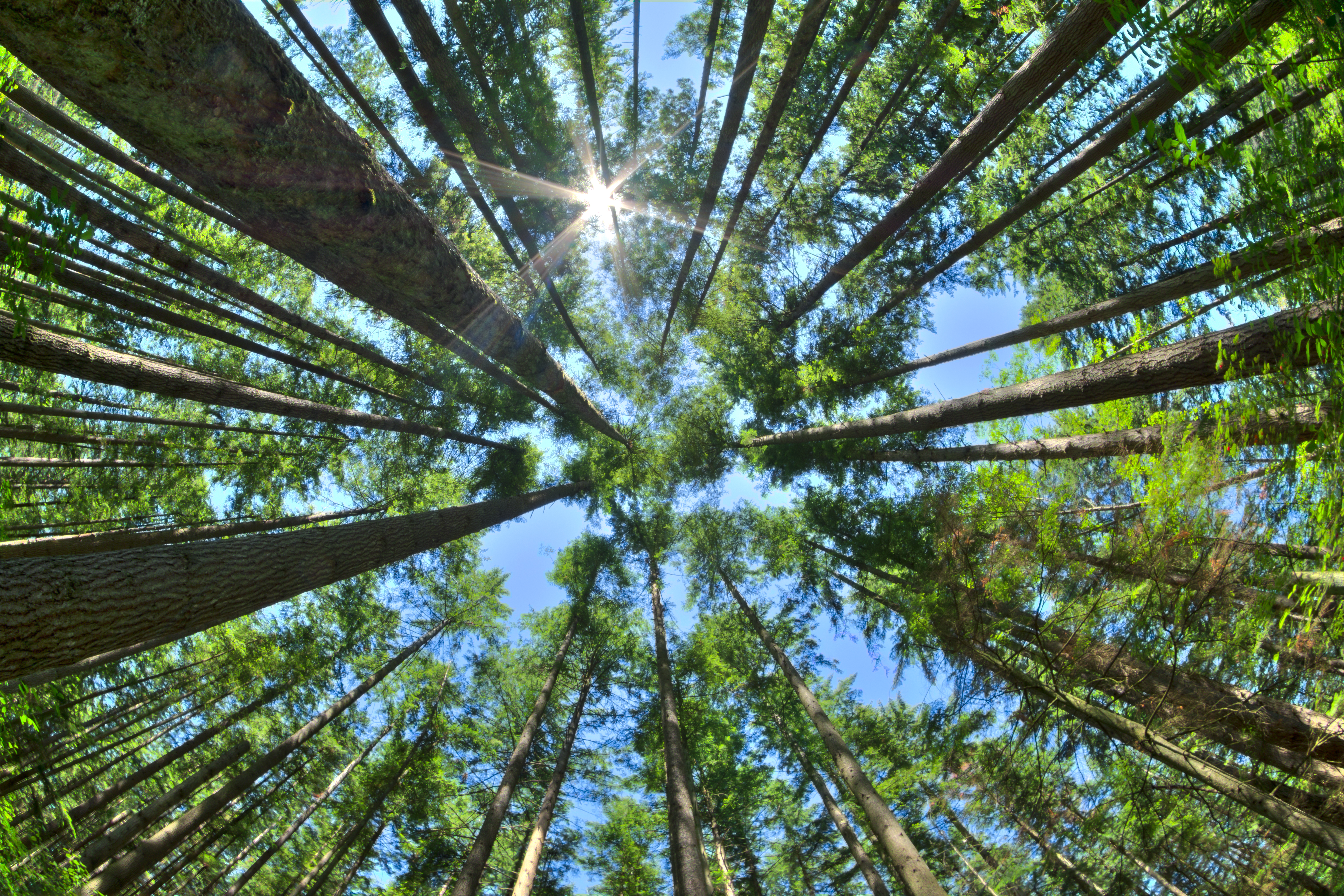
She was also surprised to find that of all the types of green space her team looked at—lakes, street trees, gardens, parks, farmland—urban forests, or densely wooded areas within cities, stood out. Guerry suspects that’s because they offer a deeper sense of escape. Forests are, in many ways, “the absence of other things,” she says, including noise, pollution, and reminders of everyday stress.
So why does even a short stint work? One leading explanation is attention restoration theory: Nature pulls your focus away from the mental loop of whatever you’ve been stressing about and parks you in the present. That shift can happen fast. “Pay attention to the nature around you,” Guerry says. “That’s going to be the best medicine.”
Being present outdoors matters more than how long you stay
Richardson’s research suggests that how you spend your time in nature counts far more than how much of it you have. A short, attentive encounter can do more than a long, distracted one. “It’s what you do rather than how long you do it for,” he says.
The reason, Richardson argues, is that simply being near nature isn't the same as feeling connected to it. You can stand in a forest for an hour and feel nothing; you can also catch the light through a single street tree and feel your shoulders drop.
That’s the thinking behind Richardson’s “Three Good Things in Nature” intervention. Each day, write down three good things you notice in the natural world: a bird singing, the breeze rippling through the trees, the smell of cream-white gardenias. His research has found that people who do this exercise daily for a week see improvements in how connected they feel to nature, their mental well-being, and mental health (for those with diagnosed conditions). The effects don’t evaporate when the week ends, either; they’re sustained for a month. “It’s good for nature and good for you,” he says.
Of course, these minutes outside count most if you're consciously present for them. That's why clicking through Instagram under a tree doesn't quite cut it. As Guerry puts it, you're far more likely to reap the benefits "if you're actually attending to the nature around you, as opposed to scrolling on your phone." So get outside, yes—but then actually look around.
How to spend your 15 minutes outdoors
There are five pathways that can deepen your bond with nature while improving your mental well-being, Richardson says. The first is engaging with the natural world through your senses: listening to, smelling, and touching what you encounter. “What we find is that most people don’t listen to birdsong,” he says. “That’s a simple but important thing to do.”
Then there’s the emotional pathway: Marveling in wonder at the size of the tree outside your window, or basking in awe at the fact that birds can sail through the sky so elegantly. “Give yourself a moment to feel joy and calm or excitement—and remind yourself that you’re out in nature to feel those things,” Richardson advises. “We’ve become so familiar with the natural world—the size of a tree becomes very mundane—so it makes a difference when you remind yourself to be amazed.”
Read More: The Best Science-Backed Way to Wash Your Hair
Appreciating the beauty of the natural world matters, too. You can do so through photography or art, Richardson suggests, or simply by pausing to take in a sunset. The catch is that your phone has to serve your observation rather than replace it—snapping a photo can sharpen your attention and memory of the moment later on, but be intentional about focusing on the sky and not your screen.
Perhaps the most profound pathway is meaning: reflecting on what nature stirs in you and why. Humans have been at this for centuries, Richardson notes, through poetry and art devoted to the natural world. You might do it by journaling or even writing a poem of your own.
And finally, there’s compassion—doing good for nature, not just soaking it up. That could mean wildlife gardening, making your backyard a little friendlier to birds and insects, or volunteering somewhere you can pitch in.
None of this demands a grand gesture. You don’t need a national park or a free weekend—just somewhere to look. Many people, Guerry points out, have green space within a 10-minute walk of home, and even a single tree outside a window counts. “Our brains are wired to appreciate nature,” she says. “Seeing a tree, even if it’s from the window of your apartment building, is good for your brain.”
If all of this sounds like remembering something you already knew, that’s the point. Richardson sees it most clearly in small children: If you take a 2-year-old to the park, they’ll likely stop to examine every bug and pebble, filled with genuine delight at their discoveries. Somewhere along the way, most of us lose that reflex—and the world isn't exactly helping. Companies spend billions designing devices to capture our attention, Richardson notes, while nature can make no such effort.
“Nature doesn’t have an advertising agency, and it doesn’t have a marketing team,” he says—which means the noticing is up to us.
Hence then, the article about how to get the biggest mental health boost from 15 minutes outdoors was published today ( ) and is available on Time ( Middle East ) The editorial team at PressBee has edited and verified it, and it may have been modified, fully republished, or quoted. You can read and follow the updates of this news or article from its original source.
Read More Details
Finally We wish PressBee provided you with enough information of ( How to Get the Biggest Mental-Health Boost from 15 Minutes Outdoors )


Also on site :
- Sports Legend Roger Craig, Who Made NFL History, Reveals Dementia Diagnosis: 'This Doesn't Define Me'
- Hang Elon Musk Around Susan Collins’s Neck
- This nuclear startup and Halliburton repurposed oil-drilling tech in a bid to solve America’s radioactive waste problem