
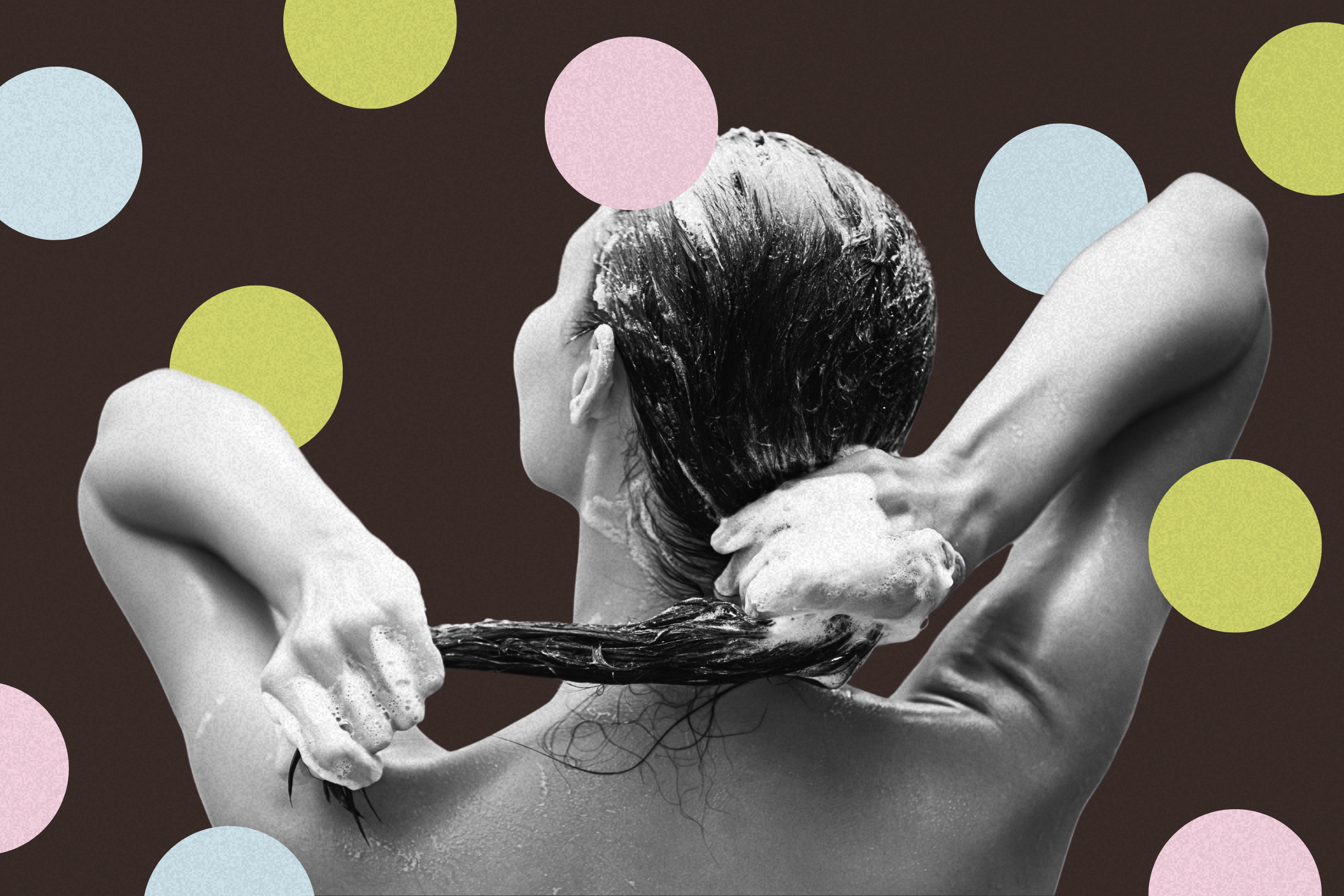
Washing your hair is a crucial part of any grooming routine. But since everyone’s hair is different, there’s no one-size-fits-all hair-washing rule. Some people use shampoo and conditioner daily, while others prefer to lather up a couple of times a week. Is one strategy better than the other?
Having healthy hair—strands that feel well-hydrated and don’t break easily—“is really a reflection of both the scalp environment and the hair shaft integrity,” says Dr. Kseniya Kobets, director of cosmetic dermatology at Montefiore Einstein Advanced Care in Elmsford, New York. Your scalp shouldn’t be itchy, red, flaky, extra oily, or feel dry or painful, Kobets says. “I always tell patients: if your scalp is calm and balanced, your hair is much more likely to behave.”
Here’s what to know about the best way to wash your hair, including the importance of scalp health, how often to shampoo, and other tips.
“The ideal interval between hair washing actually has to do with your scalp more than your hair,” says Dr. Carolyn Goh, a dermatologist at UCLA Health, who specializes in hair loss and scalp disorders. “The reason to go longer between hair washings has to do with the hair and how dry it can get from frequent washings.”
The oils from your scalp “act as a natural moisturizer, keeping your hair and scalp from getting overly dry,” says cosmetic dermatologist Dr. Danny Guo, who’s based in Calgary, Canada. However, some people produce more oil than others, and excess oil can make your hair greasy and sometimes cause scalp irritation and inflammation.
Washing your hair removes oil, dead skin cells, hair products, and dirt—all of which can build up on your scalp—and prevents yeast overgrowth, which can cause dandruff, Kobets says.
Read More: 11 Signs You're the Problem in Your Friendships
The American Academy of Dermatology recommends washing your hair based on “how often it gets dirty or oily.” For most people, that usually means every two to four days, but it can mean daily for people with oily scalps or every week or two for those with dry or curly hair, Kobets adds.
This is because oil may more easily travel down the length of your strands when you have straight hair, but this may not happen with curly hair, sometimes making it drier and more prone to breakage, Goh adds.
“For the average person, washing your hair two to three times per week is ideal,” Guo says. Overwashing your hair may cause it to become dry and brittle or break easily, Goh says. And your scalp may feel tight, itchy, or irritated, says Kobets.
When you don’t wash your hair often enough, it’ll likely look and feel greasy and might smell bad, Guo says, and your scalp might be flaky and itchy.
“If you feel like you need to use some dry shampoo to soak up the oils on your hair, you probably need to just wash in the shower with actual shampoo,” Goh adds.
What type of shampoo and conditioner should you use?
This also depends on “what your scalp is telling you,” not hair type alone, Kobets says.
Shampoos labeled “clarifying” are recommended for oily hair and scalps, and hydrating, gentle shampoos that contain moisturizers like glycerin or ceramides are better if your scalp is dry, Guo says. Choose a dandruff shampoo containing ketoconazole, zinc pyrithione, or selenium sulfide if you’re prone to the scalp condition, says Kobets. Sulfate-free shampoos, which tend to be gentler and don’t strip away oils, work well for curlier or drier hair, Goh adds.
Guo recommends fragrance-free shampoos for people with sensitive skin, since these products are less likely to cause irritation. Shampoos containing silicones like dimethicone (often marketed as “anti-frizz” or “pro-shine”) or heavy oils or butters can contribute to buildup for people prone to folliculitis, which is hair follicle inflammation, Kobets says. High-sulfate products can be “too stripping” if used frequently, she adds.
Read More: Scientists Are Finding Out Just How Toxic Your Stuff Is
“It’s not that these ingredients are universally ‘bad,’” Kobets says. “It’s about matching the formula to your scalp tolerance.”
Most people benefit from using conditioner after shampooing, Goh says. It can help restore some of the natural oils that were stripped away after washing, she explains. It can also help improve the hair’s texture and appearance while detangling it, adds Guo.
The American Academy of Dermatology recommends applying conditioner only to the ends of your hair if it’s fine or straight, and to the entire length for those with curly or dry hair.
Tips for healthy hair washing
Once you’ve found your ideal shampoo and conditioner and settled on a hair-washing frequency, here are some other expert tips to keep your locks as healthy as possible:
People tend to use too much, Kobets says. She suggests using about a quarter-sized amount, which is usually enough to wash the scalp and roots of your hair.
Focus on the scalp
Apply shampoo to the hair’s roots, massage it into the scalp gently, and “let the lather cleanse the lengths as it rinses,” Kobets says. Then, completely rinse out the shampoo. Over-scrubbing can irritate the scalp and worsen conditions like eczema or dandruff, she adds.
Read More: Is It Bad to Use a Laptop Right on Your Lap?
How much you use depends on how much hair you have, Goh says. She suggests applying conditioner to the hair ends and shaft, but not the scalp unless it’s particularly dry. Rinse it out thoroughly.
Use lukewarm water
It’s best for the skin and hair, Guo says. Hot water can irritate the scalp by stripping oils and causing dryness.
Pay attention to your scalp
If you notice persistent rashes, pimples, redness, or itching, Goh suggests seeing a dermatologist.
Hair conditions can sometimes manifest as scalp problems, Guo adds. He suggests seeing a dermatologist if you have bald patches or sudden or worsening hair shedding.
A dermatologist will examine your scalp and may do blood work to check your thyroid, iron, and vitamin D levels, or a biopsy to test any red or flaky patches of skin, Kobets says.
Overall, healthy hair depends on a healthy scalp, she adds. “The biggest misconception is that it’s about how often you wash, when in reality, it’s about whether your routine and ingredients match your scalp and hair biology.”
Hence then, the article about the best science backed way to wash your hair was published today ( ) and is available on Time ( Middle East ) The editorial team at PressBee has edited and verified it, and it may have been modified, fully republished, or quoted. You can read and follow the updates of this news or article from its original source.
Read More Details
Finally We wish PressBee provided you with enough information of ( The Best Science-Backed Way to Wash Your Hair )


Also on site :
- 1,600-year-old skeleton found in a giant jar in Bulgaria may belong to Roman who hid there to escape enemy attack
- US strikes in Iran kill at least 12, wound dozens
- ‘The Runner’ Review: Gal Gadot Is a Mother on a Rescue Mission in an Energetic but Uninspired Amazon Thriller