
In a time when Middle Eastern crises are increasingly intertwined — from Gaza and Lebanon to the Red Sea, and from Sudan to the Horn of Africa — Somalia appears to be one of the region’s most complex and influential arenas for regional security and international navigation.
The country occupies an exceptionally sensitive geopolitical position at a strategic crossroads linking the Indian Ocean, the Arabian Gulf, the Gulf of Aden, and the Red Sea.
Despite its political and security fragility, Somalia remains a key player in maritime security dynamics and regional balances in both the Horn of Africa and the Middle East.
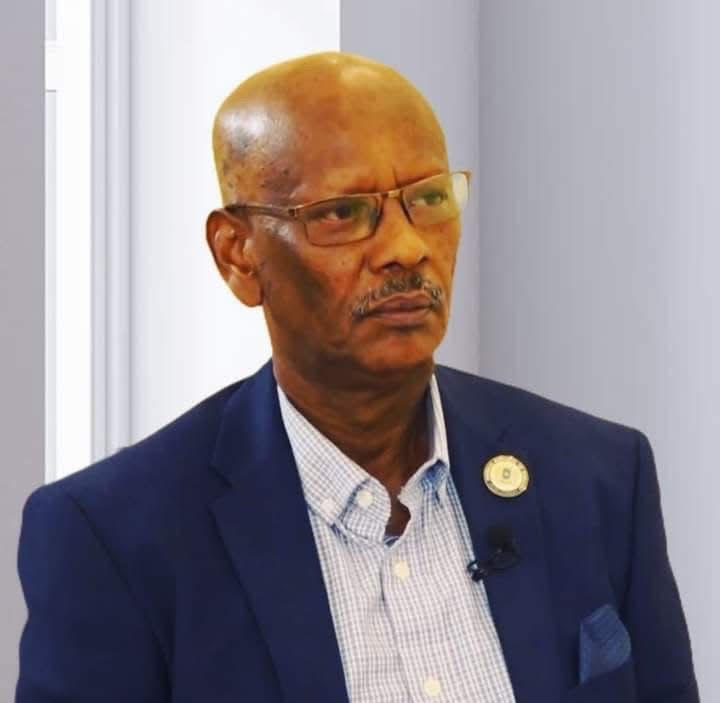
In this exclusive interview, the Former Somali Minister of Information and former presidential candidate Zakaria Mahmoud Haji offered an extensive assessment of the future of Somalia and the wider region, addressing the crises of the nation-state, the rise of competing power centers, threats of piracy, and the international rivalry over maritime corridors.
He also discussed the repercussions of what he called the genocidal war in Gaza, its expansion into southern Lebanon, the US-Israeli war on Iran, and how these developments are reshaping the balance of power in the Middle East.
Haji, who heads the Somali Re-Liberation Alliance, argued that Israel seeks to “strangle the Arabs by sea,” and warned that Arab divisions are enabling the advancement of Israel’s expansionist plans.
He also discussed the reasons behind the dysfunction of Somalia’s federal system, the future of Somali unity, and the limitations of the Arab role in confronting the transformations currently unfolding across the region.
How do you assess the state of the Middle East amid the dominance of power politics?
– The situation in the Middle East is highly complex and is the product of decades of accumulated historical crises. What is new today is that our region is undergoing profound geopolitical transformations whose final contours have yet to become clear.
Israel is strangling the Arabs by sea, while Arab divisions have enabled the expansion of its project.
We are witnessing wars and major geopolitical shifts, yet the Arab world does not appear to be benefiting from them. We need greater coordinated Arab action, and I hope Egypt will lead such efforts, drawing on its historic role at this critical stage, in order to restore balance to Arab affairs.
Israel has a well-known and openly declared expansionist strategy — “from the Nile to the Euphrates.” Today, Netanyahu and members of his government openly boast about this repeatedly.
Unless Arab states fundamentally change the way they politically and strategically confront the Israeli occupation, Israel will continue advancing toward its expansionist objectives.
Its military presence in the port of Berbera, at the mouth of the Red Sea, represents a dagger in the back of the entire region.
What are we waiting for? Israel is openly seeking to cut Egypt off from fresh water through its strategic ally Ethiopia, and now it is attempting to dominate saltwater routes and vital maritime corridors in order to isolate Egypt and the Gulf states through its presence in the separatist northwestern region of Somalia.
Israel believes it can dominate more than 450 million Arabs — and unfortunately, we are the ones who allowed it to think so.
What is the nature of America’s role in this equation?
– The US and Israel are holding our region hostage. Without American support, Israel would not have been able to do anything, including carrying out what has happened in Gaza and Lebanon.
If Arab countries were to reach consensus and adopt a unified strategy, we could compel the US to take its interests with us into consideration.
Israel will neither engage in genuine peace nor offer benefits to those rushing toward normalization. Rather, it absorbs the benefits while evading its obligations.
I believe Israel will not engage in peace unless we force it to do so and restore it to its natural size.
Egypt proposed the establishment of a joint Arab force and introduced several initiatives, yet none of them materialized. What is obstructing this path?
– This has always been the aspiration of the Arab people, and we had hoped it would move forward when the Arab Parliament was established.
Unfortunately, even politically and diplomatically, there is no genuine Arab coordination in place and this weakens the joint Arab position.
The Arabs have not even used the minimum level of their diplomatic power to confront Israel, so how can we speak of military and security cooperation when some Arab countries are assisting Israel in achieving its objectives in Somalia and Sudan?
The Arab National Security Committee exists, but no one is providing the mechanisms necessary for it to become operational. Arab populations are deeply dissatisfied with the way their leaders are handling issues of Arab national security. There is no doubt that disconnecting from the will of peoples who aspire to unity and solidarity will eventually lead to new waves of Arab uprisings.
Today, Arab unity is no longer a luxury; it is a necessity to prevent the region from descending into even more bloodshed.
Regrettably, I must say that certain Arab states — which I will not name — are obstructing this path.
Some of them are playing roles in Somalia and Sudan that are inconsistent with overall Arab national security, and they are also involved in Libya and Yemen.
What is the most dangerous scenario you fear for the region?
– Further Arab fragmentation and the collapse of inter-Arab cooperation. This would pave the way for greater Israeli expansionism as a result of accumulated Arab mistakes and their prolonged silence regarding the violations committed against the peoples and states of the region.
How do you assess the war on Iran? Do you believe it is part of a long-term strategy to reshape the Middle East in Israel’s favor?
– Israel sees Iran as a rival that challenges it, and this has laid the foundation for decades of hostility between the two sides. If Iran is ultimately neutralized, Israel will continue pursuing its next objectives. What happened in Gaza and Lebanon was part of Israel’s expansionist strategy.
I say this to the Arab world: what is coming is even more dangerous. If Gaza and Lebanon fall, other Arab states will gradually collapse as well. If the Arabs allow the current situation in Gaza, Lebanon, Sudan, and Somalia to continue, more countries will inevitably face the same fate.
What is needed is a unified Arab position before it is too late.
I also recall the statements made by a former Pentagon official regarding an American plan to fragment seven Arab countries, and I would point to the invasion of Iraq which is now being repeated almost identically in Iran.
Your analysis draws on the remarks made by retired US General Wesley Clark regarding a plan to fragment several countries in the region. Do you believe this scenario is actually being implemented today?
– Yes, I believe the region is already witnessing the gradual implementation of this scenario, and perhaps we are now in its advanced stages. What is happening in Gaza and Lebanon, the Israeli discourse surrounding buffer zones, and the ongoing escalation across multiple regional arenas are all indicators of a broader project aimed at reshaping the balance of influence in the Middle East.
The Israeli occupation’s moves toward Ethiopia and Somaliland are evidence of this.
Israel operates according to a long-term strategic vision, taking advantage of Arab divisions and the fragmentation affecting several states. If the situation continues in this manner, the entire region could enter an even more dangerous and complex phase.
The problem is not only the scale of external intervention, but also the absence of a serious and unified Arab position capable of matching the gravity of the transformations our region is witnessing.
To what extent has the absence of a unified Arab position contributed to the expansion of regional and international influence within the region?
– The Arabs made mistakes in Somalia and Sudan, and there have been different kinds of mistakes in Gaza and Lebanon. Israel’s expansionist project has no limits, and if there is no unified Arab position, then we have no one to blame but ourselves.
At the very least, we should formulate a unified Arab political and diplomatic stance, because short-term individual interests will not protect anyone.
In light of the war on Gaza and the escalation in Lebanon, do you believe Arab policy toward Israel requires a comprehensive reassessment?
– The Arabs have not even used the minimum level of their diplomatic leverage, let alone their other instruments of power. Regardless of differing economic interests and the inability to establish a unified military force similar to the European Union model, we remain fragmented even with diplomatic statements.
I do not understand what prevents us from formulating a unified decision and taking practical action through the United Nations and friendly countries. Israel is now facing a genuine crisis. Even Western populations reject its practices, and there are voices opposing it in the US, Britain, and Western Europe, while the Arabs have completely abandoned their role.
Why are we not building on this growing public resentment toward Israel? When I hear firm positions from countries such as Spain and Ireland toward Israel, I feel ashamed, as the Arab stance appears far less resolute.
I feel anger and despair; if Arab governments will not defend their peoples and their own countries, then who will?
Beyond emotional rhetoric, what does the exhaustion of Gaza and Lebanon, alongside the continued collapse of states such as Sudan, Somalia, Syria, and Iraq, mean for the future of the Arab regional order?
– If Gaza and Lebanon are left vulnerable, I expect greater Israeli penetration into the region, and we will witness further fragmentation in several Arab states.
Any state seeking to wage war against another does not begin with the core; it begins with the peripheries.
Israel has already targeted the peripheral Arab states first, and now the focus is shifting toward the Arab heartland.
I remember in 2006 and 2007, when Ethiopia invaded Somalia, I was then a member of the Arab Parliament. I warned them that if they remained as spectators while Ethiopia occupied Mogadishu, Khartoum would be next, followed by Damascus. I told them that the Somalis did not need Arab armies, but simply diplomatic support and pressure.
Yet no one moved. Israel used its ally Ethiopia to fragment Somalia, and now it is using others to fragment Sudan.
Israel’s expansionism is the result of accumulated mistakes and prolonged Arab silence.
Let us turn to the case of the Egyptian sailors abducted off the Somali coast. How do you assess this incident, and why has piracy returned to the forefront once again?
– Piracy flourishes in fragile environments where state institutions are weak.
The more conditions deteriorate in Somalia, the higher the rates of piracy become. The US-Israeli war on Iran also has broader repercussions.
Somalia lies in a highly sensitive region where the Indian Ocean, the Arabian Gulf, the Gulf of Aden, and the Red Sea intersect.
Most pirates are Somali fishermen exploiting the state of security collapse, which itself is a consequence of Somalia’s impoverishment.
No one can provide verified information regarding the incident except the Minister of Ports and Maritime Transport in the Puntland region.
Somalia occupies one of the world’s most sensitive maritime locations. How dangerous is the continuation of this security fragility for the Red Sea and regional stability?
– Somalia’s fragility threatens the security of the Red Sea and international maritime navigation. Regional states will be the first to pay the price for piracy, but its repercussions will eventually extend internationally.
The international community must develop a clear strategy to help Somalia build a strong centralized national state capable of controlling security conditions and preventing the expansion of piracy activities.
Piracy should serve as an alarm bell for both the region and the world.
I remember in 2007 when the largest Saudi oil tanker, carrying nearly two million barrels of oil, was hijacked. At that moment, everyone realized the scale of the danger posed by leaving Somalia in such a state of collapse, given the risks of environmental disasters and disruptions to global shipping routes.
Who bears responsibility? There are competing explanations for the growing instability in the Red Sea, ranging from regional conflicts to international rivalry. Some point to the Huthis, while others accuse Israel. How do you interpret the broader picture?
– Israel is playing a role in destabilizing security in the Gulf of Somalia and has an interest in encouraging piracy activities. It is not impossible that it could have had a role in the abduction of the Egyptian sailors, particularly given its deep penetration into the separatist northwestern region and its military and security presence there.
I believe Israel benefits from destabilizing Somalia.
As for the Huthis, I do not believe they have direct political or security objectives in this regard.
How do you interpret Israel’s unilateral recognition of Somaliland, and what are the objectives behind this move?
– The objective is simply to control the Red Sea and establish influence over it.
Israel seeks dominance over maritime corridors, and this forms part of its broader strategic map in a way that threatens Arab states bordering the Red Sea, including Egypt because of the Suez Canal.
Washington and London have recently entered the Somali political crisis by facilitating dialogue between the government and the opposition. What is the political significance of this intervention?
– The intervention by London and Washington reflects the failure of Somalia’s current political system to manage its crises internally, whether at the regional or central government level.
The Somali people are united and deeply frustrated by the political fragmentation.
How can two foreign states, through their chargés d’affaires, intervene between the president and regional leaders? This illustrates the nature of the current leadership in Somalia.
How can Somalia preserve the unity of its people, destiny, and territory while preventing further fragmentation?
– The Somali people and national political forces must take responsibility through urgent national unity, fair elections, and by moving beyond the current political leadership, which has effectively become a group of “warlords.”
Israel has deeply infiltrated Somalia’s institutions and penetrated Somali political decision-making.
We must recognize the danger of its presence in Berbera, as well as the risks posed by delays in achieving national unity and saving what remains of the Somali state.
You spoke about Israel’s penetration into the core of Somali politics. Whom do you hold responsible for this?
– The primary responsibility lies with the Somalis themselves, and this is what allowed the fragmentation to occur.
However, Arab states and countries of the Horn of Africa also bear responsibility.
Israel penetrates Somalia through Ethiopia, as the two countries share relations and mutual interests.
I was part of the Somali Re-Liberation Alliance when Ethiopia attempted to occupy parts of Somalia in 2007. The war with Ethiopia continued between 2007 and 2011. After Ethiopia was repelled and its forces pushed out of parts of Somali territory, Western powers stepped in and helped install non-national forces into positions of authority, which later contributed to the deterioration of the situation.
When Ethiopia occupied parts of Somalia, it was effectively a proxy war. Israel had an interest in fragmenting Somalia, while Ethiopia had a direct interest in fighting Somalia and occupying parts of it. Thus, Ethiopian and Israeli objectives converged.
Even today, Ethiopia continues to occupy part of western Somalia.
Israel benefited from Somalia’s chaos and collapse, and there is a broader project aimed at reshaping the region.
Here, I refer again to the remarks of retired US General Wesley Clark regarding the fragmentation of seven states: Somalia, Sudan, Libya, Syria, Lebanon, Iraq, and Iran.
The war on Iran is part of the restructuring of the Middle East in Israel’s favor. If Tehran is ultimately neutralized, Israel will become capable of moving across the region as it pleases.
What is happening in Gaza and Lebanon, the Israeli discourse surrounding buffer zones, and the operations of forced displacement are all part of a broader strategy.
This is widely understood. Official Arab positions do not match the scale of the transformations and dangers confronting our region. What is happening today threatens everyone, and I warn Arabs of the danger of Somalia falling under Israeli influence and the risks posed by its presence in Berbera.
In the context of regional competition in the Horn of Africa, how do you view the relationship between Israeli influence and Ethiopia’s actions in the region, including the Grand Ethiopian Renaissance Dam?
– There is no doubt that Israel has played a role in deepening the crisis surrounding the Grand Ethiopian Renaissance Dam.
The evidence is numerous. Israel maintains strong relations and influence within Ethiopia, and it now has additional influence inside Somalia through its affiliates, some of whom are prominent politicians, largely because of the fragility of the Somali political system.
Israel also possesses extensive alliances and networks across the region, so there is little reason to question what is already widely understood.
What are the main threats facing Somalia today: terrorism, political fragmentation, or the fragility of the state itself?
– The multiplicity of power centers has destroyed the Somali state, and the federal system has failed.
However, the most dangerous threat is not the resurgence of extremist movements, but rather the absence of national leadership. Somalia is a country rich in resources, and had there been genuine national leadership, Al-Shabaab would never have emerged or chosen the path of violence.
The absence of national leadership laid the foundation for all of Somalia’s crises. The disconnect between the central government in Mogadishu and the regions has corrupted the political structure of the state.
Unfortunately, the concept of the nation-state is eroding day after day.
The real centers of power in Somalia are the regional leaders, whose authority has become extremely broad, while the central government lacks wise leadership capable of unifying the country.
Governance has effectively expanded from the capital to tribes and factions, with each region becoming almost like an isolated state or island unto itself.
So, you believe the federal system has failed to manage Somalia’s diversity and has instead deepened divisions?
– The federal system has failed catastrophically. The Somali people are united in every sense — culturally, religiously, and linguistically — but the absence of a nationally agreed political program negotiated among all Somalis is the root of the crisis.
The current system is failing, and Somalia has been without a true state of institutions for 36 years. Yet despite this, the Somali people remain united, and there are still strong foundations that bind us together.
The problem is not with the people, but with those currently in power.
I advise the Arab states to become actively involved in resolving the Somali crisis and to play a role that protects Arab national security rather than leaving the arena open to others.
Finally, how do you assess the future scenarios for the region?
– The future of the region is directly tied to the ability of Arab states to act collectively. If the absence of coordinated Arab action continues, internal instability will increase and political systems will become even more fragile.
If Israel continues pursuing its objectives without effective Arab political deterrence, no regime in the region will remain stable in the long term.
What is required, before it is too late, is the formulation of a unified Arab strategy — at the very least politically and diplomatically — to restore balance to the regional landscape.
Former Somali Information Minister Zakaria Mahmoud Haji in exclusive interview discusses Iran war, Israel, Red Sea occupation, Somali unity, and more Egypt Independent.
Hence then, the article about former somali information minister zakaria mahmoud haji in exclusive interview discusses iran war israel red sea occupation somali unity and more was published today ( ) and is available on EGYPT INDEPENDENT ( Egypt ) The editorial team at PressBee has edited and verified it, and it may have been modified, fully republished, or quoted. You can read and follow the updates of this news or article from its original source.
Read More Details
Finally We wish PressBee provided you with enough information of ( Former Somali Information Minister Zakaria Mahmoud Haji in exclusive interview discusses Iran war, Israel, Red Sea occupation, Somali unity, and more )


Also on site :
- Walmart’s ‘Pretty’ $24 Scalloped Stoneware Pie Dish and Ramekin Set With Gold Trim Makes Fall Baking Even Sweeter
- Quote of the Day: 51 Years Ago, Philosopher Stanisław Lem Explained Why Getting It Wrong Is Essential to Finding the Truth—and It Still Rings True Today
- Quote Of The Day By Sebastian Stan: 'With Age, You Realize That Uniqueness Doesn't Come From What You Share With Others, But Precisely From...'