
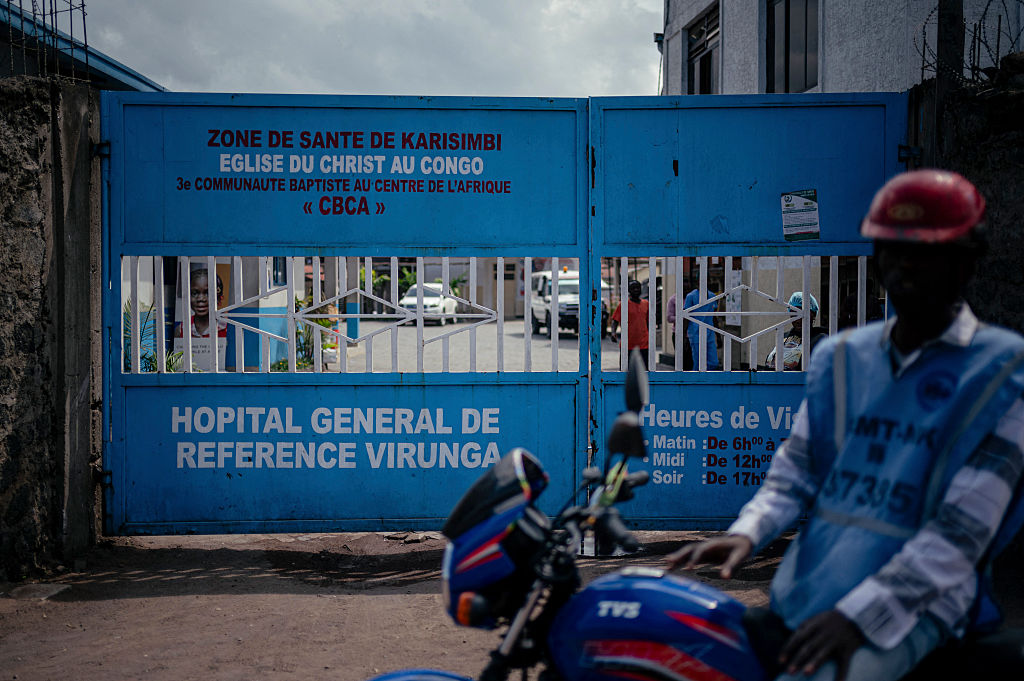
The World Health Organization (WHO) declared an Ebola outbreak in the Democratic Republic of Congo and Uganda a “public health emergency of international concern” on Sunday, after the virus killed nearly 90 people and spread across multiple regions, including cross-border infections and suspected cases in major cities.
The outbreak, first detected in eastern Congo’s Ituri province, has now resulted in at least 88 deaths and more than 300 suspected cases, according to health authorities. Officials said the virus has also reached Uganda, where at least two laboratory-confirmed cases were linked to travelers from Congo, including one death in the capital, Kampala.
WHO officials said the outbreak does not meet the criteria for a pandemic emergency but warned of a “high regional risk” due to population movement, porous borders, and ongoing transmission in multiple health zones.
Read more: A New Ebola Outbreak in Democratic Republic of Congo Kills 65 and Sickens Hundreds
Health officials said the outbreak is being driven by the Bundibugyo strain of Ebola, a rare variant first identified in Uganda in 2007. The strain has been reported in two previous outbreaks and has no approved virus-specific therapeutics or vaccines, according to the WHO.
The virus is transmitted through direct contact with bodily fluids, including blood, vomit, and other contaminated materials, and becomes contagious once symptoms appear. Those symptoms can include fever, vomiting, diarrhea, muscle pain, and internal or external bleeding.
WHO Director-General Tedros Adhanom Ghebreyesus said in a briefing on Friday that there remain “significant uncertainties” about the true scale of the outbreak and how widely it has spread beyond confirmed cases.
Initial laboratory samples tested negative because early field diagnostics were only capable of detecting the Zaire strain of Ebola, delaying confirmation of the Bundibugyo variant now driving the outbreak, according to the WHO.
Health authorities said the outbreak began in Mongwalu, a mining hub in Ituri province, where infected individuals later traveled to other health zones, contributing to wider transmission.
Officials also confirmed suspected and laboratory-linked cases in North Kivu province and in Kinshasa, Congo’s capital, located roughly 1,000 kilometers from the epicenter, raising concerns about broader geographic spread. Ugandan officials said cross-border movement between Congo and Uganda has further accelerated transmission, with at least one confirmed fatal case in Kampala tied to travel from Congo.
Health officials also said at least four health-care workers showing Ebola-like symptoms have died.
The WHO’s declaration marks its second-highest alert level and is intended to mobilize international coordination, funding, and response capacity. The agency urged countries to strengthen surveillance, isolate confirmed cases, and monitor contacts for up to 21 days, while discouraging border closures that could drive cases underground.
“The number of cases and deaths we are seeing in such a short timeframe, combined with the spread across several health zones and now across the border, is extremely concerning,” Trish Newport, emergency program manager for Doctors Without Borders, said in a statement. “In Ituri, many people already struggle to access health care and live with ongoing insecurity, making rapid action critical to prevent the outbreak from escalating further.”
Read more: The U.S. Helped Defeat Ebola in 2014. Now, We’re Watching a Crisis Become a Catastrophe
WHO officials said previous emergency declarations have had mixed results, but stressed that rapid response remains critical given the speed of transmission in this outbreak.
The outbreak comes amid a strained global response system, after the U.S. Agency for International Development, which previously played a central role in containing Ebola outbreaks, was shuttered, and the United States withdrew from the WHO in January this year.
The outbreak is unfolding in eastern Congo, where armed conflict, weak healthcare infrastructure, and population movement tied in part to mining activity are complicating efforts to contain the virus.
Authorities said violence in Ituri, including attacks by armed groups such as the Allied Democratic Forces and M23, has limited access for health workers and disrupted contact tracing efforts.
Officials noted that only a small fraction of suspected cases have been confirmed in laboratories so far, highlighting uncertainty about the outbreak’s true scale.
Previous outbreaks killed thousands
The Democratic Republic of Congo has experienced at least 17 Ebola outbreaks since the virus was first identified in 1976, making it one of the countries most frequently affected.
The largest outbreak between 2018 and 2020 killed nearly 2,300 people. More recent outbreaks have been contained more quickly, though officials warn this one is more complex due to its rare strain, geographic spread, and delayed detection.
WHO officials said the outbreak’s reach into urban centers, including Kinshasa and Kampala, raises concern because infectious diseases spread more rapidly in densely populated areas.
Hence then, the article about who declares global emergency over ebola strain with no vaccine here s what to know was published today ( ) and is available on Time ( Middle East ) The editorial team at PressBee has edited and verified it, and it may have been modified, fully republished, or quoted. You can read and follow the updates of this news or article from its original source.
Read More Details
Finally We wish PressBee provided you with enough information of ( WHO Declares Global Emergency Over Ebola Strain With No Vaccine. Here's What To Know )


Also on site :
- ‘Bridgerton’ Breakout Hannah Dodd to Lead Lucas Jones’ Romantic Drama ‘Miss You Forever, Zara Drake’ (EXCLUSIVE)
- Before U2 Became Famous, Bono and The Edge Had Very Different Stage Names and Monty Python Was Involved
- Malteurop erwirbt die Mälzerei der Chunlei Malting Co. - Eine strategische Investition, die das Geschäft des Unternehmens erheblich ausweitet und seine Position auf den Exportmärkten stärkt