
What do weapons and drug discovery have in common?
Over the last 24 hours, billions of dollars and a lead investor. In quick succession, Demis Hassabis’s Isomorphic Labs announced it had raised a $2.1 billion Series B, and very early today, Anduril announced it had closed its $5 billion Series H at a $61 billion valuation. (Thrive Capital led in both rounds, and Andreessen Horowitz additionally led for Anduril.)
I have an admittedly odd vantage point here: Two of the biggest features of my career to date have involved me spending a lot of time with Anduril and Isomorphic, respectively, a defense tech company and an AI drug discovery company. And though I will under no circumstances tell you they are the same (building drones and searching for cancer cures have wildly different financial and ethical landscapes), they also have a few things in common.
Both Anduril and Isomorphic are deeply technical companies that have risen at a time when advances in AI have not only rendered the impossible possible, but made moonshots seem earthbound. Hassabis and Google DeepMind’s AlphaFold, which won the 2024 Nobel Prize, is the foundation of the Isomorphic spinout, proof that AI could make biological vastness legible. Anduril, meanwhile, is building its business on the kind of autonomous weapons and systems that very well would have been out-of-reach twenty years ago.
When the numbers are tallied for all the venture dollars flowing into AI, though these billions will count, neither is something I would personally consider “an AI company,” whatever such a phrase means these days.
Perhaps the more salient thing Anduril and Isomorphic have in common: Both are at inflection points where, in the coming months and years, results matter more than anything else.
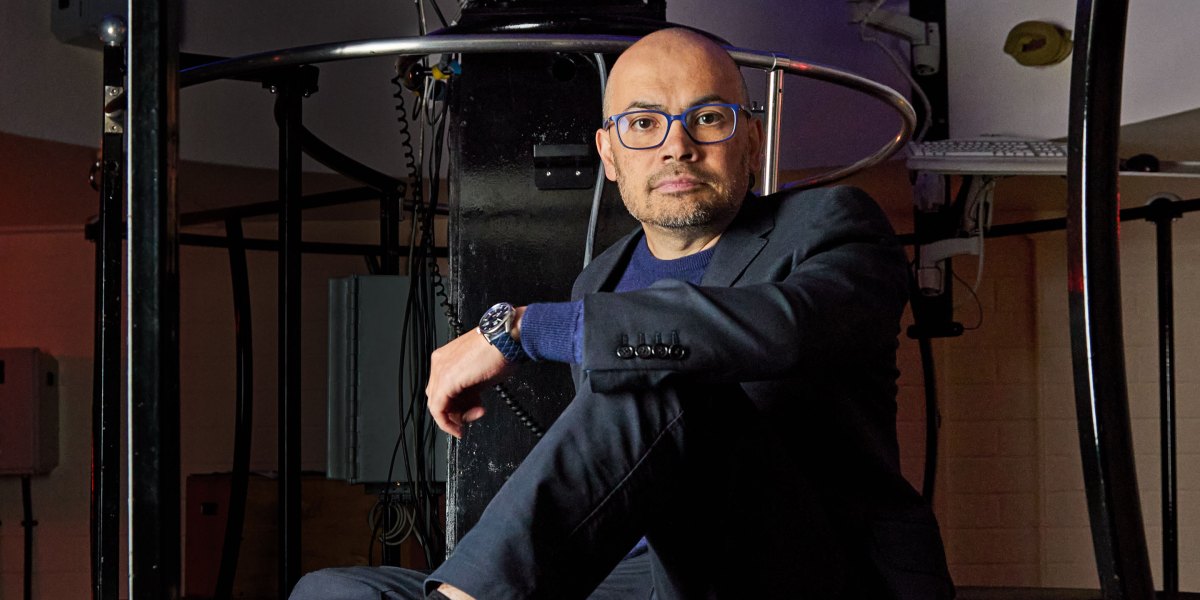
“On the Isomorphic side, we care about the outcome,” Hassabis told me yesterday. “First and foremost, it’s about curing diseases or making a breakthrough on a particular property we care about. We don’t care so much about the algorithm that got us there, right? It’s whatever works… Whereas when you think about AGI, you do care about the algorithm. It’s not just about winning at Go. It’s how you build it.”
Hassabis is clear: he believes AGI will usher in generational change, and that the stakes are high there, too. But when it comes to better pharmaceuticals, it’s not algorithms that matter most, it’s outcomes. This is simultaneously true in defense, particularly at a time when the U.S. is at war—Anduril has systems deployed in the Middle East right now, and they have to work.
Anduril CEO Brian Schimpf is certainly aware of this, and as Thrive partner Philip Clark recently pointed out to me: “The most important thing from here is that Anduril shows it can deliver results in tests and in combat. They’ve shown this in small ways, and it’s about the big swings from here.”
Schimpf is also building towards a future where it will be clear one way or another if Anduril has gotten results. That’s clear in an investor letter from Schimpf the company shared with Fortune.
“In our new world, the victors will be those who are best suited to deliver mass and apply advanced technologies to their future force,” Schimpf writes. “We are singularly positioned to build at scale, deploy superior software, and act with the speed that our status as a technology company affords us.”
You win wars or you lose them. You either cure intractable diseases, or you don’t. For all their differences, for both companies, the most gut-level versions of success are relatively binary—and will be visible over time.
In a way, then, Anduril and Isomorphic are both, well, isomorphic: two things that look different, but underneath it all, have a lot in common.
Term Sheet Podcast… This week, our guest is Claire Zau! With 337,000 followers and 1.6 million likes, Lightspeed Venture Partners just hired her in a role that’s never existed in venture before: New Media and Investor. We talked about the AI bubble, AI education, the gap between Silicon Valley and the general public, and why one in three Gen Zers say AI makes them angry. Watch the episode here.
See you tomorrow,
Allie GarfinkleX: @agarfinksEmail: [email protected]
Submit a deal for the Term Sheet newsletter here.
Joey Abrams curated the deals section of today’s newsletter. Subscribe here.
This story was originally featured on Fortune.com
Hence then, the article about what drones and drug discovery have in common was published today ( ) and is available on Fortune ( Middle East ) The editorial team at PressBee has edited and verified it, and it may have been modified, fully republished, or quoted. You can read and follow the updates of this news or article from its original source.
Read More Details
Finally We wish PressBee provided you with enough information of ( What drones and drug discovery have in common )


Also on site :
- Bessent’s $4 billion bond plan is like ‘rearranging deckchairs on the Titanic given the U.S. national debt of $40 trillion,’ ING says
- Walmart’s Rustic 5-Tier Bookcase Brimming With Farmhouse Charm Is Perfect for Book Lovers and Plant Parents
- Millionaire Mel Robbins says her waitressing boss taught her how to spot the most influential person in the room: ‘It’s never who you think it is’