
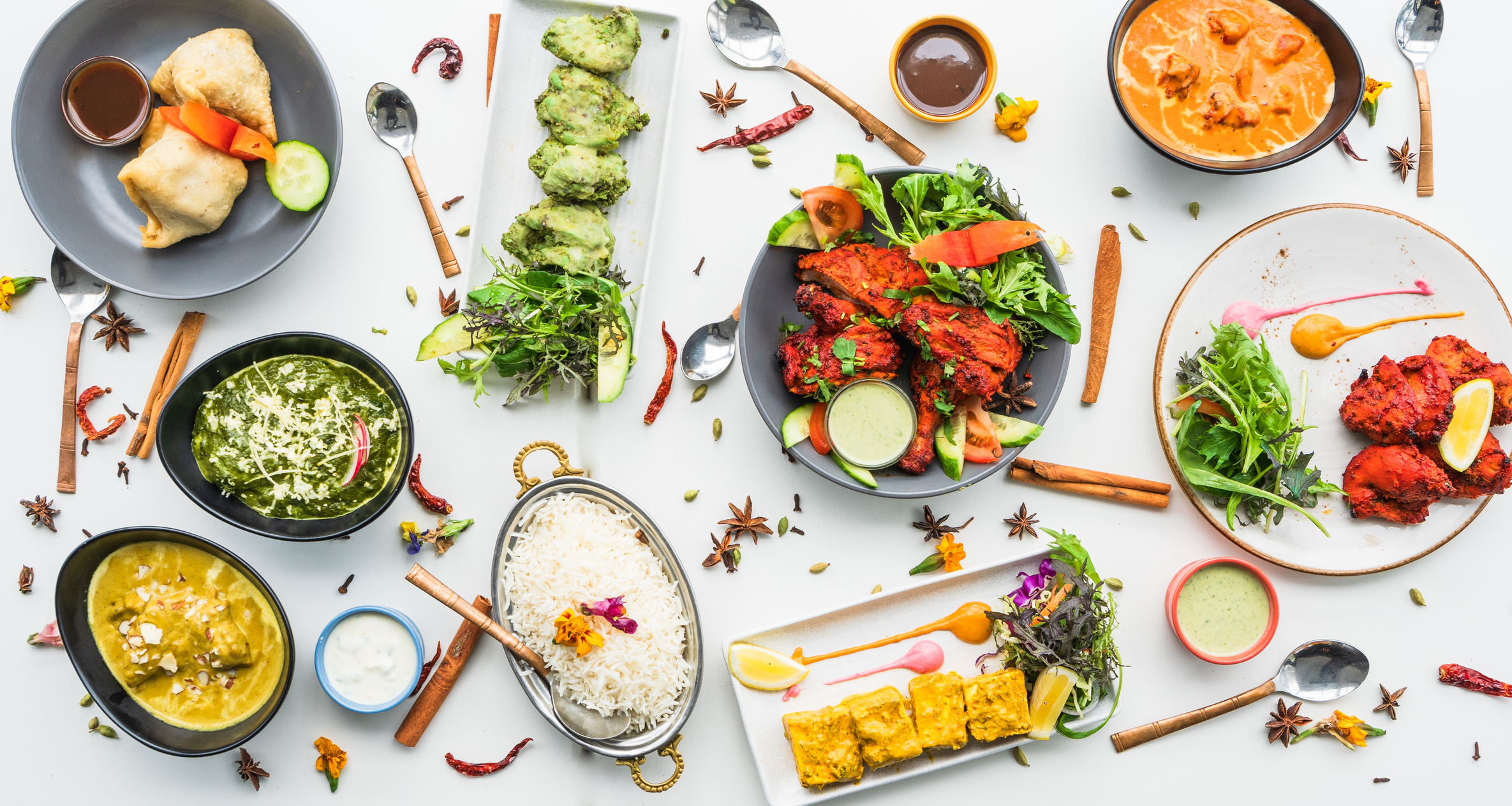
Growing up in Amritsar, India, food was never just cooked; it was offered. My grandmother stirred pots at dawn with instinct and devotion.
The kitchens I was raised in were not full of privilege and expensive ingredients. But they were full of beautiful rituals filled with care.
Indian food has always lived in homes, temples, and community kitchens. It was not created to impress, but to nourish, include, and heal. But for too long, the world has overlooked Indian food because of these very qualities.
When I went to culinary school in India, I was trained in French sauces and classical European techniques. This training gave me discipline and structure. But I was drawn to the depth of Indian food, the kind that isn’t taught, but remembered.
The pineapple coconut curry from the Krishna Temple in Udupi, the dal from the Golden Temple in Amritsar, the sweet rice from the Jagannath Temple in Puri, and the modaks from the Siddhivinayak Temple in Mumbai resonated with me far more deeply than the sauces I was taught in culinary school.
While my culinary school classmates followed a defined path and a Eurocentric curriculum, I kept returning to the flavors I had grown up with.
There was a wall in the library filled with photographs of Western chefs, the standard we were told to aspire to. I remember asking, “Why does no one look like me?” The answer was simple: this is who controls the world.
That control shapes which cuisines are valued. A gastronomic hierarchy has emerged, with some traditions seen as refined while others are labeled “ethnic.” One food framework has become dominant, while others are expected to adapt.
After culinary school, I went on to achieve recognition within this system, earning Michelin stars and global accolades. By every measure, I had succeeded. But somewhere along the way, I felt a growing distance from the food that had first defined me.
I remember a moment when my mother sat at my restaurant table and did not enjoy a single bite of what I had prepared. That stayed with me. I had spent years striving for excellence as it was defined around me, yet the person I most wanted to honor did not recognize herself in my food.
That instance led me to a question I could no longer ignore: Who decides what greatness tastes like?
Global culinary standards have evolved within specific histories. They have elevated technique, precision, and consistency, and for that, they deserve respect. But they do not always capture cuisines shaped by memory and lived experience.
Cuisines like Indian food are layered, diverse, and deeply rooted in context. To measure them through a single lens risks missing what makes them meaningful.
Across the world, cuisines carry stories of identity and survival. They are not incomplete versions of something else. They are complete in themselves. Yet they are often simplified to fit expectations that were never built around them.
The good news: these expectations are beginning to change.
Today’s diners are seeking more than presentation. They want authenticity, connection, and meaning. This is not a trend; it is a shift.
The preservation of cuisine does not happen only in institutions. It happens in everyday kitchens, in homes where recipes are remembered, not written, and passed down through generations. That is where authenticity lives.
Today my goal is to create experiences that truly honor where I come from, without needing to change it for acceptance. My restaurant, Bungalow, is a continuation of traditions—a space where authenticity is not adjusted for acceptance, but presented with pride.
The truth is that the success of a cuisine cannot be defined only by stars or rankings. It must also be measured by recognition, by the people who see themselves in it.
We cannot build the future of global cuisine by asking every culture to fit into the same mold. We build it by expanding that mold, by allowing multiple definitions of excellence to exist. Because when only a few are given the power to judge what greatness tastes like, we all lose.
At its core, food remains what it has always been, an act of giving, a way of connecting, a reflection of who we are. If we measure it through a single lens, we risk losing its diversity.
But if we allow food to exist in its full identity, we gain something far greater. We begin to understand each other.
Hence then, the article about who decides what greatness tastes like was published today ( ) and is available on Time ( Middle East ) The editorial team at PressBee has edited and verified it, and it may have been modified, fully republished, or quoted. You can read and follow the updates of this news or article from its original source.
Read More Details
Finally We wish PressBee provided you with enough information of ( Who Decides What Greatness Tastes Like? )


Also on site :
- Bessent’s $4 billion bond plan is like ‘rearranging deckchairs on the Titanic given the U.S. national debt of $40 trillion,’ ING says
- Who Is Jessica Bowie? Woman With Alleged ISIS Link Accused of New York Plot
- Oil flows nearly tripled before US-Iran MoU expired, analysis shows