
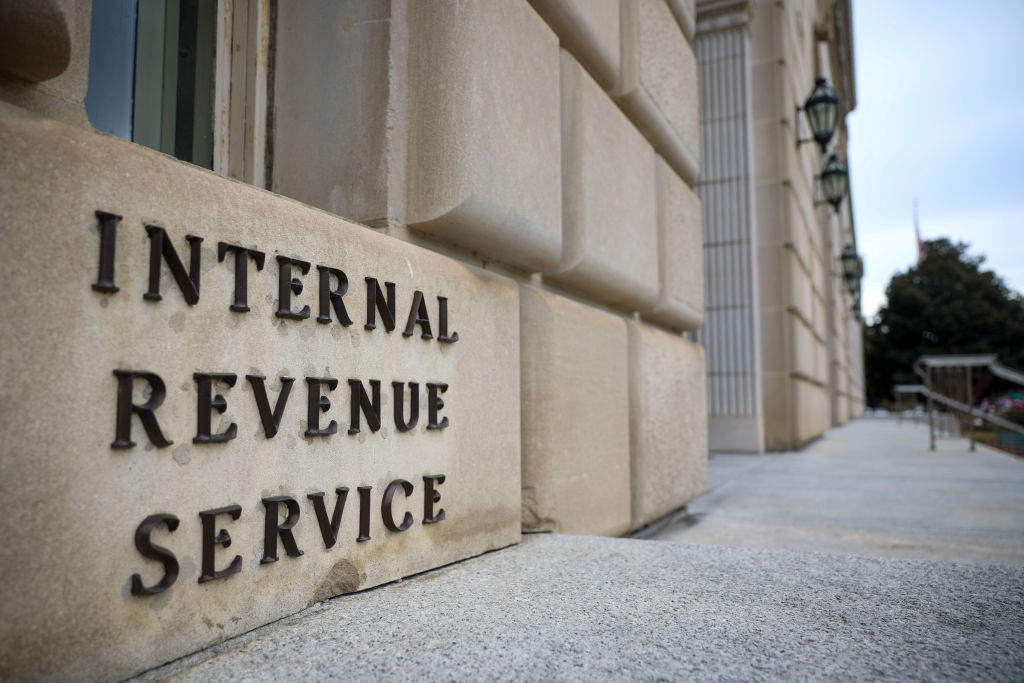
Tens of millions of Americans may be eligible for refunds on tax penalty and interest charges issued during the COVID-19 pandemic.
Whether taxpayers ultimately receive that relief will hinge on the outcome of ongoing legal battles. Judges have determined in recent rulings, most notably in the case of Kwong v. United States, that tax filing and payment deadlines should have been automatically postponed from Jan. 20, 2020, through July 10, 2023––the duration of the COVID-19 disaster declaration—plus an additional 60 days.
“By the court’s logic, the IRS should not have assessed penalties for late filing or payment during that 3.5-year period, nor charged interest on those amounts,” National Taxpayer Advocate Erin M. Collins explained in recent blog posts.
The decision is anticipated to face pushback from the Department of Justice, Collins noted, and it may be years before the court process is resolved. But if the ruling stands, taxpayers could be owed refunds for certain charges they were assessed during that more than three-year period—if they act to preserve their eligibility within the next few weeks.
Because the IRS typically requires taxpayers to make a claim for a refund within three years of filing their return, Americans will have until July 10 of this year to submit claims for the potential COVID-era relief.
Here’s what to know about your eligibility, and how to file a claim for a potential refund.
Taxpayers who could be eligible for the potential refunds include individual Americans, small businesses, large corporations, estates, and trusts, according to Collins.
If the court’s decision holds, anyone who was charged penalties for failing to pay their taxes or filing their returns late during the period when the disaster declaration was in effect and in the 60 days that followed may be entitled to a refund. Taxpayers who were assessed interest that began accruing during that period may also be eligible for refunds on those deductions, along with those who overpaid interest for that time. People or entities who were penalized for being late to file foreign information tax forms––which are required to report on international assets, gifts, or trusts––may also receive refunds.
Taxpayers can review their federal income tax transcripts, which summarize tax payments along with penalty or interest charges, by making an account on the IRS website. The agency’s ID.me service can be used to register individual or business accounts.
Transcripts can also be requested by mail, which typically takes five to 10 days for delivery.
Once taxpayers have access to their transcripts, Collins advised looking for any penalty or interest charges and checking whether the dates associated with them fall in the relevant period between Jan. 20, 2020, and July 11, 2023.
If so, she said, “taxpayers may want to explore a refund claim.”
When do claims for refunds need to be filed by?
Taxpayers generally need to file a claim within three years of when they filed their tax return, or two years after the date their taxes were paid. In most cases, the deadline for making a claim for the potential COVID-era refunds is July 10, 2026, three years after what would be the postponed filing and payment due date following the end of the pandemic disaster declaration based on the court’s ruling.
But Collins noted that some taxpayers may have additional time, if they paid penalties or interest assessed during the relevant period later on. For a taxpayer who didn’t make such a payment until July 1, 2025, for instance, she said that they “would have until July 1, 2027, (i.e., two years from the date of payment) to file a refund claim, as it is later than July 10, 2026.”
How to file a claim
Eligible taxpayers should use Form 843, “Claim for Refund and Request for Abatement,” to protect their right to a refund or abatement if the court’s decision holds.
Since the ruling isn’t yet final, taxpayers can specify that they are filing a “protective claim,” which Collins noted are generally used when a pending legal battle makes the amount of a potential refund uncertain. She advised taxpayers to label their Form 843 with language identifying the relevant legal issue, along the lines of “Protective Refund Claim Pursuant to Kwong Case.”
Separate forms must be submitted for “each tax period and each type of tax” in most cases, she said, unless the Form 843 instructions explicitly allow them to be combined.
“The claim should clearly state that your claim is based on the COVID-19 disaster relief period and the legal reasoning reflected in Kwong,” Collins wrote. “It should also identify the specific penalties and interest, tax period, and dates at issue.”
Protective claims can also be filed for abatements on interest and penalties that have not yet been paid.
Unlike annual tax returns, Form 843 must be submitted on paper, which Collins noted is a slower process, harder to track, and less accessible.
Because the IRS does not confirm it has received these claims, she advised taxpayers to send Form 843 by certified mail, which provides legal proof of mailing and delivery should there be disputes from the government on the location of the form.
Hence then, the article about millions of americans could be owed tax refunds for covid era penalties here s what to know was published today ( ) and is available on Time ( Middle East ) The editorial team at PressBee has edited and verified it, and it may have been modified, fully republished, or quoted. You can read and follow the updates of this news or article from its original source.
Read More Details
Finally We wish PressBee provided you with enough information of ( Millions of Americans Could Be Owed Tax Refunds for COVID-Era Penalties. Here’s What to Know )


Also on site :
- Iran offers US deal to reopen Hormuz within a week
- ‘Whisper Fringe’ Is About To Be Fall’s Biggest Hair Trend—a Celebrity Stylist Explains Who It Flatters Most
- Carrot Top Breaks Silence After Suicide Attempt and Hospitalization as Comedian Preps Return to Stage