
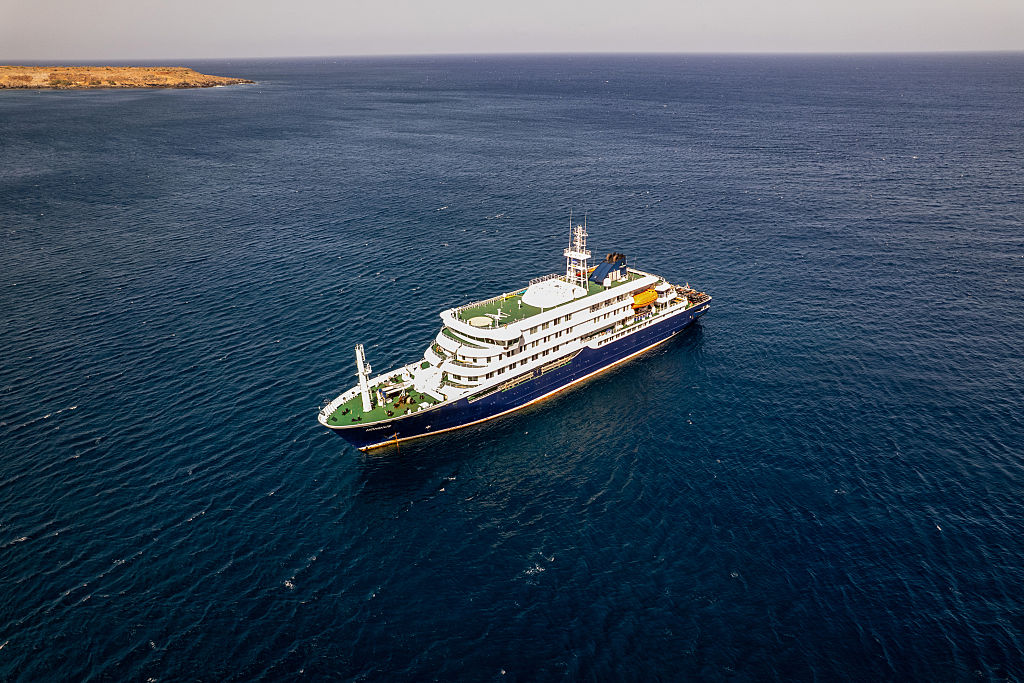
Two Dutch people and a German national have died after a suspected hantavirus outbreak on the MV Hondius, a cruise ship run by Oceanwide Expeditions, according to the World Health Organization (WHO). The global health agency said it was investigating three others, including two crew members, who became sick on the ship, which is now docked off of Cape Verde in Africa.
So far, only one of those people has confirmed hantavirus: a person from Britain who is being treated in Johannesburg, South Africa. The five others are suspected cases. The two crew members who fell ill experienced difficulty breathing.
How could a disease that's mainly spread by rodents appear on a cruise ship in the middle of the ocean? “There are two possibilities," Dr. Amesh Adalja, senior scholar at the Johns Hopkins Center for Health Security and adjunct professor at the Johns Hopkins Bloomberg School of Public Health, tells TIME. "There may be rodents on board the ship, or the passengers got sick during an excursion in an endemic area." The ship left Argentina, where hantavirus is endemic, several weeks ago, although Argentine health officials reported no known cases of the virus in the area when the ship left, according to the New York Times.
Here's what to know about hantavirus and the suspected cruise-ship outbreak.
What is hantavirus?
Hantavirus is a virus spread mostly by the urine, droppings, or saliva of rodents like rats or mice, according to the U.S. Centers for Disease Control and Prevention (CDC). There are several viruses belonging to the family Hantaviridae, and each virus tends to be associated with a specific rodent in which it can survive without causing illness in the animal.
In the U.S., hantavirus has been reported in the Southwest, especially in the Four Corners region where Utah, Colorado, Arizona, and New Mexico meet. U.S. health officials began tracking hantavirus cases in 1993 after an outbreak in the region, and since then nearly 900 cases have been reported after scientists confirmed presence of the virus with lab tests. Of the people who contract hantavirus in the U.S., about 35% die.
Read More: We Aren’t Ready for the Next Pandemic. This Game Proves It
People can become infected by inhaling the virus, which may be released when rodent droppings or nests are disturbed; by eating food or touching items contaminated by infected rodents; or being scratched or bitten by one.
Is hantavirus contagious?
Generally, hantavirus does not spread easily from person to person, says Adalja. But there is one exception: Andes virus, which is part of the hantavirus family and may be transmitted by droplets among close household members, says Kartik Chandran, professor of microbiology and immunology at Albert Einstein College of Medicine. It’s not clear yet whether that virus is responsible for the cases—whether confirmed or suspected—on the cruise ship, but a spokesperson for the WHO said “detailed investigations are ongoing, including further laboratory testing, and epidemiological investigations. Sequencing of the virus is also ongoing.”
What are the symptoms of hantavirus?
The virus attacks the lungs and kidneys, according to Mayo Clinic, leading to fatigue, fever, headaches, chills, nausea, and vomiting. About 10 days after infection, people start having difficulty breathing as their lungs fill with fluid.
Some may also develop kidney problems a week or two after getting exposed. These can start with fever, nausea, and back or abdominal pain and eventually lead to low blood pressure and internal bleeding as the kidneys start to fail.
How is hantavirus diagnosed?
There is a test to detect the virus, but it’s not as accurate in the first 72 hours after exposure. If people suspect they are infected, doctors recommend getting a second test 72 hours after symptoms start.
What treatments are available?
“There is no standard antiviral treatment for this group of viruses,” says Adalja. The CDC recommends rest, getting plenty of fluids, and medications to lower fever. Adalja says supplemental oxygen can help to alleviate more severe respiratory symptoms.
Researchers are working on treatments, including antibodies and vaccine, that have been effective in limiting or even preventing disease in animals, but lack of funding and interest from the pharmaceutical industry is preventing them from being tested in people, Chandran says. "We have things that work in animal models. The real hurdle is money, not the science or medicine."
Hence then, the article about what to know about hantavirus amid a suspected cruise ship outbreak was published today ( ) and is available on Time ( Middle East ) The editorial team at PressBee has edited and verified it, and it may have been modified, fully republished, or quoted. You can read and follow the updates of this news or article from its original source.
Read More Details
Finally We wish PressBee provided you with enough information of ( What to Know About Hantavirus Amid a Suspected Cruise-Ship Outbreak )


Also on site :
- ‘Southern Charm’s Taylor Ann Green and Gaston Rojas Look Coupled-Up on ‘Below Deck’ as She Eyes a Bravoleb Match for Fraser
- In 1940, Hattie McDaniel became the first African American to win an Oscar and had to sit at a segregated table; the Academy replaced her lost statuette in 2023
- Un nuevo sismo de magnitud 6,1 sacude Panamá en medio de la emergencia por el terremoto de la semana pasada