
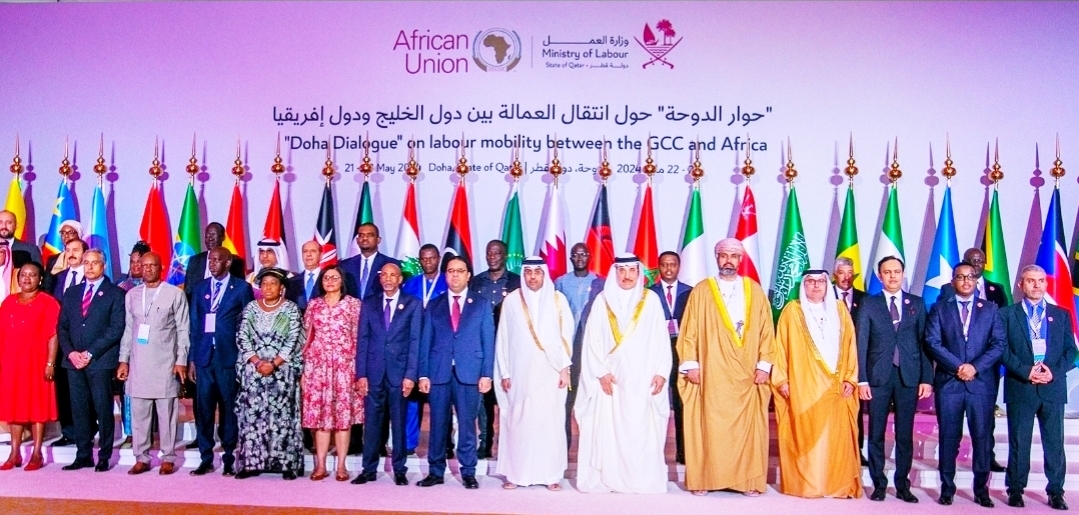
Recent developments in Africa point to a marked intensification of security cooperation with Gulf countries. Military agreements signed by Somalia with Saudi Arabia and Qatar, Emirati investments in defence technologies in Nigeria, and the strengthening of military ties between the United Arab Emirates and Egypt all raise important questions. Why are African states turning to these partners, and what are they seeking from such cooperation?
A growing presence
The deepening of ties between the Gulf and Africa appears to be part of a broader dynamic combining security, investment and diplomacy. The military agreements signed by Somalia with Riyadh illustrate this diversification of partnerships in a tense regional context. For its part, Qatar is pursuing a more comprehensive approach, blending political mediation, strategic investment and security cooperation, as seen in Rwanda, where it acts both as an investor and a diplomatic player.
This growing presence is not solely driven by a Gulf ambition to expand influence. It also reflects genuine demand from African states. Many countries across the continent face persistent threats, whether armed conflict, political instability or the spread of jihadist groups. In an increasingly volatile environment, governments are compelled to arm themselves, equip their forces and strengthen their defence capabilities.
At the same time, many are reluctant to rely any longer on the powers that traditionally ensured their security. Western partnerships are being challenged or weakened, while other actors such as Russia and China suffer from a more controversial image. African states are therefore seeking new partners capable of meeting concrete needs without imposing disproportionate political conditions.
It is precisely within this space that Gulf countries are positioning themselves. Responsive and discreet, they present themselves as credible alternative partners. For African states, engaging with them is as much a strategic choice as it is an opportunity.
The UAE: leading the way?
Within this broader dynamic, the United Arab Emirates occupies a distinctive position, both in the scale and structure of its engagement. Its approach rests on several pillars: training and support for local forces, the development of defence industries, and a flexible security presence in certain strategic areas, without permanent or systematic deployments on the ground.
This strategy is also underpinned by strong regional alliances, notably the strategic partnership with Egypt, characterised by exchanges of military expertise, joint exercises such as “Hercule 2”, and close security coordination. It is further reinforced by political alignment, with both countries sharing similar positions on the Muslim Brotherhood and broader regional stability issues.
The investment announced in Nigeria in early 2026 reflects this logic. It goes beyond the mere provision of equipment, aiming instead to develop local capabilities in areas such as drones, cybersecurity and industrial production. For Abuja, the objective is to strengthen its strategic autonomy; for the UAE, it is to embed itself sustainably within the local security and industrial ecosystem.
Similar patterns can be observed elsewhere. In Angola, cooperation spans border security, port infrastructure and surveillance technologies. In several East African and Sahelian countries, partnerships focus on training, equipment and capacity-building. These initiatives respond to clearly expressed needs from African states, particularly in counter-terrorism.
The Emirati model is also characterised by its flexibility. Rather than establishing permanent bases, Abu Dhabi tends to favour adaptable arrangements, often preceded by training agreements. This approach limits costs, reduces political exposure and allows for rapid adjustments depending on the context.
Converging interests
These partnerships are therefore grounded in a convergence of interests, albeit one that remains partly asymmetrical. For Gulf states, engagement in Africa serves to secure trade routes, protect investments and strengthen their presence in strategic regions. Efforts to combat armed groups, piracy and trafficking fit within this broader framework.
However, this perspective alone does not fully explain the rise of these partnerships. From the African side, the benefits are manifold: access to financing, technology transfer, the development of local capabilities and support for security policies. These are advantages that many felt they were no longer sufficiently deriving from Western partners. In some cases, such as Nigeria and Angola, these collaborations are helping to structure industrial sectors and reinforce defence systems.
These partnerships also provide greater diplomatic room for manoeuvre. By diversifying their alliances, African states avoid excessive dependence and are better able to navigate an increasingly competitive international environment.
Ultimately, Gulf engagement in Africa reflects a dynamic of mutual adjustment. Yet beyond this apparent convergence of interests, the durability of many of these new partnerships remains to be tested.
Gulf-Africa Defence Cooperation: a Shared Lever? first appeared on Egyptian Streets.
Hence then, the article about gulf africa defence cooperation a shared lever was published today ( ) and is available on Egyptian Streets ( Egypt ) The editorial team at PressBee has edited and verified it, and it may have been modified, fully republished, or quoted. You can read and follow the updates of this news or article from its original source.
Read More Details
Finally We wish PressBee provided you with enough information of ( Gulf-Africa Defence Cooperation: a Shared Lever? )


Also on site :
- APOD: 2026 September 23 – A New Lunar Crater: McGetchin
- A Fat, Nude Woman Became a 1970s Merchandise Sensation. Who Was “Bridget in the Buff”?
- Macy’s Has an Elegant 8-Piece Reversible Comforter Set That Exudes French Countryside Charm for Under $40