
The Middle East and especially the countries that are part of the Gulf Cooperation Council (GCC) have made a habit of grabbing headlines around the world. Last year in Q3, the Institute of Chartered Accountants in England and Wales (ICAEW) published its Economic Insight Q3 2025 report (produced in collaboration with Oxford Economics), which revealed the GCC economy was on track for 4.1% growth in 2025, increasing to 4.6% in 2026 despite global GDP expansion slowing to 2.7%.
Following recent regional strife and the accompanying disruptions, GCC economies are projected to contract by 0.2% in 2026 according to the ICAEW’s Economic Insight Q1 2026 report. However, the report also said that GCC economies are expected to rebound sharply, with growth forecasts reaching 8.5% in 2027, as a result of strong fundamentals, diversification, and policy reform supporting a return to growth, as energy flows normalise and non-oil sectors strengthen.
The GCC economy continues to be led by two major markets, the UAE and Saudi Arabia, with the latter holding the crown of being one of the most vibrant construction markets in the world. According to the recent Saudi Arabia Construction Market Analysis report produced by Mordor Intelligence, the Saudi construction market size was $133.79bn in 2025, is expected to grow to $142.3bn in 2026, and ultimately reach $186.13bn by 2031, growing at a CAGR of 5.52% from 2026 to 2031. The construction market in the Kingdom continues to be driven by giga-projects under Saudi Vision 2030, the development of transport corridors, housing programs and other infrastructure upgrades.
With 2 offices in the Kingdom, global risk mitigation and dispute resolution firm HKA has been a part of the Saudi construction landscape for over 20 years. The firm has its Regional Headquarters (RHQ) in Riyadh in the 302m tall Kingdom Centre, in addition to their office in Jeddah.
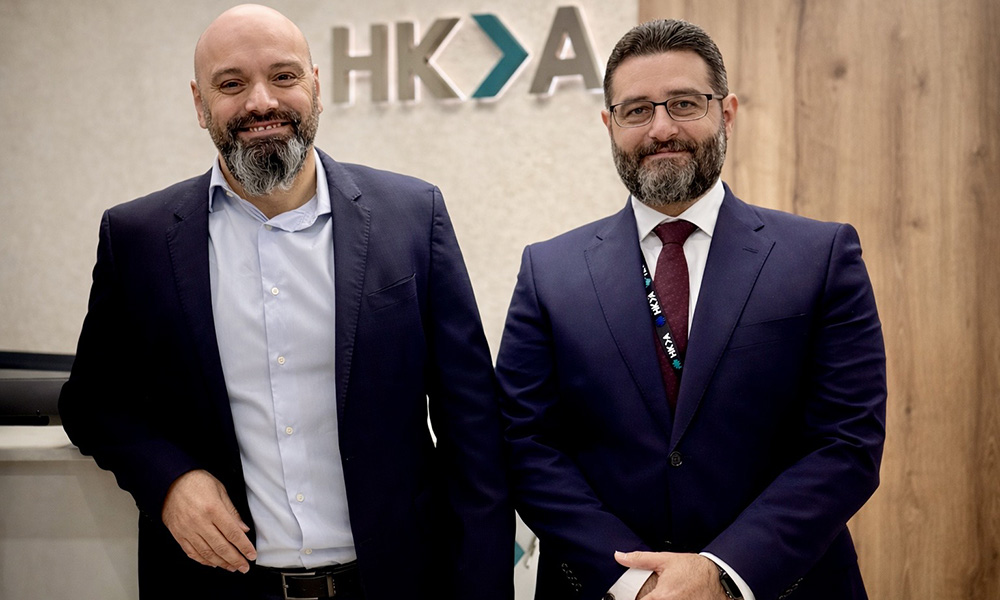
Nader Emile and Hilal Itani, Partners at HKA in Saudi Arabia, share their perspectives on the evolving construction landscape in the Kingdom. From design maturity and cash‑flow pressures to collaboration across the supply chain and the evolving priorities of Vision 2030, they offer insight into how major programmes are being reshaped to improve delivery and long‑term value.
In 2025, the company enjoyed tremendous success. Emile shared that, “2025 was a strong year for HKA. We inaugurated our RHQ, secured high-profile engagement with PIF entities and strengthened our relationship with the government. With the establishment of the RHQ, we are strategically positioned to expand our business with the government across a variety of projects. We have also provided expert services with the Saudi Center for Commercial Arbitration (SCCA) in Arabic and have been actively collaborating with lawyers throughout the Kingdom to secure further expert assignments in the future.”
Emile also notes that in 2025, the firm undertook 2,200 projects worldwide valued at approximately $2.43tn, with average CapEX of $1.25bn spanning 114 countries. He also reports that the disputed costs claimed on average constitute roughly one third of contract budgets, while the Extension of Time (EOT) claims would extend project schedules by approximately two thirds.
Talking specifically about the Kingdom, he notes, “We have worked on hundreds of projects, with 152 projects directly contributing to the Eight Annual CRUX Insight Report. The average CapEX in Saudi Arabia is $1.68bn while the average cost claimed amounts to nearly 27%. The total EOT associated with these projects is approximately 96.2%.”
Key achievements and highlights in 2025
Reflecting on 2025, Emile emphasises HKA’s strong performance and highlights a number of significant achievements.
“There’s plenty to be proud of, but I believe that our training capabilities deserve special praise. We’re well known for our dispute expertise and claims services, but we also do a lot of training with our clients. I’ve been personally engaged in several assignments with employers and contractors and we’ve made a significant impact in terms of raising their capabilities, and the results have been positive in terms of how they are evolving and adopting our approach and methods. Beyond the delivery of claims and our dispute resolution services, we help clients strengthen their own internal understanding of delay analysis and contract management. I personally provide training on delay analysis and disruption methodologies, scheduling techniques, and the preparation of EOT claims,” Emile states.
Here he adds that Itani also undertakes work relating to delay, disruption, prolongation costs, and all of the issues related to change of scope and claims management.
Nader Emile is a Partner at HKA in Saudi Arabia.
Emile says, “The shift from simply solving a problem for a client to empowering them to prevent issues themselves is rewarding and it’s not only because of training. When we collaborate with clients on our assignments and we conduct Windows analysis or Time Impact Analysis (TIA) or As-Built versus As-Planned analysis, and work with their planners, we also teach them – through our assignment – how to carry out these methods of analysis properly and what the best practices are. It’s highly rewarding to see that we are contributing to the advancement of the construction industry by educating client planners, claims practitioners and internal engineers.”
He emphasises, “Prevention is much better than cure, and helps avoid situations in which we are engaged for claims work only to discover that some clients lack adequate records or do not fully understand the processes involved.”
On a personal note, Emile shares that 2025 has been a particularly memorable year. He has been honoured with the Client Choice Award 2025 for the second consecutive year as a Construction Consulting Expert in Saudi Arabia by Lexology Index (formerly Who’s Who Legal). This achievement reflects the exceptional feedback and trust of HKA’s valued clients. In addition, Emile says he is especially proud to be the only Arabic‑speaking testifying delay expert recognised by Lexology Index in Saudi Arabia.
Itani points to HKA’s client feedback programme as one of his proudest milestones of 2025, highlighting the firm’s strong performance under the Net Promoter Score (NPS) framework. The tool, widely used across professional services, enables HKA to assess client perception and its likelihood of recommendation across the market.
“NPS is a powerful indicator because it goes beyond satisfaction and captures trust, confidence and perceived value,” Itani explains. “It provides objective, candid feedback that allows us to assess where we are performing well and where we can improve.”
In 2025, 85% of respondents classified themselves as promoters of HKA, an exceptionally high result within the advisory and disputes sector. A further 36% awarded the firm an overall score of 10, with 18% providing a perfect rating.
“It is always rewarding to see this reflected at an individual level,” Itani adds. “Achieving a perfect 10 from clients is a strong endorsement of the work we do, and being recognised by our CEO, Renny Borhan, made this one of the most meaningful moments of the year.”
Turning to the firm’s outlook for 2026, and despite heightened regional uncertainty, HKA remains focused on expansion within the Kingdom. According to Itani, the firm has identified 3-clear priorities aligned with market demand and the pace of development under Vision 2030.
“Our first objective is to expand our Saudi team and increase both commissions and expert-related appointments,” he says. “Saudi Arabia market is critical to HKA’s long-term growth, not only because of the scale of current and planned investment, but also because clients are seeking more specialised dispute-ready expertise as projects grow in scale and complexity.”
To support this, HKA is continuing to strengthen its local capabilities by appointing senior experts, transferring forensic delay analysis capacity into the Kingdom, and ensuring the right balance of technical, commercial and contractual skill sets.
“We are positioning ourselves to secure more expert appointments and arbitration-related commissions,” Itani notes. “Nader and I both testify in Arabic, and we are likely the only firm in this segment with Arabic-speaking experts formally registered in Saudi Arabia. That gives us a clear advantage in understanding local procurement practices, dispute frameworks and client expectations”.
Beyond market expansion, Itani emphasises that HKA’s strategy in Saudi Arabia also places strong emphasis on people development. “Our second area of focus is investing in young Saudi talent,” he says. “We believe that sustainable growth in the Kingdom requires more than just expertise, it requires building a pipeline of Saudi professionals who can grow with us and eventually lead major commissions.” This is being delivered through structured training, mentorship programmes and planned succession pathways, he says. “We are not just filling roles; we are building long-term careers,” he adds.
Hilal Itani is a Partner at HKA in Saudi Arabia.
The firm’s third strategic priority is investment in bespoke artificial intelligence solutions aligned with its core services.
“We are not interested in off-the-shelf AI tools that everyone has access to,” Itani explains. “Instead, we are developing tailored solutions around delay analysis, claims management, expert reporting and data-driven dispute resolution – areas where data quality, judgement and repeatability really matter.”
Itani confirms that these tools will leverage existing CRUX data, and notes that there is no fixed launch date yet. “Developing a tool such as this takes time; I believe we’ll be ready in the next 2-years,” he notes.
CRUX in the Kingdom
HKA released the Eight Annual CRUX Insight report titled ‘From Insight to Foresight’ in H2 2025, which features insights from over 2,200 projects from 114 countries valued at US $2.43tn. Since the very first report was first released, it has been extremely well received around the world, thanks to its deep insights into the main causes of claims and disputes on engineering and construction projects. The full report and a powerful interactive dashboard are freely accessible at www.hka.com/crux-insight.
Discussing the report’s popularity, Emile remarks, “It’s been 8-years now and the popularity is growing year after year. We have thousands of downloads, and the readership includes several major employers and contractors. Apart from this, we often present CRUX data to our clients and to other organisations via relevant events. We also use bespoke analysis in our own proposals and include figures and analytical information to back up our capabilities with respect to specific commissions.”
Emile also highlights that HKA will be hosting a Saudi breakfast VIP event in the first half 2026, alongside the delivery of a CRUX webinar in Arabic scheduled for June. “Hilal and I normally host this annual CRUX webinar in Arabic, with a strong focus on the Middle East and Saudi Arabia in particular. We dissect all the findings by sector, contract type, and individual cases. We have been delivering this webinar together for around 4-years now, and it continues to be an important platform for sharing insights relevant to the regional market.”
Asked about whether the CRUX report is published in Arabic, Emile confirms, “We usually have an Arabic language version of the report and we’re hoping the latest edition will be available in Arabic soon.”
Discussing some of the data published in the 2025 edition of the CRUX Insight report in response to a question on whether the causes behind disputes has changed noticeably compared to previous years, Emile responds, “That’s an interesting one; when you look at the cumulative data that’s added annually, it doesn’t dramatically change the overall rankings of dispute causation. This year, we conducted our first time-based comparison by analysing results pre and post 2020 (based on the COVID-19 pandemic timing and impact on the industry). We observed a substantial drop in disputes arising from design-related issues in the Middle East.”
“According to the data, the incidence of disputes related to incomplete design declined from 28.8% to 11.9%. This improvement can be attributed to increased awareness among clients and contractors regarding effective strategies to prevent and resolve these issues before they escalate into disputes. I hope that our CRUX report, along with our training programs and webinars, has contributed to this positive development,” explains Emile.
“In terms of cash flow for instance and payment issues, these were found to have affected 16.7% of projects up to 2020, compared to 25.5% from 2020 onwards globally. That said, the Middle East and Saudi Arabia are affected by this trend as well,” he clarifies.
Asked to delve deeper into the topic of challenges on megaprojects and the advice he has for clients, Emile notes that it’s important to address these issues on megaprojects specifically, as projects of this type amplify the consequences of misalignment, uncertainty, and delay, making their impacts more pronounced and far-reaching than on smaller projects.
“With respect to scope and design issues, it’s essential to address this on massive construction projects. In the Kingdom, significant efforts are underway to enhance megaproject delivery, and our predominant advice regarding scope changes is ‘go slow to go fast’. This guidance, which is emphasised throughout our CRUX report, fundamentally discourages fast-tracking in complex projects. Fast-tracking involves overlapping various project phases, such as initiating construction prior to the completion of the design, which can introduce substantial risks and complications,” he outlines.
“It is essential to cultivate a culture that recognises the value of sacrificing some initial progress to achieve superior long-term project outcomes. Employers should commit to a tighter scope definition and facilitate an Early Contractor Involvement (ECI) approach when integrating technical inputs and insights. During the design development phase, it is imperative that designs are thoroughly reviewed and finalised prior to the commencement of on-site activities. This remains our standard recommendation to our clients.”
“This specific requirement really depends on the type of contract and whether it is Design and Build (D&B), Engineering, Procurement and Construction (EPC) or instances where the design is provided by the employer. In essence, while this approach entails higher initial costs and time investment, it yields significant benefits in terms of scheduling, constructability, management of interfaces and costs, especially for more complex engineering projects,” he continues.
He cautions, “Project stakeholders, particularly contractors, should proactively implement self-protective measures by engaging experienced consultants and contract managers at the earliest possible stage. Ideally, these appointments should occur prior to contract engagement; however, if not feasible, they must be made immediately following contract execution and project commencement. This will enable them to accurately identify assumed risks and anticipate potential risks that could give rise to disputes.”
At this point, Emile notes that clients they work with are actively incorporating these consultancy costs into their bid calculations nowadays and factoring them into their budgeting processes.
Elaborating on the risks associated with project delivery, Emile emphasised the importance of avoiding overlapping project phases, highlighting the direct relationship between scope and design. “There is a real connection between scope of work and design changes; once the scope changes – even where robust change management mechanisms exist in the contract – it inevitably triggers design changes, because the design is typically frozen against a defined scope. Changing the scope therefore changes the design. It becomes a domino effect, or a ‘ping pong’ cycle between scope and design. This is precisely why scope and design issues, whether arising from incomplete, late, or incorrect design, consistently rank among the top 5 causes of claims and disputes.”
Shifting focus to design specifically, Emile explained that, through his and Hilal’s frequent work with project programmes in the context of delay analysis and EOT, they consistently encounter challenges related to how design timing has been accepted, structured, or provided for within the contract programme.
Emile states, “My advice to clients is to include clearly defined milestones specifying when particular stages or elements of the design are required. The logic links and the floats must be managed very carefully, so that each party understands its obligations and delivery timelines in line with its design responsibility.”
Emile further highlighted the importance of well‑drafted and properly interpreted contracts, noting that clarity around design responsibility is critical. “If responsibilities are not clearly defined, delays are almost inevitable,” he explained. “Uncertainty over who is responsible for which design elements often leads to delays across all design phases, as debates over responsibility can stall progress and result in the entire design falling behind schedule.”
Itani advises rigorous gateway checks throughout the design verification process, including budget and programme considerations linked to design development. “Advanced design development is critical in reducing delivery risk,” he says, noting that insufficient design maturity remains a recurring issue across major projects.
Shedding light on aspects relating to cash-flow, Emile notes that it ranks after scope and design issues and observes that it can sometimes be quite surprising to find cash-flow and payment issues are predominant in the Middle East. He comments, “With government budgets shrinking currently and public debt increasing, private finance will need to support large projects more than before. Public Private Partnerships (PPP) therefore need to be strengthened, particularly to address recurring challenges such as unclear project objectives or poorly defined risk allocation – issues that have recently caused difficulties on many projects globally, not only in the Middle East.”
Here, Emile says that it’s important to link what is happening on the ground and what HKA’s CRUX Insight report can add to clients’ businesses. “We are focused on bridging the gap between theory and practice to ensure the findings are applied meaningfully to business decision-making. Drawing on our years of experience in the Kingdom and across the region, we aim to ensure that the insights from CRUX add tangible value to our clients,” he says.
Itani also highlights the growing importance of CRUX as an industry resource. “CRUX represents a vital industry platform, and one of its key strengths is accessibility. The data is freely available on our website, supported by a powerful interactive dashboard that allows users to interrogate the information and extract insights in a way that suits their needs.”
He adds that the platform reflects a significant long‑term investment by the firm. “CRUX is something we are extremely proud of because it represents the culmination of 8-to-10-years of collective effort across HKA. When you consider the depth of analysis and volume of data required to produce even a single table, the scale of work behind CRUX is truly remarkable.”
Emile continues, “We’re really proud of CRUX, and it has also been very rewarding for both Hilal and me as we’ve both contributed to the study and analysis. We can confidently say that only HKA is able to produce insights of this depth and scale, given our global reach and the breadth of projects and contract types we are involved in worldwide. We remain fully committed to the continued development of CRUX with further enhancements and upgrades planned for the future.”
The benefits of true collaboration
The construction supply chain in the Kingdom and across the broader GCC region is made up of hundreds if not thousands of stakeholders. Unfortunately, quite a combative mindset still seems to pervade the supply chain with stakeholders appearing all too eager to blame other parties, rather than working together collaboratively and placing the interests of the client and the project first.
Asked about his thoughts on this, Itani acknowledges that the issue remains prevalent, particularly on large‑scale programmes in the Kingdom, “We see this across many projects, especially major programmes,” he says. “There is a noticeable adversarial mindset amongst stakeholders, mostly driven by schedule pressure, unclear scopes, rapid mobilisation, fragmented interface, and an overarching rush to deliver. This tendency towards blame-shifting rather than collective problem-solving ultimately slows progress and drives claims.”
That said, Itani is clear that these challenges are far from insurmountable. “We’ve applied practical solutions on projects and seen a significant positive impact,” he explains. “Shifting from a mindset of contractual defence to a project-first approach can materially enhance progress onsite. Early collaboration models, for example, or a delivery partner approach along with early warning systems, lessons learned cycles, integrated decision forums, all play a critical role. These mechanisms improve collaboration, accelerate delivery and reduce friction.”
He adds that clarity and discipline are equally important. “When responsibilities are clear and supported by a robust respected change control system, outcomes improve for everybody involved. Promoting a long-term industry mindset also offers a lot of benefits. Many organisations are working together repeatedly across Vision 2030 projects, and a reputation for collaboration is becoming a genuine competitive advantage”. Given the interconnected nature of the current programme pipeline, Itani notes that behaviours are increasingly visible to major clients. “With projects often flowing through entities such as PIF, clients are fully aware of how organisations perform and interact. Those that demonstrate collaborative behaviours and a solutions‑driven approach are more likely to be favoured when future opportunities arise.”
Over the past 2-years, the Saudi market has continued to evolve, with a growing focus on announced projects and those delivering near-term economic impact or tied to events with immovable completion dates.
Commenting on this shift, Itani says: “It’s clear that Saudi Arabia is increasingly focused on delivery and placing greater emphasis on private‑sector participation. Several giga‑projects have been restructured, and in many cases, this has strengthened their overall viability. Actions such as pausing, scaling back, and restructuring aspects should be viewed as strategic prioritisation rather than retreat.”
Emile notes, “We’re seeing this prioritisation of projects taking share through various mechanisms, whether that is deferring specific elements of a project, reducing scope, re‑budgeting, or undertaking value engineering exercises. This is happening in Riyadh, in NEOM and in Jeddah as well, albeit at different scales. Looking ahead to the second half of 2026, we expect a number of significant announcements, with several strong projects in the pipeline.”
In his closing remarks, Itani emphasises that the recent reprioritisation measures ultimately strengthen the Kingdom’s development agenda. “These moves enhance the feasibility, the governance and the delivery capacity underpinning the broader giga-project portfolios, and will ultimately support the successful delivery of Vision 2030, he says. “They signal a shift from capital-intensive, highly futuristic mega-structures towards sectors that offer quicker and more tangible economic returns, such as logistics, AI, mining and event related infrastructure.”
He adds that fixed‑date global events are now acting as a key driver of focus. “In the near future, Saudi Arabia is preparing for EXPO 2030 and the 2034 FIFA World Cup, both of which are immovable deadlines. When events open on fixed dates, prioritisation becomes inevitable. Concentrating resources on certain programmes will naturally impact others, but this is a strategic decision and, in our view, a necessary and positive one.”
Hence then, the article about driving ksa s construction segment forward was published today ( ) and is available on ME CONSTRUCTION NEWS ( United Arab Emirates ) The editorial team at PressBee has edited and verified it, and it may have been modified, fully republished, or quoted. You can read and follow the updates of this news or article from its original source.
Read More Details
Finally We wish PressBee provided you with enough information of ( Driving KSA’s construction segment forward )


Also on site :
- Prince William proves he's king of the sofa promoting his ecology awards on Graham Norton - as viewers hail 'down to earth' heir for being 'up for a laugh'
- How hard-Left thugs and anarchists are plotting a new French Revolution... from the rural idylls every Brit dreams of moving to
- Kemi Badenoch hits out at Andy Burnham's turn on Googlebox as he becomes first PM to appear on the Channel 4 reality TV show - and jokes that 'the King will be pleased with me'