
By SORS Volunteer Margot Lester
What if I told you there’s an easy way to save someone who’s overdosing? It’s true! Quickly giving naloxone can reverse symptoms and buy time until EMS arrives. That’s why SORS includes naloxone administration training in our free CPR and first aid classes.
Just like bystander CPR saves lives, so does bystander use of naloxone, including NARCANⓇ. But a lot of people are still dying from unintended overdoses every year. In North Carolina, the folks at above average risk of fentanyl-positive overdose are Native American, Black, white, male and aged 25-64. Closer to home, unintended overdose deaths in Orange County (5 to 9 per year) are below the state average of 14, but we all agree that’s still too many.
Accidental overdoses aren’t restricted to people who regularly use drugs. In fact, two-thirds of adolescents and young adults who die from unintentional overdose have no known history of opioid use at all. A quarter of them die from taking one counterfeit opioid or stimulant pill containing fentanyl, which is deadly in tiny amounts.
Despite naloxone’s effectiveness, it’s often not given. There are four main reasons:
Awareness: We aren’t sure what overdose looks like, so we don’t take action or we don’t realize someone’s in trouble because they’re using just out of sight or in another room. Access: We don’t know where to get free or low-cost NARCANⓇ or naloxone. Apprehension: We worry about doing it wrong or getting in legal trouble. Attitudes: We equate helping with supporting drug abuse.Improving awareness and access, and providing training on proper instruction, are easy to address — and we do that in this article! We help you recognize overdose symptoms, show you where to get a naloxone kit and teach you how to respond. We also offer insights to ease your concerns about helping people in distress with information on Good Samaritan laws.
It’s our goal to help destigmatize substance abuse. Long-held beliefs are slow to change, but there’s no evidence that helping someone who’s overdosing encourages them to continue using. Overdose prevention isn’t about supporting drug use; it’s about supporting people through struggles and perhaps getting them on a path to treatment and recovery.
How to recognize a drug overdose
Overdose symptoms, which can look like other serious and even life-threatening conditions, include:
Awake but unable to talk Unconscious or unresponsive to outside stimuli, like rubbing your knuckles on their chest Breathing that is very slow and shallow or erratic — or not breathing at all Choking sounds or a snore-like gurgle Clammy face Tiny (pinpoint-sized) pupils Unusual skin tone (bluish purple for lighter-skinned people, grayish or ashen for darker-skinned people) and blue or purplish-black lips and fingernails Vomiting Limp body or limbs Slow or erratic heartbeat — or no heartbeat at allThe National Harm Reduction Coalition recommends trying to wake up someone you suspect of using drugs if they’re making unfamiliar sounds while sleeping: “Many loved ones of users think a person was snoring, when in fact the person was overdosing. These situations are a missed opportunity to intervene and save a life.”
Where to get no- or low-cost naloxone
While everyone doesn’t need to carry around naloxone, if you have friends, family or contacts who use opiates, you might want a kit in case of emergency.
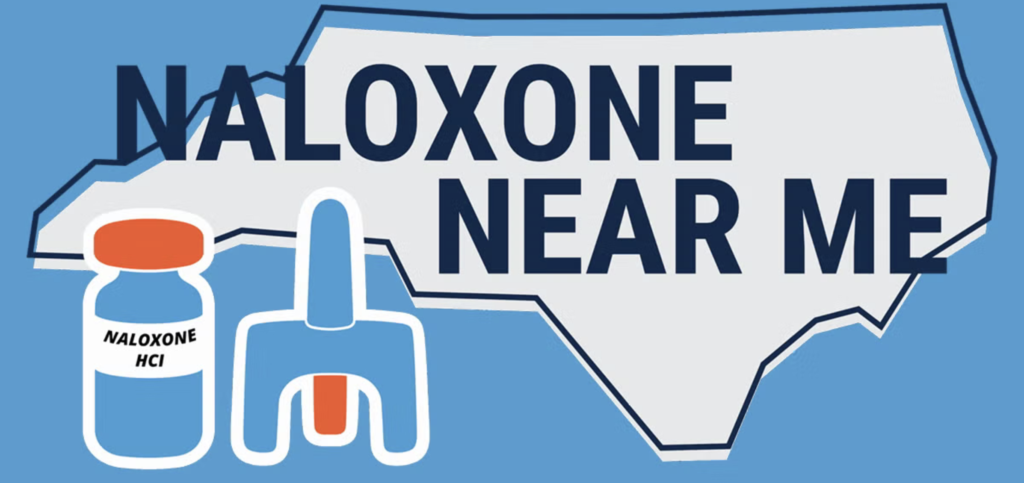
Orange County gives out free kits (NARCANⓇ and fentanyl test strips)and training at its clinics. UNC students can get free naloxone at Student Wellness and the Campus Health and Student Stores pharmacies. The UNC Eshelman School of Pharmacy also maintains an online database of pharmacies and other no-cost options across the state at NaloxoneNearMe.org. Many local pharmacies also sell kits.
The County has an extensive list of harm reduction resources.
How to use naloxone
Some kits include a naloxone autoinjector that looks and works like an EpiPen. Read the directions for your particular injector before you need it. Most providers also have a demo kit you can practice with. Administer it on the person’s outer thigh (through clothing is fine), hold in place, count to 5, and then pull it away.
NARCANⓇ spray works just like a nasal spray. Generally, you spray the whole container in one nostril or half the container in each nostril to provide the full dose. Again, get familiar with your specific product before you have to use it.
What to do if you think someone is overdosing
Signs of an overdose can imitate many other serious medical problems, so it’s important to call 9-1-1 and get medical attention anytime someone is in distress.
Check for responsiveness and normal breathing by loudly asking if they’re OK, tapping them on the shoulder or rubbing your knuckles hard on their chest. Yell for help and call 9-1-1 if the person doesn’t seem OK, isn’t responding or breathing normally. Answer the dispatcher’s questions, which helps them help you respond. (As soon as dispatch has your address, they send EMS, even while they’re still talking to you.) Give NARCANⓇ or naloxone if you suspect an overdose. There are very few potential side effects of administering naloxone, so if you have reason to suspect an overdose, give it! Do CPR, beginning with chest compressions hard and fast in the center of the chest if they don’t respond and aren’t breathing normally. Stay on the phone and with the person until EMS arrives.Most places that provide naloxone also show you how to use it. You can also sign up for one of our free CPR and first aid classes or stop by the SORS table at local events for a quick demo. (Photo by SORS Member Gabi Battaglini)
If you’re worried about the legal implications of helping, the SB20 911 Good Samaritan/ Naloxone Access law offers some protections. It prevents you (the person calling 9-1-1 and giving aid) from being sued for providing reasonable emergency assistance and from being prosecuted for possession of small amounts of drugs, paraphernalia or underage drinking.
Death from accidental drug overdose is preventable when you’re prepared, and we can help. Sign up for one of our free CPR, first aid and naloxone training every month or schedule a class at a time that works best for you.
Donations from people like you make our free community classes possible. Click here to give now. Thank you!
The South Orange Dispatch is a monthly column on Chapelboro by the South Orange Rescue Squad: an all volunteer, 501c3 non-profit providing EMS and technical rescue services in the Carrboro-Chapel Hill area of Orange County since 1971.
Chapelboro.com does not charge subscription fees, and you can directly support our efforts in local journalism here. Want more of what you see on Chapelboro? Let us bring free local news and community information to you by signing up for our biweekly newsletter.
The South Orange Dispatch: How To Help Someone Who’s Overdosing Chapelboro.com.
Hence then, the article about the south orange dispatch how to help someone who s overdosing was published today ( ) and is available on chapelboro ( Middle East ) The editorial team at PressBee has edited and verified it, and it may have been modified, fully republished, or quoted. You can read and follow the updates of this news or article from its original source.
Read More Details
Finally We wish PressBee provided you with enough information of ( The South Orange Dispatch: How To Help Someone Who’s Overdosing )


Also on site :
- Barcelona vs Real Madrid: Kick-Off Time, TV Channel, Live Stream and Expected Lineups for El Clásico
- The U.S. military and NASA have power problems. Nuclear microreactors might solve both
- In 1930, 3 Entrepreneurs Started a Toy Company During the Great Depression; Today, It’s a Household Name