
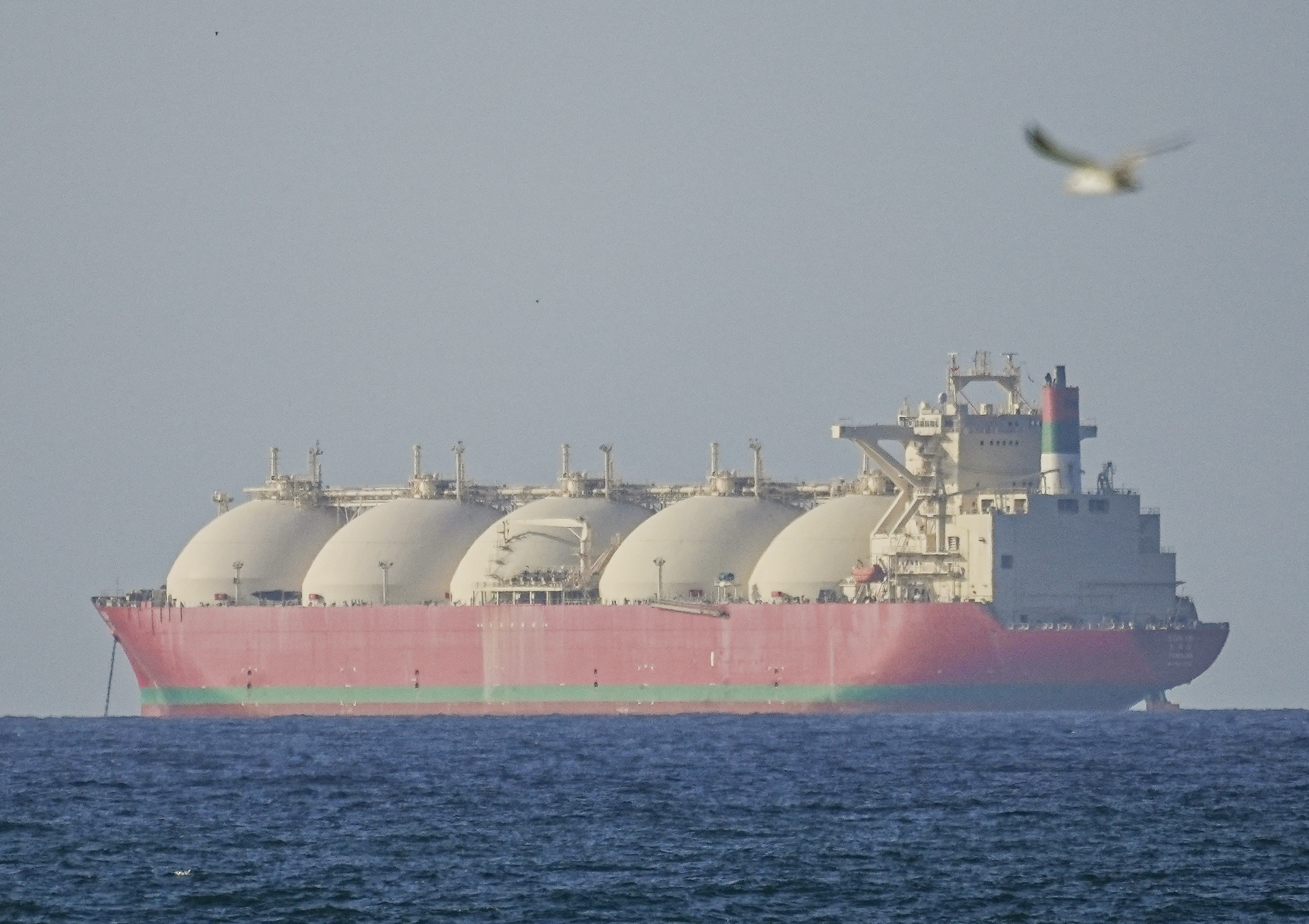
Iran said it has reimposed “strict control” over the Strait of Hormuz as gunboats linked to the country’s Islamic Revolutionary Guard Corps (IRGC) fired on at least three commercial vessels on Saturday, according to maritime security reports, ending a brief period of calm in the key global shipping route.
The UK Maritime Trade Operations (UKMTO) said that it received a report of two gunboats opening fire on a tanker without issuing a radio challenge 20 miles north of Oman. A few hours later, UKMTO reported a separate incident in which a container ship was hit by an “unknown projectile.”
Reuters, citing merchant and shipping sources, reported additional vessels—including at least one Indian-flagged ship—had been hit by gunfire as they attempted to pass through the Strait.
The attacks come as Iran’s new Supreme Leader Mojtaba Khamenei threatened “bitter defeats” in a statement on Telegram, and as the U.S. refused to lift a naval blockade of Iranian ports. In response, Iran has once again closed the Strait, less than 24 hours after it was declared reopened, choking off a vital shipping lane that carries roughly one-fifth of the world’s oil supply.
Iranian semi-official state media, Tasnim news agency, reported that Iran's security council cited the U.S. blockade as the reason for the Strait’s closure, and that Tehran will “regard [the blockade] as a breach of the cease-fire and will prevent the conditional and limited reopening of the strait of Hormuz.”
The US Central Command (CENTCOM) said Saturday that American forces were still enforcing the naval blockade, and that 23 ships have complied with their orders to turn around since it began.
It added that U.S. helicopters are currently “flying in and around the Strait providing a visible presence in support of freedom of navigation.”
The U.S. military is preparing in the coming days to board Iran-linked oil tankers and seize commercial ships in international waters, The Wall Street Journal reported, citing U.S. officials, a step that would significantly expand the scope of the naval blockade.
The Strait of Hormuz has been a flashpoint between Iran and the United States during nearly seven weeks of conflict. The U.S. and Israel began military operations against Iran on Feb. 28 over the nation's nuclear enrichment and missile program, with the first day of strikes killing Iran’s supreme leader Ayatollah Khamenei. The war has killed several thousand people across Iran, Lebanon and other parts of the region, displaced millions—including more than one-fifth of Lebanon’s population.
The Strait of Hormuz’s closure by Iran during the war has fueled volatility in global oil prices. While a brief reopening on Friday sent oil prices tumbling, fuel shortages persist and renewed restrictions by Iran are likely to push prices higher.
The Strait of Hormuz —maps4media — Getty ImagesPotential for a second round of talks
President Donald Trump warned Iran not to “blackmail” the US with its closing of the Strait of Hormuz, saying that Iran got “a little cute” with the U.S.
Still, he struck a positive tone when talking to reporters at the White House on Saturday morning, noting the potential for a second round of talks.
“We’re talking to them. They wanted to close up the Strait again—you know, as they’ve been doing for years—and they can’t blackmail us,” he said. “It’s going actually along very well, and we’ll see, but we’ll have some information by the end of the day.
The main sticking point remains Iran’s enriched uranium stockpile, with U.S. officials pushing for it to be handed over as part of any deal.
Meanwhile, Tasnim News Agency reported that Iran has not agreed to a date for a second round of talks.
“We are now focusing on finalising the framework of understanding between the two sides. We don't want to enter into any negotiation or meeting which is doomed to fail and which can be a pretext for another round of escalation,” Iranian deputy foreign minister, Saeed Khatibzadeh, told reporters in Turkey.
Iran’s national security council said it had received new U.S. proposals through Pakistani mediation and was reviewing them, but had not yet responded.
A fragile cease-fire in Lebanon has prompted tens of thousands of displaced families to begin returning home, even as violence persists. Lebanese officials accused Israel of violating the truce within hours of its start, and a French peacekeeper was reported killed in an attack attributed to the Iranian-backed militia Hezbollah.
Residents in southern Lebanon have also reported continued shelling, while the Israeli military said it had carried out “precise strikes” against Hezbollah positions, accusing the group of breaching “cease-fire understandings.” The conflicting claims underscored the uncertainty surrounding the 10-day truce, which is seen as critical to preventing the wider Iran-Israel conflict from escalating further.
The cease-fire between Israel and Hezbollah took effect on Thursday night, after weeks of strikes that killed more than 2,000 people in Lebanon, according to Lebanese health authorities.
Hence then, the article about iran reimposes control of strait of hormuz and fires on tankers was published today ( ) and is available on Time ( Middle East ) The editorial team at PressBee has edited and verified it, and it may have been modified, fully republished, or quoted. You can read and follow the updates of this news or article from its original source.
Read More Details
Finally We wish PressBee provided you with enough information of ( Iran Reimposes Control of Strait of Hormuz and Fires on Tankers )


Also on site :
- The Real Reason Why Josh, Nelson and Leo Got Kicked Off ‘The Challenge’
- Karin Rådström is steering Daimler Truck in a new direction as the world’s biggest truckmaker faces a growing challenge from China
- Cruz Azul vs Inter Miami: Kickoff Time, Channels and Live Streaming Details