
Economists have spent months debating whether a recession is on the horizon. One economic indicator predicts most of those arguments are already moot.
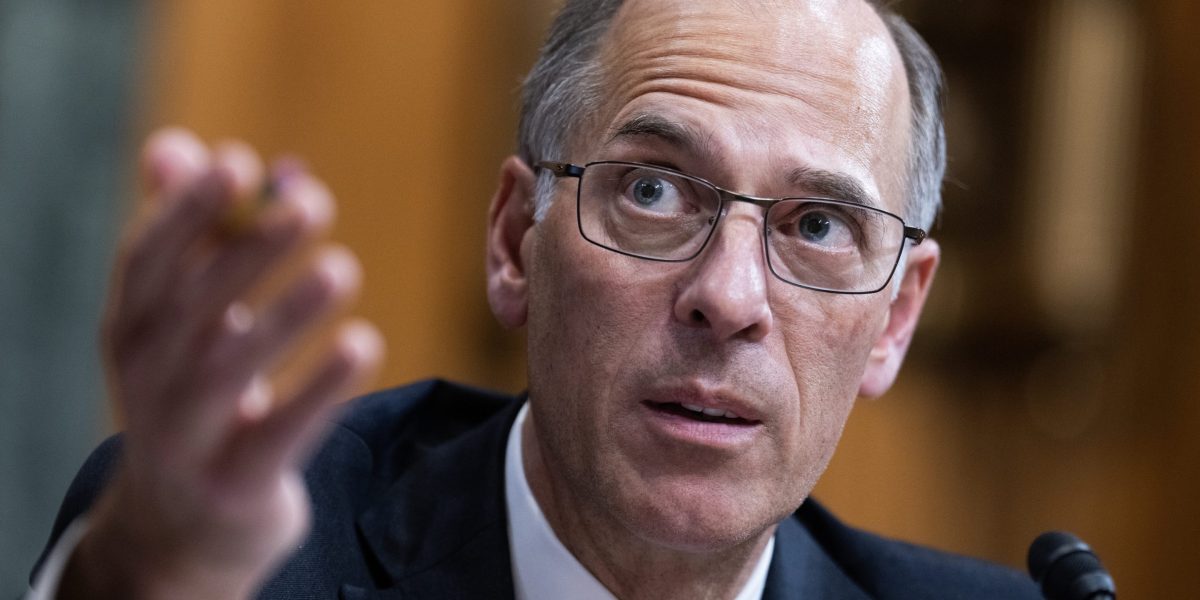
Mark Zandi, the top economist at Moody’s Analytics, said the U.S. economy could already be in a recession, according to the Vicious Cycle Index (VCI), an economic indicator Zandi and his colleagues created.
The measure is a tool used to identify when the economy has entered a recession by measuring how quickly unemployment is rising. It’s a labor-force adjusted version of the Sahm rule—which signals a recession if the three-month average of the unemployment rate increases by more than half a percentage point above its lowest point in the previous 12 months. The VCI uses the five-year moving average of the labor-force participation rate to adjust the unemployment rate, and flashes red when the three-month average rises more than one percentage point over the past year. According to Zandi, the VCI has increased by more than a percentage point in January and has remained elevated over the last three months.
“It has nailed every recession since WWII without falsely predicting a downturn,” Zandi wrote in a LinkedIn post about the VCI. “If it is triggered, it may take a while for the Business Cycle Dating Committee of the National Bureau of Economic Research to confirm it, but we are already in a recession.”
A swell of headwinds has blown recession fears back into economic thinking. Many economists have raised the probability of a recession happening within the next year, including Zandi himself. That’s because the oil shock from the Iran war has sent jitters across the economy. Consumer confidence remains low, and up until last month, employers had posted dismal job numbers. Many economists have even aired concerns of stagflation amid dual fears about growth and unemployment. But even with the March job report’s better-than-expected 178,000 added jobs, Zandi said those results offer a false picture of the overall economy.
“Don’t take solace in the big March payroll employment gain,” Zandi wrote in a post on X. “It comes after a big decline in February, when brutal winter weather and a labor strike at Kaiser Permanente weighed heavily on jobs.” Zandi points out that most of those added jobs fail to reflect the economic injury incurred by the Iran war, and that without health care, the economy would actually be losing jobs.
Mark ZandiIs the U.S. actually in a recession?
In his LinkedIn post, Zandi said the VCI is near 5%, indicating further headwinds than the March jobs report lets on. “That suggests there is more slack in the labor market than the headline unemployment rate implies, as discouraged workers leave the workforce altogether.”
The VCI reflects the assessment KPMG chief economist Diane Swonk made of the March job numbers. “The unemployment rate dropped, but for the wrong reasons: a loss in labor-force participation,” Swonk told Fortune in a recent interview.
Of course the VCI is merely a proprietary tool. And the Sahm rule, which the VCI mirrors, hasn’t always held up. The measure flashed red in summer 2024. However, the U.S. didn’t fall into a recession, thanks in large part to the “soft landing” brought in by interest rate cuts. In February, the Sahm rule rose by just 0.26 percentage points, far from the 0.5 percentage point rise threshold that indicates a recession. But like the Sahm rule’s false flag, the VCI doesn’t guarantee that a recession has already beset the U.S. economy. Zandi notes it could still prove wrong given today’s unusual economic conditions.
And while the U.S. navigates an array of economic headwinds, Fed Chair Jerome Powell has shrugged off stagflation fears. “The U.S. economy has really been just doing pretty well through a lot of significant challenges over the past few years,” Powell said last month following the Fed’s decision to hold interest rates steady. “It’s been amazing to see.”
Still, multiple organizations have raised their recession outlook. Moody’s Analytics gives it a 48.6% chance of the U.S. falling into one in the next 12 months. Goldman Sachs forecasts a 30% chance of a recession. And EY-Parthenon places the odds at 40%. And at the very least, Zandi thinks the VCI tempers the March job report’s strong numbers.
“At a minimum, the VCI is another good reason to heavily downweight the significance of the March payroll employment gain,” he wrote.
This story was originally featured on Fortune.com
Hence then, the article about top economist mark zandi says the indicator that has called every recession since wwii just signaled we re already in one was published today ( ) and is available on Fortune ( Middle East ) The editorial team at PressBee has edited and verified it, and it may have been modified, fully republished, or quoted. You can read and follow the updates of this news or article from its original source.
Read More Details
Finally We wish PressBee provided you with enough information of ( Top economist Mark Zandi says the indicator that has called every recession since WWII just signaled we’re already in one )


Also on site :
- Man who plants thousands of 9/11 memorial flags in West Sacramento will retire, hopes tradition lives on
- Peso Pluma Leads 2026 Billboard Latin Music Awards Finalists: Complete List
- Giancarlo Esposito, Jinkx Monsoon & Debra Wilson Star Opposite Brandon Rogers In His Debut Feature ‘Weird Party’