
“Parents shouldn’t need a Ph.D. in chemistry to understand what they’re feeding their kids,” California Assemblymember Jesse Gabriel declared last month, announcing a new food-labeling bill. Over the past few years, Gabriel has emerged as a vocal and effective legislative proponent of healthier eating, sponsoring state legislation in 2025 that defined the famously slippery term “ultra-processing” and that removed food dyes and some “ultra-processed” foods from school lunches. This new bill, AB2244, proposes to stamp non-ultra processed food products sold in the state with the words “California Certified.”
Championing food unsullied by industrial processing and ingredients is one of the few points of bipartisan consensus in American politics. For decades, liberal foodies like Michael Pollan have railed against the “foodlike substances” lining our supermarket shelves. More recently, opposition to food processing has become a core tenet of the MAHA movement, with the federal government’s Departments of Human and Health Services and Agriculture, under the leadership of RKF Jr., urging Americans to “Eat Real Food.” Food system reformers of all stripes have embraced this moment to push for their preferred policies, and so-called ultra-processed foods (UPFs) have become a favored target.
But well-intentioned programs like product labels that identify UPFs may ultimately be the wrong approach to incentivizing healthier eating.
America is not a healthy nation. Over 70 percent of Americans are overweight and 40 percent are obese. Heart disease is the nation’s bigger killer. And much of the blame for this can be placed on how we eat. The question, of course, is which part of our diets is responsible. A growing chorus of voices has chosen to blame so-called ultra-processed foods for our thickening waistlines and a slew of other diet-related problems, ranging from anxiety to hyperactivity. When these critics aren’t simply conflating industrial processing with impurity, they tend to rely on a relatively new food categorization schema called Nova and an emerging academic literature tying ultra-processed foods to ill health.
In 2009, a team of Brazilian public health researchers designed an epidemiological schema that would allow for correlating population-level health outcomes with the general make-up of diets. They decided to categorize foods according to four levels of processing: “unprocessed” foods; household ingredients like salt and olive oil and butter; minimally processed packaged foods that combine the previous two categories, like canned tomato sauce and boxed pasta; and then “ultra-processed” foods: those made using industrial processes such as protein isolate extraction or containing ingredients not found in the common kitchen, such as preservatives or emulsifiers. They called this categorization system Nova, or “new” in Portuguese. Their theory was that the more people ate from the latter category (which is an increasingly large share of what people eat—about 55 percent of calories consumed by the average American come from ultra-processed food) the worse their health. The simplicity of the schema and the nefarious-sounding fourth category soon entered the academic and public zeitgeist as settled science.
The problem, however, is that Nova was not designed to adjudicate the nutritional properties of individual foods. It is designed to understand population-level health outcomes. While a growing body of research ties the consumption of ultra-processed foods to increased morbidity and deems them a “threat to public health,” deeper examination of the data tends to suggest that, for the most part, the only statistically meaningful ill health effects come from ultra-processed foods that contain the things we already know are bad for us: too much salt, sugar, and fat. But the broadness of the fourth Nova category means that it captures foods as disparate as alcohol, sugary breakfast cereals, chips, infant formula, ready-to-eat meals, and plant-based meat alternatives, all of which are made using completely different processes and ingredients and have vastly different nutritional properties. This means that enriched soy milk and fortified bread are treated as being just as unhealthy as a bag of chips or a bottle of vodka.
It’s true that many ultra-processed foods are designed to be “hyperpalatable”—easy or even addictive—which can lead to over-eating. But this is mostly a problem because it means eaters can take in too many calories or an excess of salt, sugar, and fat. There is little convincing evidence that any particular form of processing is inherently unhealthy. In fact, one recent study suggested that eating more ultra-processed vegetables was a net health benefit for the simple reason that it increased vegetable intake.
Meanwhile, there is also little evidence that simply removing items deemed ultra-processed will yield health benefits. A recent study conducted in Brazil showed that even massively reducing the proportion of UPFs in children’s diets over a nine-month period did not result in weight loss or measurably better health outcomes. Sure, critics of this study might point out that some of the posited risks associated with ultra-processed food accrue over a longer period of time. But this still doesn’t look great for the anti-UPF theory of health—particularly since many dietary interventions do make a meaningful difference in a matter of months.
So there are two questions we need to ask as anti-ultra-processed food policies start to gain momentum across the nation. First, are we blaming the right thing for our health woes? And second, are our proposed solutions actually likely to help?
The Gabriel-championed legislation that California passed in 2025—the Real Foods, Healthy Kids Act—aims to move beyond Nova’s generalizations and statutorily specify what constitutes an ultra-processed food, resulting in a complex definition that lists countless food additives as well as foods particularly high in fat, sugar, and salt. This is the schema based on which California’s school lunches are currently being remade, and which would serve as the basis for the California Certified label. But while the definition does list many products that sound like they require a PhD in chemistry to understand—things like the sweetener lactitol and stabilizers like dipotassium phosphate—these products are certified as safe by both the FDA and notoriously more fastidious European regulators. Why would adding a safe product to a food make it less safe? The premise doesn’t make sense. And while California’s definition makes some common-sense exceptions, such as for infant formula, it also makes incomprehensible exceptions, such as for alcohol.
It’s not that wielding state power in defense of public health is wrong; quite the opposite. Taking junk food and soda out of schools, as legislation does in California, is certainly a good idea—and using state contracts to incentivize food companies to produce healthier products can be very effective.
But using that regulatory power to focus on one category of foods as the arch-villains in the American diet risks falling into an unproductive purity politics. The proposed California Certified seal would not be a marker of individual foods’ nutritional values but rather a sorting mechanism between foods implied to be pure and those implied to be somehow corrupted by industrial processes. This is especially problematic since many of the foods that would fall into the latter category, like packaged breads and pre-made meals, are affordable convenience foods on which many people rely, and which would now be tainted.
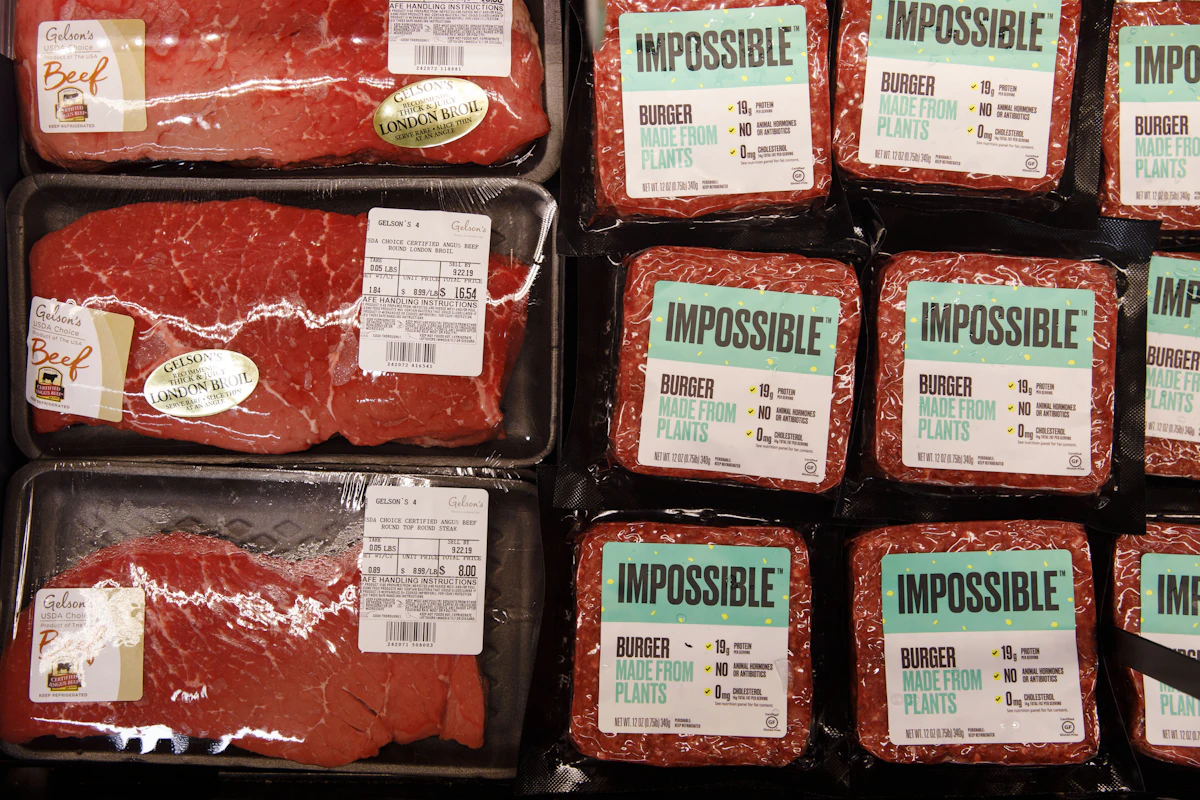
The labels also risk steering eaters away from objectively nutritious foods. Many brands of oat milk contain emulsifiers like dipotassium sorbate, for example, but that does not make them unhealthy; indeed, they may be preferable to consumers for any number of reasons, from animal ethics concerns to lactose intolerance, which affects 36 percent of Americans. Similarly, soy-based burgers like the Impossible burger have been found to be more heart-healthy than the beef burgers they are designed to replace and have been suggested by some nutritionists to be a healthy source of protein.
The labels may also steer consumers toward the very food we should be keeping off our plates. Consider that a factory-farmed chicken fed on processed feed, growth hormones, and antibiotics could be California Certified as unprocessed—a mind-boggling statement, and one that papers over the growing body of evidence linking high meat consumption to less favorable health outcomes.
There are better ways to use legislation to guide consumers’ decisions. First, products shown to be provably dangerous could be banned. We did this with trans fats at the federal level and Gabriel led legislation to do this with some food dyes in California schools. Second, consumer information on product should be based on the nutritional properties of individual foods and not categories that are so broad that they are not fit for purpose. Countries like Mexico and Canada do this by implementing mandatory front-of-package label for products containing excessive sodium, sugar, fat, or calories. Many European countries do it with a voluntary tool called Nutriscore that gives foods a nutritional quality grade based on a wide range of metrics. No approach is perfect, of course—nutrition is complicated, and scientific opinion is evolving. But both of these approaches focus on nutritional specifics and not on the level of processing, providing far more accurate and useful information to consumers.
Jesse Gabriel and his allies in the California legislature have the right idea: the regulatory state has the power to shape how Americans eat by banning the worst foods and nudging eaters toward healthier ones. But focusing primarily on ultra-processed foods risks sending the wrong message about nutrition to the public, especially where it would imply that many comparatively healthy convenience foods are to be avoided, while foods with known ill effects could be “California Certified.”
In reality, U.S. dietary issues are more about what we don’t eat than what we do. For decades, starting long before the current profusion of ultra-processed foods, government research had shown that Americans eat too few fruits, veggies, and whole grains—a problem that persists today. That’s probably not a problem that a label can solve. But to have even a chance, any label nominated for the job is going to have to move beyond the unhelpful binaries and misleading generalizations of the ultraprocessed food wars.
Hence then, the article about people love to blame ultra processed food it s unhelpful was published today ( ) and is available on The New Republic ( Middle East ) The editorial team at PressBee has edited and verified it, and it may have been modified, fully republished, or quoted. You can read and follow the updates of this news or article from its original source.
Read More Details
Finally We wish PressBee provided you with enough information of ( People Love to Blame “Ultra-Processed Food.” It’s Unhelpful. )


Also on site :
- Drew Barrymore’s $10 Stoneware Pie Dish Is a ‘Beautifully Simple’ Way to Bake ‘Extra Joy’ Into Your Desserts
- I’m a Pastry Chef, and This Classic Apple Dessert Has Been an After-Dinner Staple in My Family for 50 Years
- FBI launches investigation into theft of millions of Americans’ and Canadians’ stolen driver’s licenses