
A group of U.S. senators from both parties is targeting sports-related prediction markets, introducing a bipartisan bill that would outlaw the contracts altogether. The move ramps up an ongoing clash over whether these platforms function as legitimate financial tools or simply unregulated gambling in disguise.
Early reaction from the advocacy group Gambling is Not Investing was blunt.
“Clearly something needs to be done. Prediction market platforms have unilaterally made sports gambling available on every phone in the country, regardless of local laws and in disregard for consumer protections and safeguards that legal sportsbooks implement,” said Mick Mulvaney, the group’s executive director in a statement to ReadWrite.
.@EndBackdoorBets executive director @MickMulvaney responds to @SenAdamSchiff and @SenJohnCurtis bipartisan bill that would ban sports betting on prediction market platforms pic.twitter.com/sWRXJMOo8x
— Suswati Basu (@suswatibasu) March 23, 2026He also pushed back on federal regulators’ role in the space.
“The CFTC is attempting to sow confusion about who regulates sports gambling in this country, but the law is clear: sports betting is a state issue. I’m glad to see Members of Congress stepping up to ensure that all forms of sports betting are governed by the same state-set regulatory framework. If it quacks like a duck, it’s probably sports betting and it ought to be regulated as such.”
Sports prediction contracts under scrutiny in new bipartisan bill
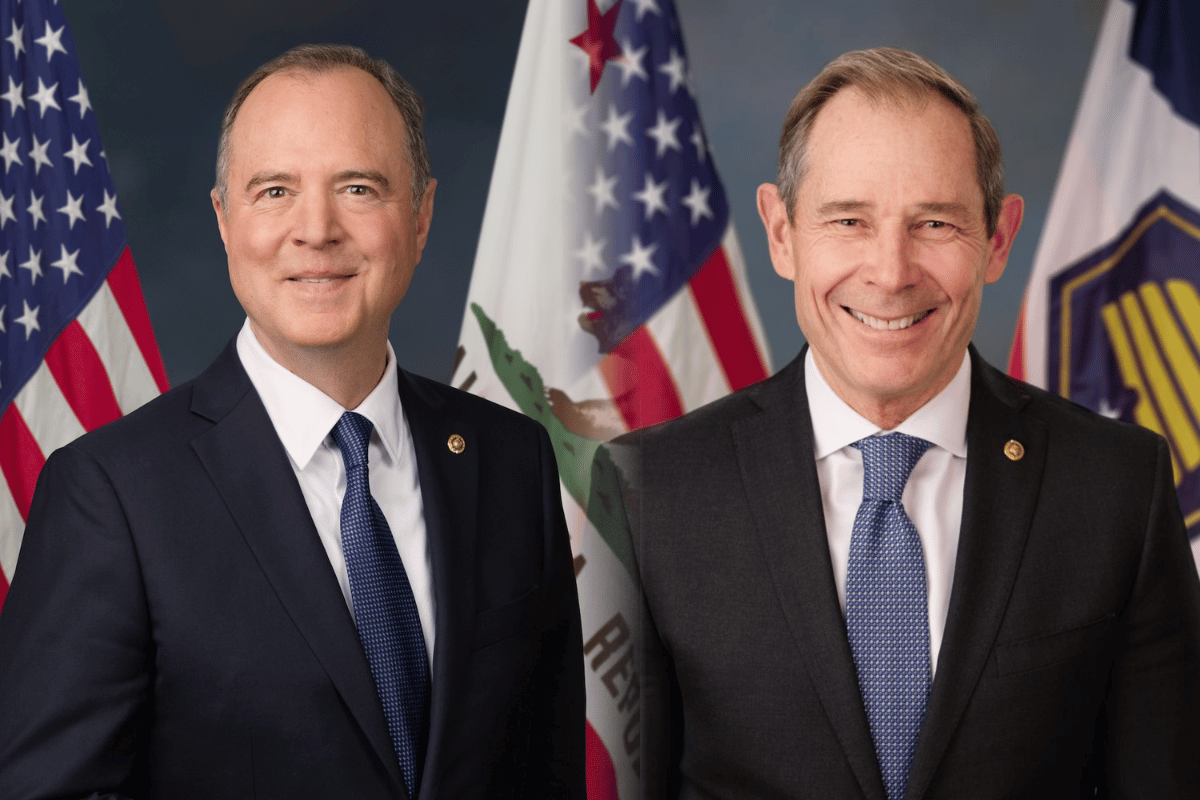
The proposal, called the Prediction Markets Are Gambling Act, comes from Senator Adam Schiff and Senator John Curtis. It would block platforms overseen by the Commodity Futures Trading Commission from listing contracts that mirror sports betting or casino-style wagers.
“Sports prediction contracts are sports bets — just with a different name,” Schiff said in a statement announcing the bill. “And yet, these contracts have been offered in all fifty states in clear violation of state and federal law.”
He argued regulators have allowed the market to expand instead of stopping it.
“Rather than enforce the law, the CFTC is greenlighting these markets and even promoting their growth. It’s time for Congress to step in and eliminate this backdoor which violates state consumer protections, intrudes upon tribal sovereignty, and offers no public revenue.”
Curtis pointed out concerns about younger users and regulatory boundaries.
“Too many young people in Utah are getting exposed to addictive sports betting and casino-style gaming contracts that belong under state control, not under federal regulators,” he said. “Our bipartisan legislation clarifies regulatory jurisdiction, ensuring that states can maintain their authority over sports betting and casino gaming.”
He added: “The Prediction Markets Are Gambling Act is about respecting states’ authority, protecting families, and keeping speculative financial products out of spaces where they don’t belong.”
Under the bill, federal law would be updated to clearly ban any contract tied to sporting events or casino-style games on regulated exchanges. Lawmakers wrote the definition rather broadly, covering everything from amateur contests to professional leagues, including virtual competitions.
At the same time, the legislation stresses that states should remain in charge of gambling oversight, reinforcing existing legal frameworks rather than replacing them.
The push comes as prediction markets tied to sports have grown rapidly, with some contracts drawing massive trading volumes and reaching users even in states where betting is restricted. Critics say these platforms avoid taxes, sidestep consumer protections, and operate outside tribal agreements.
The bill also fits into a wider effort in Congress to rein in controversial prediction markets, including proposals targeting so-called “death contracts” and limiting participation by federal officials.
Kalshi spox @ediyork statement:“Banning sports on regulated prediction markets would just push this behavior offshore, where no regulation exists."It’s clear this bill is motivated by casino interests that are threatened by competition. They’re more worried about protecting… t.co/UhoTbXUNqu
— Nick Devor (@nickdevor_) March 23, 2026Industry voices, however, argue the bill could have unintended consequences. Elisabeth Diana, head of communications at Kalshi, warned that banning regulated markets would not eliminate demand.
“Banning sports on regulated prediction markets would just push this behavior offshore, where no regulation exists.
“It’s clear this bill is motivated by casino interests that are threatened by competition. They’re more worried about protecting their monopolies than protecting consumers.
“Sports trading on regulated prediction markets offer a fairer choice to consumers, with no house that restricts winners and hooks people the more they lose. Tens of millions consumers use regulated predictions markets for this very reason.
“We should let competition run its course instead of protecting monopolies.”
Featured image: Sen. Adam Schiff via website / Sen. John Curtis via website
Bipartisan senators push bill to ban sports prediction markets ReadWrite.
Hence then, the article about bipartisan senators push bill to ban sports prediction markets was published today ( ) and is available on read write ( Middle East ) The editorial team at PressBee has edited and verified it, and it may have been modified, fully republished, or quoted. You can read and follow the updates of this news or article from its original source.
Read More Details
Finally We wish PressBee provided you with enough information of ( Bipartisan senators push bill to ban sports prediction markets )


Also on site :
- NBC Extends ‘Line of Fire’ With Full-Season Pickup
- Jay-Z and his mother founded the Shawn Carter Foundation in 2003; its 20th-anniversary gala raised $20 million in one night
- In 1944, Curtis Springer claimed 12,800 acres of Mojave land and built Zzyzx; the government evicted him in 1974