
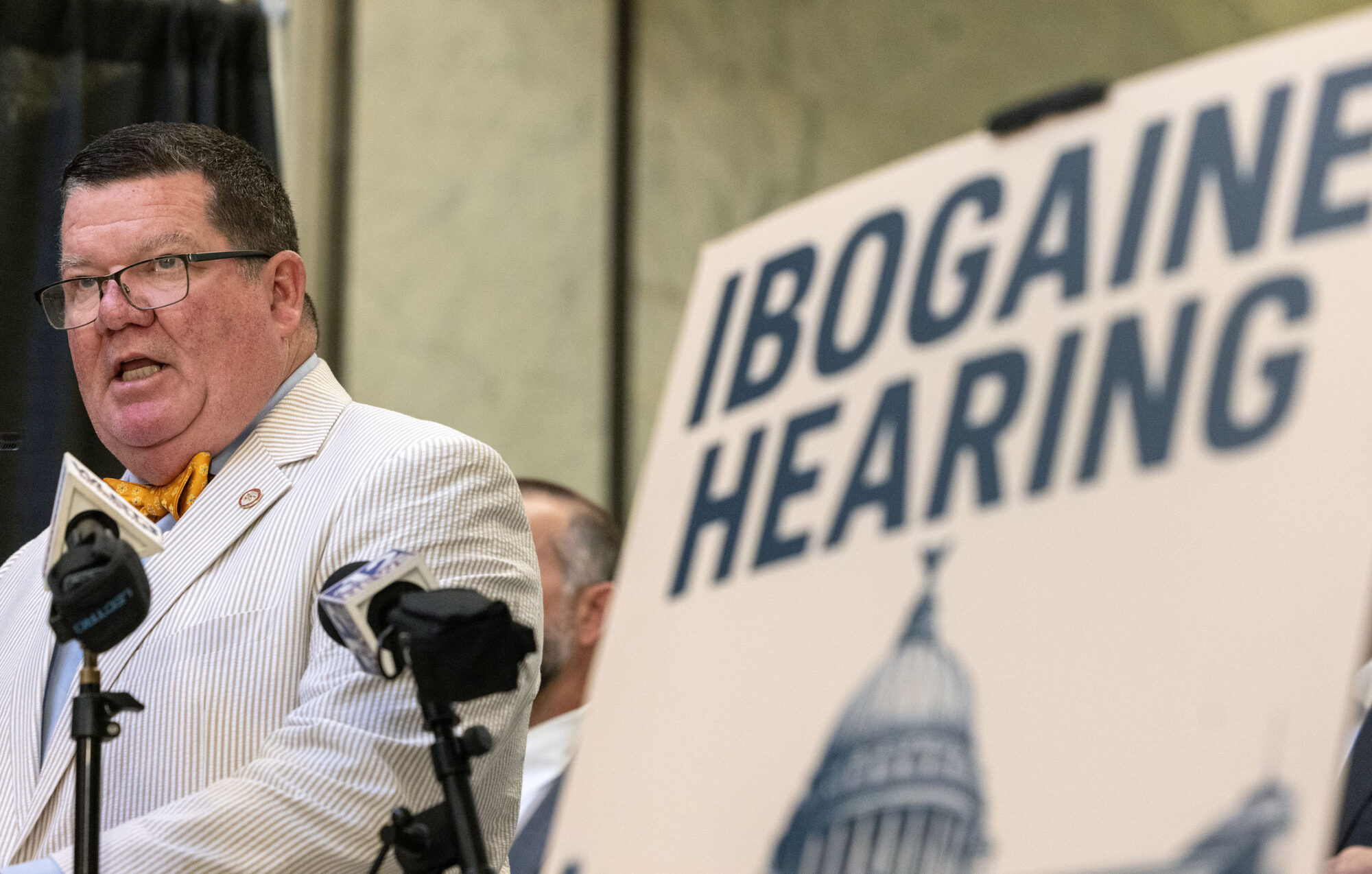
Gov. Tate Reeves signed into law legislation to fund clinical trials related to the psychedelic drug ibogaine on Wednesday, action that could add $5 million of Mississippi’s opioid settlement money to study the drug.
The bill, which passed the House and Senate with bipartisan support, instructs the Mississippi State Department of Health to create a state partnership to research ibogaine’s ability to treat mental health disorders like addiction, depression and traumatic brain injuries. No state funding is attached to the bill, although legislators have said they expect to soon appropriate the opioid settlement funds for the effort.
Lawmakers across the country and political spectrum have pushed their states to research the therapeutic potential of ibogaine over the past two years. Political and cultural figures have claimed it to be a mental health panacea for which states have a responsibility to fund research trials.
The drug, derived from a shrub native to West Africa, has interested medical practitioners for centuries. But ibogaine use has also led to fatal cardiac arrhythmias on occasion, and the federal government in 1970 added it to a list of drugs that it said had no medical use.
Bryan Hubbard, the executive director of the nonprofit Americans for Ibogaine, has gone from state to state in recent years encouraging legislatures to pool funds for ibogaine clinical trials. Because the federal government isn’t funding studies testing the drug’s potential therapeutic effects, he has been pushing for states — including Mississippi — to support research.
He has close ties to former Kentucky Attorney General Daniel Cameron, who a 2023 Daily Beast investigation found had received over $1 million in campaign funding from a super PAC backed by an ibogaine industry investor. Almost all of the PAC’s 2023 fundraising came from a billionaire who stood to benefit from ibogaine’s development as a commercial medication, according to the newsroom.
Cameron appointed Hubbard to lead much of Kentucky’s opioid settlement distribution process, a role in which Hubbard tried to direct $42 million of the state’s lawsuit money for ibogaine research. He has publicly said he personally would not financially benefit from ibogaine’s development as a medication.
Hubbard frequently cites a 2024 Stanford study that some veterans’ negative symptoms related to traumatic brain injuries and other mental disorders decreased a month after ibogaine treatment, and taking the drug with magnesium mitigated additional cardiac risks. The paper didn’t compare people who received the treatment to those who didn’t, which is essential for determining whether new medications are effective.
Existing drugs approved for opioid use disorder, the deadliest addiction, are effective at treating the condition. Hubbard has criticized these existing medications in the past as unviable solutions for addressing an addiction epidemic that’s killed over a million Americans since 1999.
While some who’ve traveled out of the country to be treated with ibogaine say it’s helped treat their opioid addictions, an academic review of studies that looked at ibogaine’s addiction treatment potential said most had “high risk of bias.”
As part of his lobbying efforts, Hubbard helped host a meeting in Aspen, Colorado, with state legislators across the country last spring. Its goal, according to the summit’s website, was to encourage states to research the drug and its impact on addiction.
Among those who attended the Aspen summit were Mississippi’s House Public Health and Human Services Committee Chair Sam Creekmore and Department of Mental Health Medical Director Dr. Tom Recore. In the following months, Creekmore started writing editorials encouraging the Legislature to join lawmakers in states such as Texas and Arizona that are using state funds for ibogaine trials.
In August, Creekmore hosted Hubbard and other ibogaine advocates at the Mississippi Capitol, where many spoke about how the drug had personally helped them overcome mental disorders. At that event, Creekmore said he would not financially benefit from ibogaine’s development as an approved medication.
The event was the first time Creekmore publicly said he wanted the Legislature to appropriate $5 million for this effort from the state’s nonabatement opioid settlement fund, money he and other lawmakers allow to be used on nonaddiction purposes. He told Mississippi Today that was still the plan Tuesday after the bill’s final House passage.Opioid settlement funds the Legislature controls are expected to be appropriated through the attorney general budget bill.
Hence then, the article about reeves signs law for mississippi to fund ibogaine mental health clinical trials was published today ( ) and is available on Mississippi Today ( Middle East ) The editorial team at PressBee has edited and verified it, and it may have been modified, fully republished, or quoted. You can read and follow the updates of this news or article from its original source.
Read More Details
Finally We wish PressBee provided you with enough information of ( Reeves signs law for Mississippi to fund ibogaine mental health clinical trials )


Also on site :
- Kate Spade Outlet’s ‘Beauty and the Beast’ Wristlet Is a Nostalgic Fairytale Find for Disney Fans, Now 50% Off
- Don’t Sleep on These 11 Trader Joe’s September Gems Before They’re Gone for the Season
- 1976 Classic Rock Album by Boston, Recorded in Basement, Ranked Among ‘Greatest Rock Masters’ of All Time