
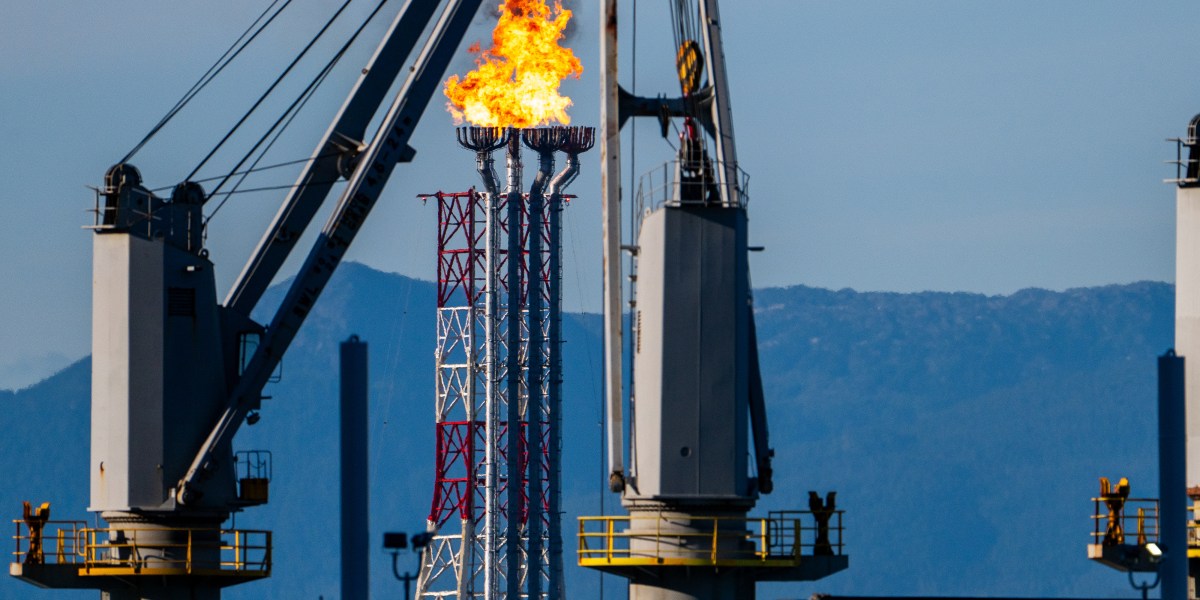
When IRGC brigadier-general Ebrahim Jabari declared the Strait of Hormuz to be closed, 150 oil and LNG tankers decided to stay put rather than risk getting fired upon. Qatar Energy and other oil and gas producers soon halted production, declaring force majeure. The effect on Asia was immediate, with LNG benchmarks jumping 39% in just one session and governments now frantically ordering staff to work-from-home to save energy.
The threat to Asia had been obvious for years. The U.S. Energy Information Administration estimated that, in 2024, over 80% of the crude and LNG that transited Hormuz went to Asian markets. China, India, Japan, and South Korea accounted for nearly 70% of all Hormuz crude flows. Saudi Arabia and the UAE can only send about 2.6 million barrels of crude oil a day through bypass pipelines, not enough to offset the 20 million barrels per day now stuck. It’s even worse for LNG: There’s no way to get it out if Hormuz is closed.
If Asian countries want a solution to their energy woes in the Middle East, perhaps they should look, well, to the east—across the Pacific to energy sources in North America, and Canada in particular.
Canada’s new Pacific energy infrastructure, from the Shell‑led LNG Canada project in Kitimat to the expanded Trans Mountain pipeline feeding crude to tankers near Vancouver, offers Asian buyers a faster, cheaper and geopolitically safer route that can skip Hormuz and other chokepoints like Malacca and the South China Sea, altogether.
A different map already exists
There’s no technological fix for geography, as author Robert D. Kaplan argued in his 2012 book, The Revenge of Geography. The only solution is a different map—and for Asia’s energy buyers, that different map is on Canada’s Pacific coast.
LNG Canada in Kitimat, British Columbia, shipped its first cargo in June 2025, making Canada an LNG‑exporting nation for the first time. Cargoes load directly into the North Pacific and reach Northeast Asian terminals without passing through the Strait of Hormuz, the Strait of Malacca, or the South China Sea, all potential chokepoints for energy trade.
Canadian crude from Alberta now moves west through the Trans Mountain Expansion (TMX) pipeline, which came online in May 2024 and has nearly tripled maximum capacity to 890,000 barrels per day. Since startup, shipments from the Westridge Marine Terminal near Vancouver have helped triple Canadian crude exports to non‑US destinations, with Asia—particularly China—emerging as a key buyer.
The Alberta‑to‑Asia route does not rely on Hormuz or Malacca, and it originates in a jurisdiction perceived as politically stable. Importantly, Canada is low-risk and—one hopes—unlikely to be beset by conflict any time soon.
Why not the United States?
The U.S., the world’s largest LNG exporter, can’t help gas-hungry Asian buyers. The reason, again, is geography. The U.S.’s LNG export terminals are on the Gulf Coast or the East Coast; none are on the Pacific Coast. It can take up to 24 days to get an LNG tanker from the Gulf Coast, through the Panama Canal, and to Japan. Shipping from Kitimat in Canada takes just 11 days.
Canadian LNG from Kitimat takes roughly 10 to 11 days, at a delivered cost of under $1/MMBtu versus $2/MMBtu or more via Panama, according to energy research firm RBN Energy. Canada’s route is shorter, cheaper and avoids congestion in the Canal.
Washington is building the Alaska LNG project, an 800-mile pipeline from North Slope gas fields to a liquefaction terminal at Nikiski on Cook Inlet. It’s got support from the Trump administration, federal permits, and letters of intent from JERA and POSCO. But Alaska LNG still lacks binding long-term contracts, and some estimates put the cost at more than $70 billion. Even if construction begins as planned in late 2026, the first LNG exports won’t be ready until 2031 at the earliest—and that assumes everything goes right.
In contrast, LNG Canada Phase 1 is operational, and ready to serve Asian buyers, today.
The window is this year
The next tranche of Canadian LNG is about to come online. LNG Canada Phase 12 will provide a further 14 million tonnes per annum through a JV that includes Shell, Mitsubishi, Korea Gas Corporation, Petronas, and PetroChina; a final investment decision is expected by late 2026 or early 2027. Ksi Lisims LNG, near Prince Rupert, has cleared all regulatory approvals. If both proceed, Canada’s total Pacific LNG export capacity will exceed 40 million tonnes per annum by the early 2030s.
Asian utilities and importers—from JERA and INPEX to CNOOC, GAIL, CPC Taiwan and Singapore’s EMA—that lock in 20‑ to 40‑year contracts will have structural insurance against the next Hormuz‑related supply shock that will look extraordinarily cheap in hindsight.
And they’d find a willing partner in Ottawa, which is actively encouraging Asian participation as part of a broader effort to diversify energy exports away from an over‑reliance on the U.S. market.
The tankers anchored outside Hormuz and the burning facilities at Ras Laffan are a live demonstration of what happens when energy security relies on a 33-kilometer wide passage flanked by a hostile power.
Asia’s energy buyers need to find an alternative—and fortunately, they have one in Canada.
The opinions expressed in Fortune.com commentary pieces are solely the views of their authors and do not necessarily reflect the opinions and beliefs of Fortune.
This story was originally featured on Fortune.com
Hence then, the article about the closed strait of hormuz is testing asia s energy security the answer lies across the pacific in canada was published today ( ) and is available on Fortune ( Middle East ) The editorial team at PressBee has edited and verified it, and it may have been modified, fully republished, or quoted. You can read and follow the updates of this news or article from its original source.
Read More Details
Finally We wish PressBee provided you with enough information of ( The closed Strait of Hormuz is testing Asia’s energy security. The answer lies across the Pacific—in Canada )


Also on site :
- A Fat, Nude Woman Became a 1970s Merchandise Sensation. Who Was “Bridget in the Buff”?
- Macy’s Has an Elegant 8-Piece Reversible Comforter Set That Exudes French Countryside Charm for Under $40
- Transform Decks, Patios, and Yards Ahead of Spooky Season With Walmart’s ‘Super Fun’ $25 Halloween Lights