
2 min read
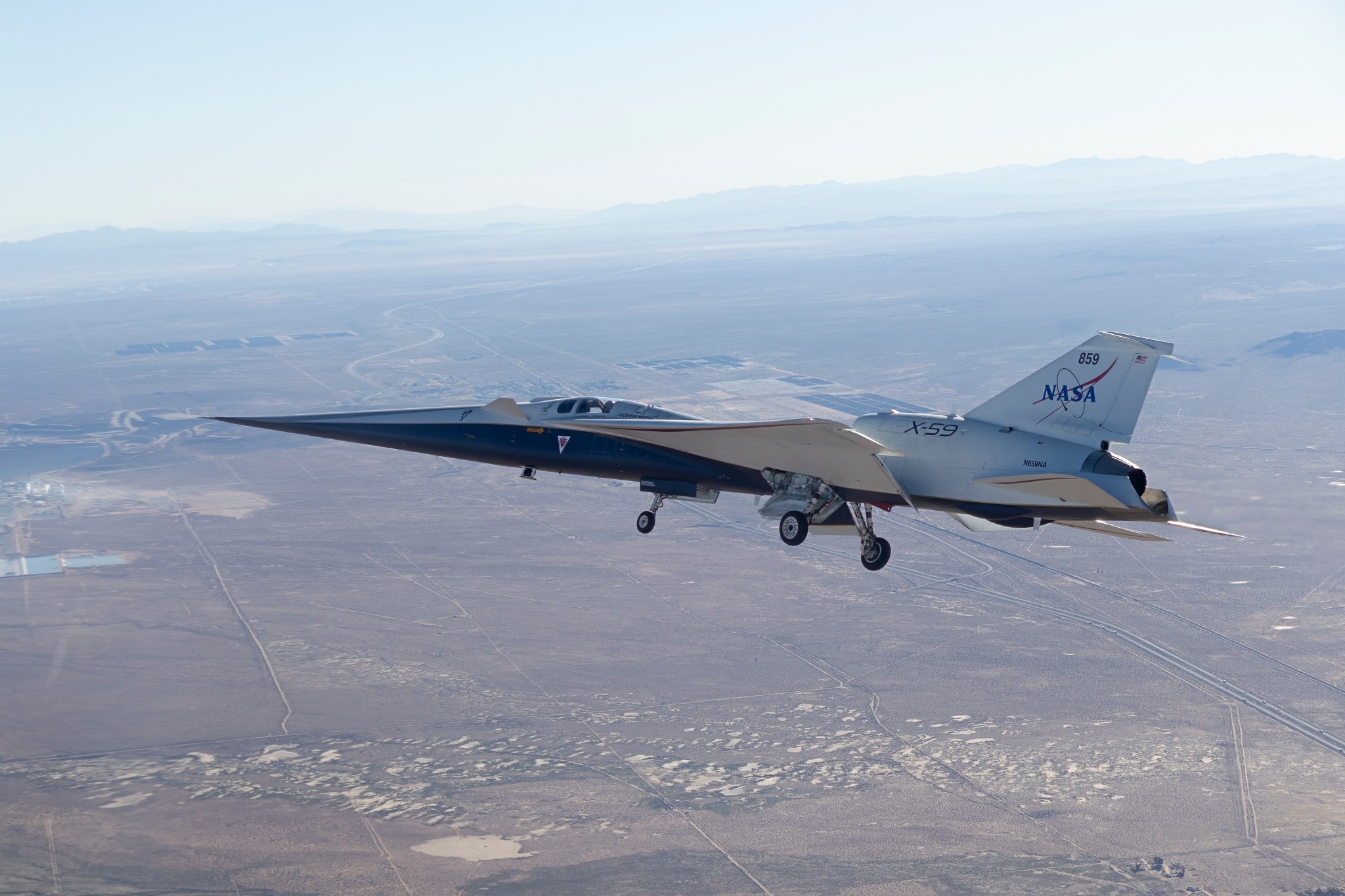
Preparations for Next Moonwalk Simulations Underway (and Underwater) NASA’s X-59 quiet supersonic research aircraft cruises above Palmdale and Edwards, California, during its first flight, Tuesday, Oct. 28, 2025. The aircraft traveled to NASA’s Armstrong Flight Research Center in Edwards, California.NASA/Lori LoseyThe Low Boom Flight Demonstrator project (LBFD) is part of NASA’s effort to help enable new aircraft noise standards that are required to open the market to commercial supersonic flight over land.
The federal government banned all civilian supersonic flights over land more than fifty years ago due to sonic boom noise. If new standards are established, the U.S. aviation industry can position itself to lead the commercial supersonic market, and passengers will benefit from significantly shorter travel times.
Over the past decade, fundamental research and experimentation have demonstrated the possibility of supersonic flight with greatly reduced sonic boom noise – one of several key areas needed to transform commercial supersonic flight.
NASA’s X-59 quiet supersonic research aircraft sits on a ramp at Lockheed Martin Skunk Works in Palmdale, California, during sunset. The one-of-a-kind aircraft is powered by a General Electric F414 engine, a variant of the engines used on F/A-18 fighter jets. The engine is mounted above the fuselage to reduce the number of shockwaves that reach the ground. The X-59 is the centerpiece of NASA’s Quesst mission, which aims to demonstrate quiet supersonic flight and enable future commercial travel over land – faster than the speed of sound.Lockheed Martin Corporation/GarrThe LBFD project will demonstrate a reduced sonic boom by utilizing a purpose-built experimental aircraft designated the X-59.
The LBFD project supports a multi-phase effort aimed at demonstrating the X-59’s ability to fly supersonic without generating loud sonic booms. The LBFD project leads Phase 1 of the Quesst mission, involving the design, fabrication, ground tests, and checkout flights of the X-59.
After ensuring the aircraft is safe and performing as expected, the LBFD project will support the rest of the mission team during Phase 2 to prove the aircraft is producing a quiet sound to people on the ground and is safe for operations in the National Airspace System.
At the conclusion of Phase 2, the X-59 aircraft will transfer to the Integrated Aviation Systems Program’s Flight Demonstrations and Capabilities project.
Facebook logo @NASA@NASAaero@NASAes @NASA@NASAaero@NASA_es Instagram logo @NASA@NASAaero@NASA_es Linkedin logo @NASAExplore More
5 min readNASA Chase Aircraft Ensures X-59’s Safety in Flight
Article 2 months ago 12 min readNASA Armstrong Advances Flight Research and Innovation in 2025
Article 3 months ago 5 min readNASA’s X-59 Completes First Flight, Prepares for More Flight Testing
Article 4 months ago Keep ExploringDiscover More Topics From NASA
Missions
Artemis
Aeronautics STEM
Explore NASA’s History
Share
Details
Last Updated Mar 12, 2026 EditorJim BankeContactSasha [email protected]Related Terms
Low Boom Flight DemonstratorHence then, the article about about low boom flight demonstrator lbfd project was published today ( ) and is available on NASA ( Middle East ) The editorial team at PressBee has edited and verified it, and it may have been modified, fully republished, or quoted. You can read and follow the updates of this news or article from its original source.
Read More Details
Finally We wish PressBee provided you with enough information of ( About Low Boom Flight Demonstrator (LBFD) Project )


Also on site :
- APOD: 2026 September 23 – A New Lunar Crater: McGetchin
- A Fat, Nude Woman Became a 1970s Merchandise Sensation. Who Was “Bridget in the Buff”?
- 1968 No. 1 Hit, Ranked Among ‘Greatest Songs of All Time,’ Became an 11-Minute Creedence Clearwater Classic