
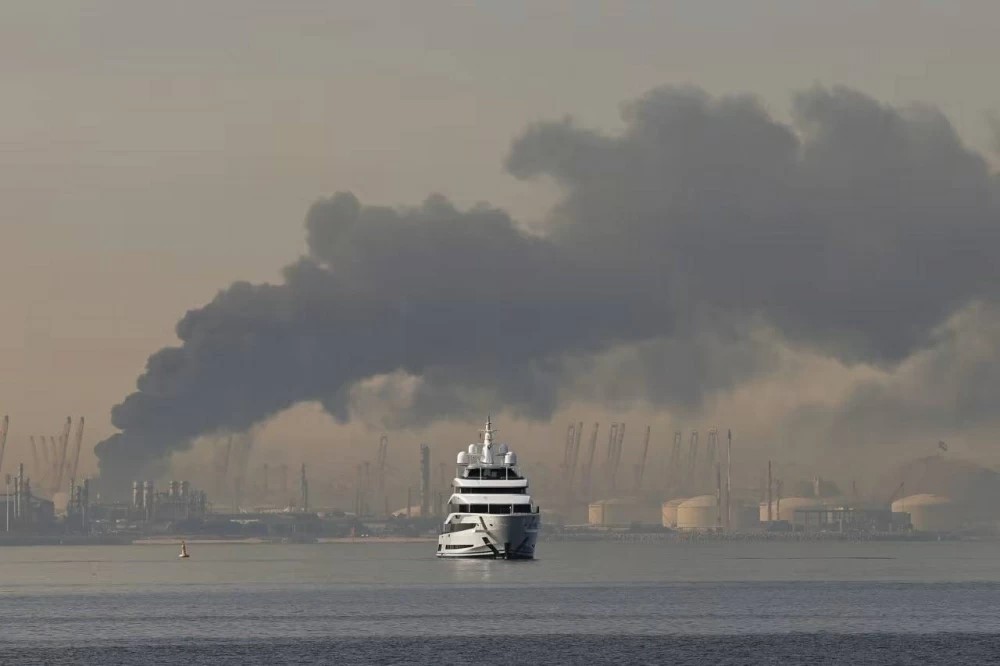
The Middle East has now entered a period of unprecedented escalation when the administration of US President Donald Trump, in coordination with Israeli Prime Minister Benjamin Netanyahu’s government, launched a military campaign against Iran on Feburary 28.
The resulting war has scorched multiple nations and sent shockwaves across the globe.
A new report by Reuters highlights the severe repercussions felt across the region, noting that Washington failed to account for the interests of its Gulf partners.
Analysts speaking to the agency suggest this oversight has led to widespread frustration with the Trump administration, likely driving regional powers to diversify their international alliances.
Regional policy experts also warn of the dangers of a “wounded lion” scenario as the fallout from the US-Israeli campaign against Iran continues to destabilize the Arabian Gulf.
Growing resentment
According to anonymous regional sources cited by Reuters, the oil-producing Gulf states are paying the ultimate price for a war ignited by Trump’s administration.
Three regional sources confirmed that “resentment is mounting behind the scenes in Arab Gulf capitals.”
These nations feel they have been dragged into a conflict they neither initiated nor endorsed, yet they are now forced to bear the staggering economic and military costs.
The President of the Emirates Policy Center, Ebtesam Al-Ketbi, summarized the regional frustration: “This is not our war. We did not want this conflict, yet we are paying the price with our security and our economy.”
However, she was quick to clarify that this stance does not claim Iran’s innocence in the escalation.
The threat of a ‘wounded lion’
According to Reuters, Gulf governments had previously provided explicit assurances to Tehran that they would not allow Washington to use their territory or airspace for combat operations.
Despite these diplomatic efforts to maintain neutrality, Iran has launched waves of drone and missile strikes across the region.
While resentment toward President Donald Trump grows over a conflict many believe he ignited without prior consultation, some regional sources argue that the US must now see the war through to its conclusion.
The prevailing fear is that a partial victory would leave the Iranian regime weakened but vengeful.
As al-Ketbi described the situation: “If America withdraws from the war now without achieving total victory, it would be like leaving a wounded lion.”
Reuters detailed what it described as “catastrophic damage” to the region’s infrastructure. From the total closure of major airspace to the cancellation of approximately 40,000 flights, the crisis represents the largest disruption to global aviation since the COVID-19 pandemic.
Simultaneously, the Gulf’s tourism sector has been severely compromised. For over a decade, nations like the UAE and Qatar have spent billions marketing themselves as safe, luxury destinations – an reputation now in jeopardy.
Reevaluating the relationship with Washington
At the same time, analysts pointed out that the war has prompted Gulf states to reassess their security dependence on Washington and to consider the eventual possibility of entering into new regional security arrangements with Tehran, even as trust in Iran collapses.
Fawaz Gerges of the London School of Economics stated that for decades, relations between Washington and the Gulf states were based on an implicit understanding: “Gulf energy and capital”—including hundreds of billions of dollars spent on American weaponry, advanced technology, goods, and services—in exchange for American protection.
Diversifying partnerships
Gerges believes the war has shaken these assumptions, adding that Gulf states will now accelerate efforts to diversify their foreign and security partnerships, realizing “that they cannot truly rely on the US to protect their energy, oil, and gas resources, their people, or their sovereignty.”
The Chairman of the Saudi-based Gulf Research Center, Abdulaziz Sager, asserted that the US administration failed to establish guarantees for its regional allies or secure the flow of oil and gas during wartime, explaining that the cost to Gulf economies is “staggering.”
Sager said the war has demonstrated the limits of relying solely on external security guarantees, particularly from Washington, noting that Gulf states need to strengthen their own defensive capabilities and preparedness for future crises.
He added: “External powers also make their decisions based on their own strategic interests, not those of the Gulf. As a result, Gulf states are likely to follow a more cautious and balanced approach in their relations with both Iran and key international partners.”
In a rare public critique, prominent Emirati businessman Khalaf Al Habtoor questioned the objectives of the US-Israeli war on Iran.
The founder of the Al Habtoor Group asked: “If the goal of the strikes was to contain Iran, did they take into account the repercussions for the region, or did they simply ignore the cost of dragging the Gulf into a conflict it is not a party to?”
Saudi Aramco CEO Amin Nasser on Tuesday warned that continued disruption to shipping through the Strait of Hormuz would have “catastrophic consequences” for oil markets.
A war tailored for Israel
Sources within Gulf decision-making circles highlighted that “the entire region feels deep frustration with Trump; many believe he dragged the Gulf into a war largely designed according to Israeli calculations, without sharing the war plan, and that he acted hastily before a full assessment of the political and economic impacts on allies.”
A Gulf source familiar with the American decision-making process stated that key decisions are being made by a small inner circle of Trump associates working largely outside traditional US political channels.
He explained: “They are businessmen and people who think with a deal-making mindset, not seasoned politicians,” suggesting that this approach has left Gulf partners vulnerable to the consequences of this circle’s decisions.
Resentment grows as Gulf countries pay economic and military toll for Trump’s Iran war Egypt Independent.
Hence then, the article about resentment grows as gulf countries pay economic and military toll for trump s iran war was published today ( ) and is available on EGYPT INDEPENDENT ( Egypt ) The editorial team at PressBee has edited and verified it, and it may have been modified, fully republished, or quoted. You can read and follow the updates of this news or article from its original source.
Read More Details
Finally We wish PressBee provided you with enough information of ( Resentment grows as Gulf countries pay economic and military toll for Trump’s Iran war )


Also on site :
- What channel is Norwich City v Bolton Championship match on? TV coverage, live stream and kick-off time
- This Bestselling Novelist, Often Compared to Agatha Christie, Secretly Wrote Under 2 Different Names for Decades
- Quote of the Day: Epicurus Lived on Bread and Water While Writing About Pleasure—and Discovered a Hidden Key to Happiness