
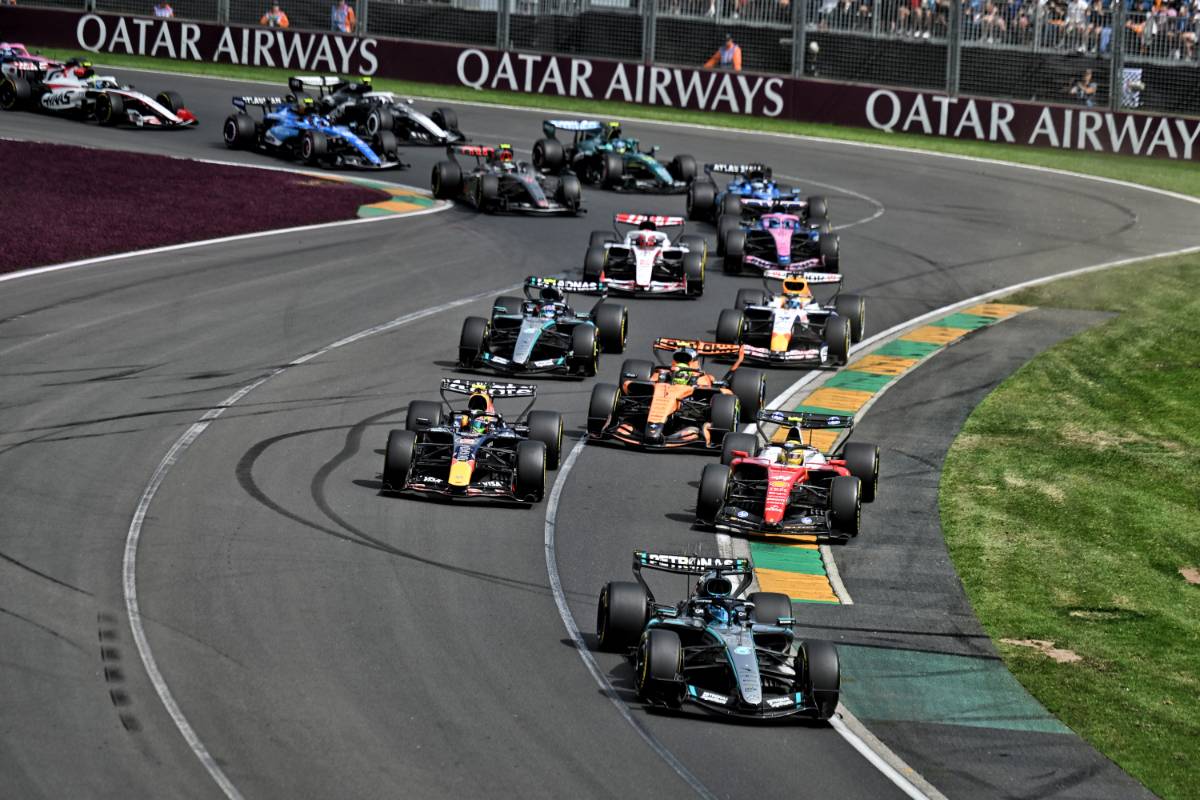
The debate over Formula 1’s new energy management reality erupted almost immediately at the season opener, but inside the paddock the message from Williams boss James Vowles is clear: don’t rush into a solution before understanding the problem.
The Australian Grand Prix laid bare an emerging challenge with the sport’s evolving power unit balance. With electrical energy now responsible for roughly half of a car’s total output, drivers spent large portions of the race managing battery deployment rather than pushing flat out.
The result sparked criticism from fans and analysts alike, with overtaking sometimes dictated less by bravery under braking and more by who had more energy left in reserve.
But Vowles insists the bigger picture still matters.
“If you go stand by the side of the road, which is what I did in Bahrain, they’re still Formula 1 cars and we’re still Formula 1 racing. Those are the facts behind it,” Vowles explained.
“Can we improve on it? Yes,” he said.
Waiting For the Full Picture
For now, the Williams team principal believes the sport must gather more evidence before pulling regulatory levers. With Bahrain, Australia and now China presenting unique energy demands, the early races offer valuable data points.
“Before we went into Bahrain, what we all said was, ‘Are we in the right place? No. Do we know exactly what’s changed to make it better? No. Let’s go through these two races, including a sprint race, and then actively change these rules to be in a solid place afterwards’,” Vowles said in Melbourne.
The nature of the circuits themselves complicates the analysis. A track like Albert Park is particularly punishing when it comes to battery deployment, amplifying the issue, which will also be the case – although to a lesser extent – in Chine next weekend.
“I’m not sure yet, but are we in a perfect spot? No. I think we are a little bit energy-starved, and we have to remember this is probably the top three in terms of worst tracks for it,” he said.
“But, irrespective, is this what we want to show as a sport? No. We want it to be in a slightly better place.”
Several Regulatory Levers Available
Behind the scenes, the FIA and Formula 1 already have several potential tweaks under consideration, according to Vowles.
Adjustments could involve how electrical energy is harvested and deployed, altering limits on energy output per lap, or even modifying the balance between the hybrid system and the internal combustion engine.
“So, there’s about four or five different proposals on the table,” he revealed.
“We’re going to go through the next few races, just see really what works and what doesn’t work. But watch this space. I’m sure as a sport we’ll come together and change the right way.”
Among the more direct interventions would be adjustments to the combustion engine’s contribution, effectively giving teams another tool to reduce the dependency on battery deployment.
“There are things we can do with the ICE as well. It’s just how extreme we want to be going in these measures,” said the Briton.
A Delicate Balance for the Sport
The challenge for regulators is clear: intervene too aggressively and risk undermining the new technical philosophy; move too slowly and the spectacle could suffer.
“I think the worst thing we can do is change it and make it worse. So there has to be an amount of making sure that we are positively affecting the sport, and there are ways of doing that within it.”
Read also: FIA and F1 consider changes amid 2026 regulation backlashChina may provide the clearest test yet. With a kilometre-long back straight, the Shanghai circuit will heavily reward cars with more deployable energy, potentially exaggerating the racing dynamic seen in Melbourne.
“Is it enough? As I said, you’re on one of the three worst tracks here for energy,” Vowles explained.
“It might be as bad in Shanghai. That’s where I want to see it and see what it ends up with. It won’t be as bad at Suzuka, for example.”
“So, we’re just going to make sure that what we’re delivering still ends up being a sport and one that’s enjoyable to watch.”
The complexity of the new hybrid balance has also become impossible to ignore.
“Have we made it too complicated? Yes. Fundamentally, let’s be frank about it,” the Williams boss acknowledged. “But do we have a good Formula 1 product? I still think we do.”
For now, the sport finds itself in an unusual position: a revolutionary technical direction already under scrutiny after only a single race.
But with multiple regulatory options available, the next few grands prix could determine whether Formula 1 tweaks its future—or rewrites part of it.
Keep up to date with all the F1 news via X and Facebook
Vowles outlines potential fixes for F1 energy management plight F1i.com.
Hence then, the article about vowles outlines potential fixes for f1 energy management plight was published today ( ) and is available on F1 News ( Middle East ) The editorial team at PressBee has edited and verified it, and it may have been modified, fully republished, or quoted. You can read and follow the updates of this news or article from its original source.
Read More Details
Finally We wish PressBee provided you with enough information of ( Vowles outlines potential fixes for F1 energy management plight )


Also on site :
- Latest transfer news today: Man City and Liverpool to battle for La Liga full-back as Arsenal prepare to sell £55m man
- HoosDay: Yet Another Verbal Commitment for Virginia’s Class of 2032 – Honorable Mention Allison Kelly
- Troy Aikman hasn’t had ESPN contract talks after Joe Buck megadeal: ‘I thought something would be done’