
Washington confronts a different kind of war
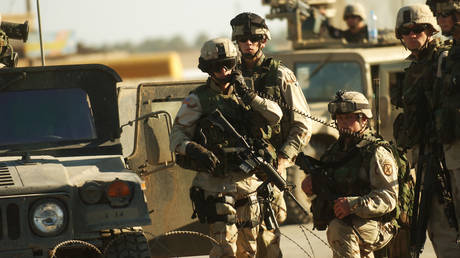
‘Shock and awe’ was the term used to describe the US operation against Iraq in spring 2003. In hindsight, it marked a turning point. The rapid defeat of the Ba’athist regime and the overthrow of Saddam Hussein created the impression that the US had acquired the ability to reshape entire regions at will.
Reality turned out differently. The war did bring change, but not the kind its architects envisaged. The old order in the Middle East collapsed, replaced not by stability but by a chain of crises that demanded enormous resources to contain, with limited success. The blow to America’s global reputation proved lasting.
At the end of winter 2026, the US and Israel launched Operation Epic Fury against Iran. In a sense, Iran’s emergence as the principal adversary of both countries is a direct consequence of the Iraq campaign two decades earlier. Whether today’s attackers can achieve quick and decisive results remains unclear. Iran is the most serious opponent the US has confronted directly in many decades. Even if military success is swift, the balance of forces is not in Iran’s favour, and even if the post-war chaos of Iraq is avoided by steering clear of internal occupation, the broader consequences are likely to disappoint.
The immediate driver of the current escalation is Israel’s determination to exploit a unique constellation of circumstances. From West Jerusalem’s perspective, this is a moment to secure a dominant regional position with Washington’s backing. The vision is of a regional order centered on Israel to which others must adapt, willingly or otherwise.
US President Donald Trump and the ideologues shaping his Middle East policy, many of whom are also relatives and business partners, have their own calculations. Israeli military superiority, combined with deepening commercial ties between Israel and the Gulf monarchies, would allow the US to channel economic benefits primarily to itself. Major geo-economic and logistical projects of interest to China, Russia, and India would become dependent on American oversight. Washington would expand its control over key markets, particularly raw materials and military-technical cooperation. At the same time, the supposed ineffectiveness of groupings created without US participation, above all BRICS and the Shanghai Cooperation Organization, would be put on display.
Read more ‘This could spark the largest regional war yet’: Russian analysts on the Iran strikesThe motive is transparent. The question is feasibility.
The Iraq War also began with slogans of regional restructuring in the name of security, laced with unmistakable mercantile interests – one need only recall Dick Cheney and Halliburton. Yet the central justification was ideological: The export of democracy. Trump and his circle have relegated ideology to the background, emphasizing material returns instead. The earlier approach failed not merely because democratic transformation proved illusory, but because prolonged instability made it impossible to extract the desired dividends.
The new, openly transactional model may appear more pragmatic, but it carries its own risks. External coercion framed purely in commercial terms can provoke powerful ideological backlash, awakening forces united precisely by their rejection of imposed order.
Trump has launched a major military operation without congressional approval, against public sentiment, and with the prospect of real losses. He needs a triumph to reverse unfavorable domestic trends. If successful, the White House may conclude that it has history, and even God, on its side, encouraging greater assertiveness at home and abroad. If not, escalation may still follow, as aggression becomes a substitute for results.
Either way, the Middle East is entering another phase of turbulence, with consequences that will radiate far beyond the region. And that, for all involved, promises nothing good.
This article was first published in Kommersant, and was translated and edited by the RT team.
Hence then, the article about fyodor lukyanov iran is not iraq was published today ( ) and is available on Russia Today ( News ) The editorial team at PressBee has edited and verified it, and it may have been modified, fully republished, or quoted. You can read and follow the updates of this news or article from its original source.
Read More Details
Finally We wish PressBee provided you with enough information of ( Fyodor Lukyanov: Iran is not Iraq )


Also on site :
- Fired ‘Shrinking’ Crew Member Accuses Warner Bros TV Of Doing Nothing Over Sexual Harassment By EP; Being Scapegoated After Complaining
- How ‘Chévere’: ARIA VEGA ‘Couldn’t Be Happier’ as She Earns First Billboard No. 1 With Ryan Castro Collab
- Dancing With The Stars Premiere: Who Was Booted From Season 35 First? And Who Made The Best Impression On Night 1?