
This time last week, I had accountability on my mind, and the need for liberal leaders in a post-Trump future to transform frustration into lustration by bringing the agents and enablers of Trumpism to heel and forcing them to pay a price for their misdeeds. One thing I could have been more forthright about is what put me in the mood: It’s the old and ongoing story of the abuse being meted out by Trump’s brownshirts. Whatever you’ve been told about these goons standing down or lowering the temperature isn’t the straight story. Every day there are fresh tales of their villainy.
It may seem overwrought or cartoonish to call these people evil. But the story that recently cemented it for me took place last year at a deportation detention center in Dilley, Texas—which you may be familiar with because among the allegedly dangerous “worst of the worst” people they have in custody is a 2-month-old infant. As NBC News reported, last November the child detainees were sent to the gymnasium under the pretense that after months of eating contaminated food, they would be treated to a Thanksgiving dinner. But after being made to stare at tables stacked for a holiday feast, they were told that the food was for their jailers, not them.
So, yes, this is evil—despicable and Dickensian. But what’s particularly hair-raising is that we’ve only learned a fraction of what’s going on behind the closed doors of what are essentially concentration camps; what we don’t know is much more vast. And with the Trump administration splashing billions of taxpayer dollars to develop a network of these warehouse prisons, this evil may metastasize—and get better at keeping us in the dark.
It can already be said that 2026 is off to a grim start. As the American Immigration Council, or AIC, reported earlier this month, there were six deaths in ICE detention centers across the country in January. This includes the death of 55-year-old Geraldo Lunas Campos, which was ruled a homicide after a medical examiner concluded he’d died of “asphyxia due to neck and torso compression.” The AIC noted that while ICE is “legally required to report deaths that occur in its custody, its public disclosures often come late and have little information. Independent investigations frequently contradict these findings later.”
Reporting on what’s going on inside these facilities is notoriously difficult, but sometimes we get a shocking glimpse behind the walls and razor wire. In late January, The New Yorker offered one such look at the kaleidoscopic horror taking place in a detention facility in the Mojave Desert. There, detainees with experience at other detention facilities told reporter Oren Peleg that the California detention center “was unique in its mistreatment of those held in its custody,” with abuses ranging from “extremely delayed appointments with health-care professionals, the denial of medications and treatment, experiences with unsafe and unsanitary living conditions, and a general antagonism by medical staff toward detainees.”
A class action lawsuit filed against ICE and the Department of Homeland Security echoes these accounts. Therein, detainees describe the remote facility as a “torture chamber” and “hell on Earth.” Tess Borden, an attorney at the legal nonprofit Prison Law Office, told The New Yorker that “the conditions at the facility are so terrible that detainees are resigning themselves to self-deportation, instead of pursuing asylum and other immigration cases,” and that others were “also trying to take their own lives.”
If stories of this kind disappear from the news, it won’t be because ICE has reformed itself. Rather, it will probably be the result of a clampdown on information. In mid-February, guards at the Dilley detention center raided the family dormitories to seize and destroy letters and drawings made by the children detained there, after their letters were included in a ProPublica report describing the conditions. And lawmakers seeking to do their own lawful oversight continue to find their access denied. As Senator Alex Padilla mused after recently being denied entry to a detention center in San Diego County, “The big question I come with is, what do they have to hide?”
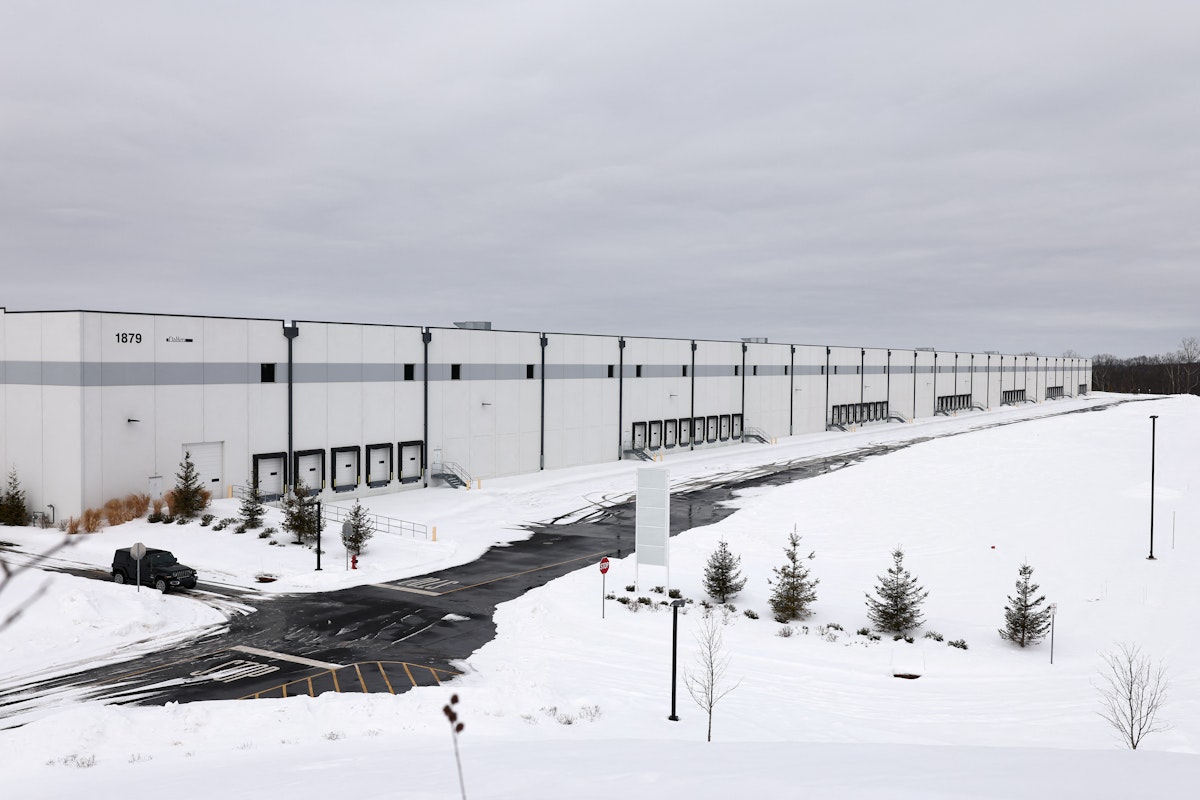
The other big question is what can be done to thwart the Trump administration’s effort to complete its network of prison camps. While we shouldn’t expect Democrats in the federal government to make headway on this matter anytime soon, we’re seeing a mass movement against these detention centers emerging at the local level. Public protest in Ashburn, Virginia, convinced a Canadian billionaire to scuttle a deal to sell warehouse facilities to ICE. Lawmakers in South Fulton, Georgia, preemptively passed a law banning DHS from acquiring warehouse properties in their jurisdiction.
And ironically enough, local jurisdictions are wielding the tools of proceduralism—the endless array of hoops to jump through that The New Republic contributor J. Dylan Sandifer has indicted as the means by which progress too often gets blocked—to throw a wrench in ICE’s works. State officials in Maryland led by Governor Wes Moore—who, per Sandifer, is a notable skeptic of proceduralism—have filed a lawsuit against ICE and DHS in an attempt to block the agency from transforming warehouses in their state into detention facilities. As The Washington Post reported, the state’s complaint borders on the mundane, but it’s really pulling out all the tricks: “The Trump administration did not conduct an environmental review nor seek public input on the project or provide a reasoned explanation on their decision-making, as required by law.”
Representative Alexandria Ocasio-Cortez recently fielded a question from a self-described “ordinary citizen” on social media, who asked, “What can we do to get the concentration camps shut down and restore accountability for those imprisoned against the law?” Her answer: “Local zoning is the way! A lot of these are being stopped or stalled by neighborhood organizing. These warehouses often need to be purchased, permitted, approved for occupancy and specs. Each one of those steps can be interrupted.”
One of the people who heartily approved of AOC’s advice was M. Nolan Gray, the author of Arbitrary Lines: How Zoning Broke the American City and How to Fix It. “As the guy who wrote the book on zoning abolition,” he wrote, “I’d like to go on record as saying: If you can use zoning to stop the concentration camps, fucking go for it.” It’s great to see everyone on the same page.
This article first appeared in Power Mad, a weekly TNR newsletter authored by deputy editor Jason Linkins. Sign up here.
Hence then, the article about how to dismantle a concentration camp was published today ( ) and is available on The New Republic ( Middle East ) The editorial team at PressBee has edited and verified it, and it may have been modified, fully republished, or quoted. You can read and follow the updates of this news or article from its original source.
Read More Details
Finally We wish PressBee provided you with enough information of ( How to Dismantle a Concentration Camp )


Also on site :
- Air Force removes all bombers from British base and redeploys them to the U.S. after a planned terror attack linked to Iran was foiled
- Radha Exports partners with Körber for advanced warehouse automation in Singapore
- TIER IV secures Japanese government grant to advance autonomous bus field operational tests and talent development in Saudi Arabia