
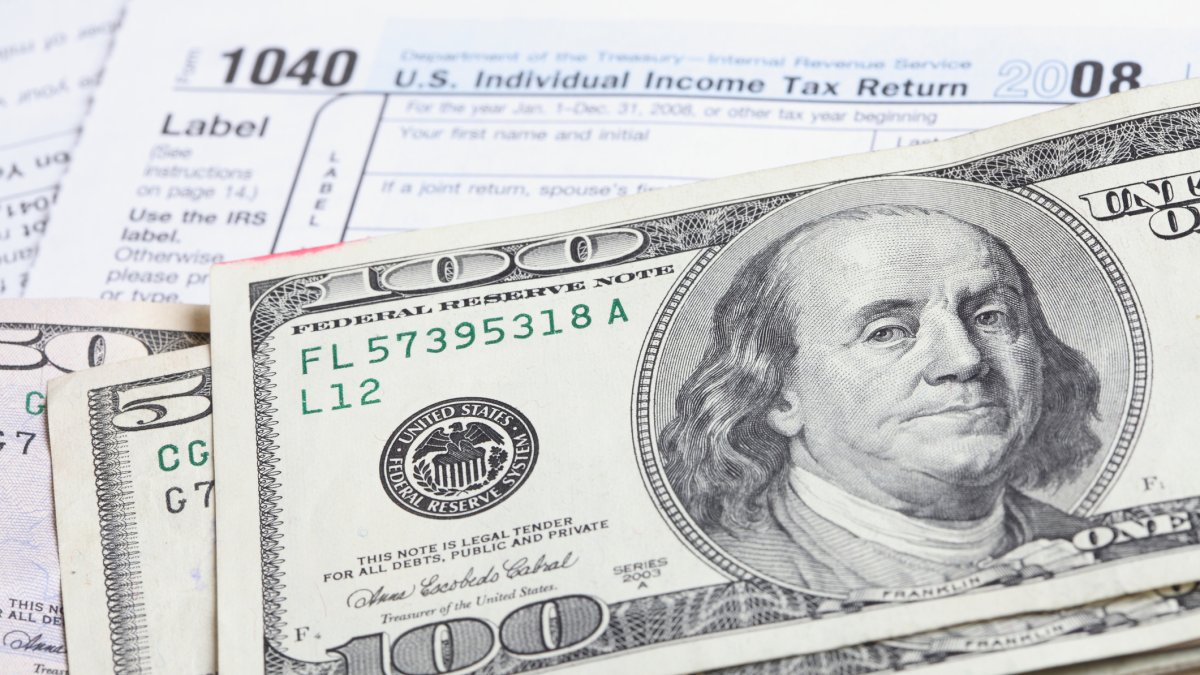
Tax filing season is underway, and the IRS expects 164 million people will file returns by April 15.
The average refund last year was $3,167. This year, analysts have projected it could be $1,000 higher, thanks to changes in tax law. More than 165 million individual income tax returns were processed last year, with 94% submitted electronically.
People with straightforward returns should not encounter delays, but because of an exodus of IRS workers since the start of the Trump administration, the national taxpayer advocate has cautioned that the 2026 tax filing season is likely to present challenges for those who run into problems filing.
While last year IRS employees were not permitted to accept a buyout offer from the Trump administration until after the taxpayer filing deadline, many of those customer service workers have now left. The IRS started 2025 with about 102,000 employees and finished with roughly 74,000 after a series of firings and layoffs led by the Department of Government Efficiency.
Here’s what to know.
When refunds will go out
If you file electronically, the IRS says it should take 21 days or less to receive your refund. If you choose direct deposit, it should take even less time. If you file a paper return, the refund could take four weeks or more, and if your return requires amendments or corrections, it could take longer.
The IRS cautions that taxpayers not rely on receiving a refund by a certain date, especially when making major purchases or paying bills.
How to check the status of your refund
Taxpayers can use the online tool Where’s My Refund? to check the status of their refund within 24 hours of e-filing and generally within four weeks of filing a paper return. The “Where’s My Refund?” tool will also provide projected deposit dates for most early EITC/ACTC refund filers by Feb. 21, according to the IRS.
Information related to this tool is updated once daily, overnight. To access the status of your refund, you’ll need your Social Security or individual taxpayer ID number (ITIN).
Taxpayers can also consult the IRS2Go app, or their IRS Individual Online Account, to check their refund status.
2 ways your refund could be bigger
If you paid more through the year than you owe in tax, due to withholding or other reasons, you should get money back. Even if you didn’t pay excess tax, you may still get a refund if you qualify for a refundable credit, like the Earned Income Tax Credit (EITC) or Child Tax Credit. To get your refund, you must file a return, and you have three years to claim a tax refund.
The IRS expects most refunds for the Earned Income Tax Credit, the Child Tax Credit and the Additional Child Tax Credit to be available in bank accounts or on debit cards by March 2 for taxpayers who choose direct deposit. Some taxpayers may receive their refund earlier, depending on their financial institution.
What is the Earned Income Tax Credit, and who qualifies?
To qualify for the EITC, you must have under $11,950 in investment income and earn less than a specific income level from working.
If you’re single with no children, your income level must be $19,104 or below. And if you’re married filing jointly with three or more children, you must make $68,675 or below. To determine if your household qualifies based on your marital status and your number of dependents you can use the online EITC Assistant tool.
Who qualifies for the Child Tax Credit and Additional Child Tax Credit?
If you have a child, you are most likely eligible for the Child Tax Credit. The credit is up to $2,200 per qualifying child. To qualify, a child must:
Have a Social Security number Be under age 17 at the end of 2025 Be your son, daughter, stepchild, eligible foster child, brother, sister, stepbrother, stepsister, half-brother, half-sister, or a descendant of one of these (for example, a grandchild, niece or nephew) Not provide more than half of his or her own support for the tax year Have lived with you for more than half the tax year Be claimed as a dependent on your tax return Not file a joint return for the year (or filed the joint return only to claim a refund of taxes withheld or estimated taxes) Be a U.S. citizen, U.S. national or a U.S. resident alienYou qualify for the full amount of the Child Tax Credit for each qualifying child if you meet all eligibility factors and your annual income is not more than $200,000 ($400,000 if filing a joint return).
You qualify for the Additional Child Tax Credit if ($1,700 per qualifying child) if you meet these factors and have little or no federal income tax liability. You must have earned income of at least $2,500 to be eligible for the ACTC.
How you get your refund is changing
This year, most taxpayers must provide their routing and account numbers to receive refunds directly deposited into their bank accounts. That’s because the IRS began phasing out paper tax refund checks on Sept. 30 in accordance with an executive order.
Taxes Jan 29Tax season 2026: New increases, deductions to know as some experts predict bigger refunds
Internal Revenue Service Jan 26As tax filing season begins, a change is coming to the way you receive your refund
Hence then, the article about when will you get your irs refund 2 ways it could be bigger this year was published today ( ) and is available on NBC Chicago ( Middle East ) The editorial team at PressBee has edited and verified it, and it may have been modified, fully republished, or quoted. You can read and follow the updates of this news or article from its original source.
Read More Details
Finally We wish PressBee provided you with enough information of ( When will you get your IRS refund? 2 ways it could be bigger this year )


Also on site :
- Europe’s cyber agency blames hacking gangs for massive data breach and leak
- AI companies are building huge natural gas plants to power data centers. What could go wrong?
- The Trump Dictatorship Is Cracking Up