
Think about just a few of the movies that have won the Grand Jury Prize at Sundance over the years: “Blood Simple,” “The Brothers McMullen,” “Welcome to the Dollhouse,” “American Splendor,” “Frozen River,” “Winter’s Bone,” “Beasts of the Southern Wild,” “Whiplash,” and “Minari.” As the final Sundance in Park City gets off the ground for 2026, the question is if this year’s winner will find its place in history like those films clearly did. Sadly, the first two Dramatic Competition films from my personal experience don’t have that kind of juice, although there are performances in both to admire.
The better of the two is Rachel Lambert’s “Carousel,” a story of old flames who reunite in the shadow of tumultuous times in their lives. Noah (Chris Pine) is still struggling through the ripple effects of divorce, waves that have turned his daughter Rebecca (Abby Ryder Fortson) into a ball of anxiety. In the opening scene, Rebecca has a mini-panic attack when she leaves homework in the kitchen instead of bringing it to school, setting up the idea that this poor girl has a short fuse, and that Noah will have to be more present to protect her from herself.
Noah seems a bit adrift himself, not only because of the divorce but because his business partner Sam (Sam Waterston) is retiring, leaving the family medical practice in danger of dissolving. Into this stressful time drops Rebecca (Jenny Slate), an old love from high school and beyond that has been estranged from Noah for what seems like years. She’s come home to Ohio from her high-powered DC job to help her parents (Jeffrey DeMunn & Jessica Harper) clean up their family home to sell it. Through snippets of conversation, we get the sense that both Noah and Rebecca kind of ran from something serious when they were young. Are they ready to run to it now? And how will all the upheaval in their family lives impact a potential reunion?
The main issue with “Carousel” is a bit of an odd one: Pine and Slate don’t play like two people who have known each other since childhood. They have too little chemistry and too little sense of shared history, which could be a fault of writing, direction, or performance. Whatever the reason, there’s an odd hollowness at the center of “Carousel” due to the feeling that Noah and Rebecca feel more like people who have just met than doomed lovers looking for redemption. A generous reading might be that they’ve changed so much and have gone through so much that they ARE just getting to know each other again, but it still feels like a flaw.
And yet “Carousel” is a hard film to dismiss because of how much Chris Pine brings to it. Doing the best work of his career, he makes consistently subtle, smart choices from a furrowed brow to a bitten nail to a downward glance. After a while, I stopped really caring about the underwritten plot and just admired the process that Pine was displaying. He’s so good that he makes the film worth seeing. I just wish the ride was a bit smoother overall.
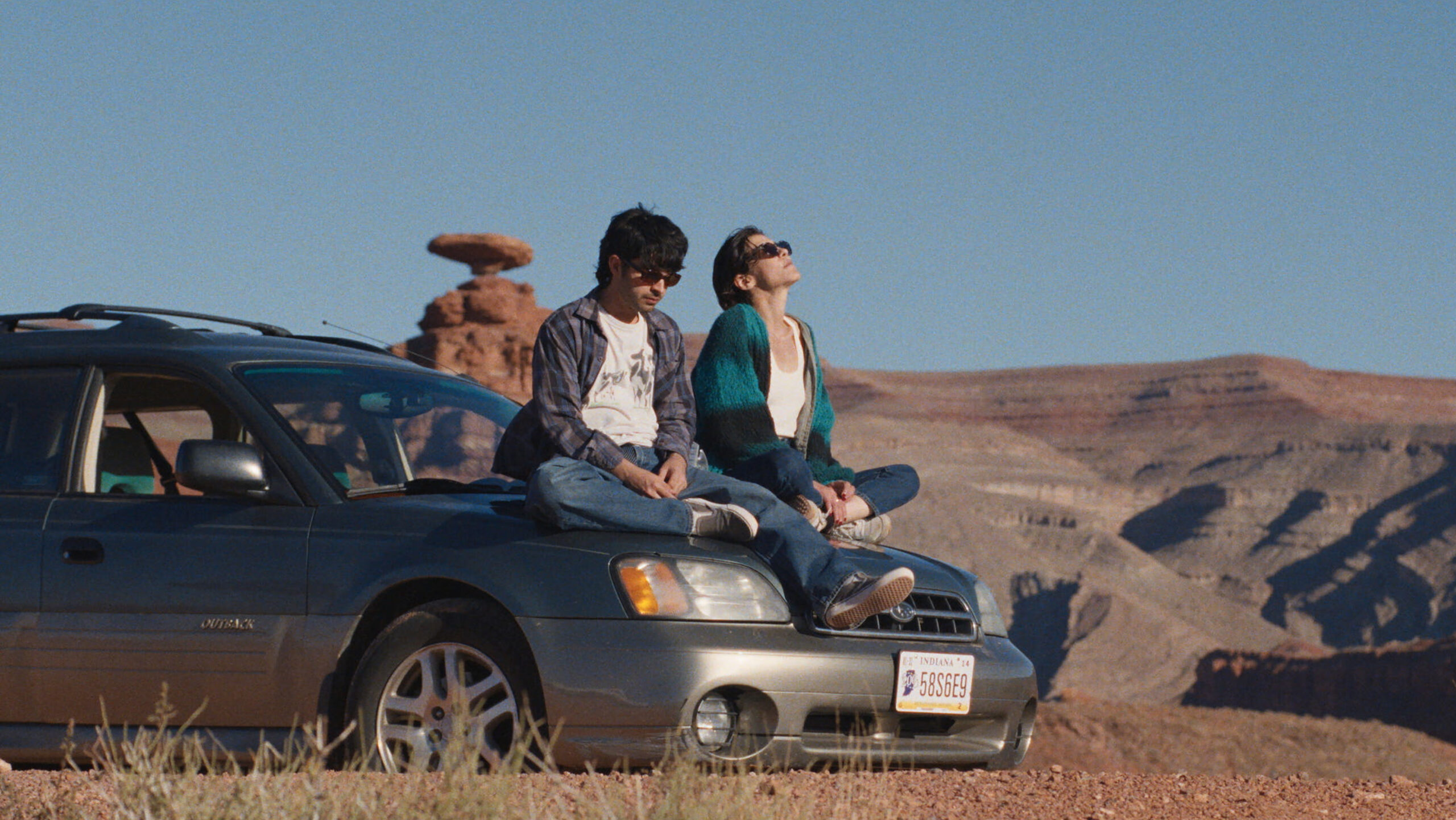
Daniel Zolghadri and Lubna Azabal appear in Hot Water by Ramzi Bashour, an official selection of the 2026 Sundance Film Festival. Courtesy of Sundance Institute | photo by Alfonso Herrera Salcedo.Another bumpy ride unfolds in Ramzi Bashour’s affectionate but slight “Hot Water,” a road comedy that fits right into that classic Sundance box of a movie in which family members finally learn about each other after they leave the house they share. There’s a tenderness to “Hot Water” that’s admirable, and an engaging turn from star Lubna Azabal (“Incendies”), but too much of what could feel true about this dramedy feels punctured by manufactured beats that telegraph and underline feelings instead of allowing them to emerge organically from character work.
Daniel (Daniel Zolghadri) has already been held back at his Indiana high school twice, and he’s being threatened with expulsion that could lead to a 7-year plan to graduate. Daniel’s estranged father Anton reenters the picture, offering to let the young man finish his education with him on the west coast instead, but Daniel can’t fly because the fight that got him expelled damaged his lung. So his mother Layal (Azabal) agrees to drive him across country, leading to conversations in diners and motels from the temperamental Arabic professor and her quirky son.
Across the beautiful landscapes of this country, Layal learns to loosen up a bit and Daniel learns to grow up a bit. The problem is that anyone who’s seen a movie knows this is the navigation of a movie like “Hot Water,” which leaves too little room for surprises or even character work. Too much of “Hot Water” feels like it’s going through the motions. It’s never an abrasively awful movie, just one that’s too forgettable, even with the notable efforts from Azabal to find as many subtle beats as she can.
One of the themes of “Hot Water” is that mothers and sons often need to just listen to and spend time with each other to not only see them in a new light but see how wonderful they are. I believe Bashour loves Layal and Daniel, which is important. He tries to avoid turning them into clichés as he tries to find the commonality in these very different souls. I just wish he found a way to make us love them as much.
Hence then, the article about sundance 2026 carousel hot water was published today ( ) and is available on Roger Ebert ( Middle East ) The editorial team at PressBee has edited and verified it, and it may have been modified, fully republished, or quoted. You can read and follow the updates of this news or article from its original source.
Read More Details
Finally We wish PressBee provided you with enough information of ( Sundance 2026: Carousel, Hot Water )


Also on site :
- ‘Change is inevitable’: What is next for Iran?
- Travel Warning Issued For Millions Across US
- Australian Open: Sinner overcomes cramps; Keys, Pegula advance; Osaka withdraws