
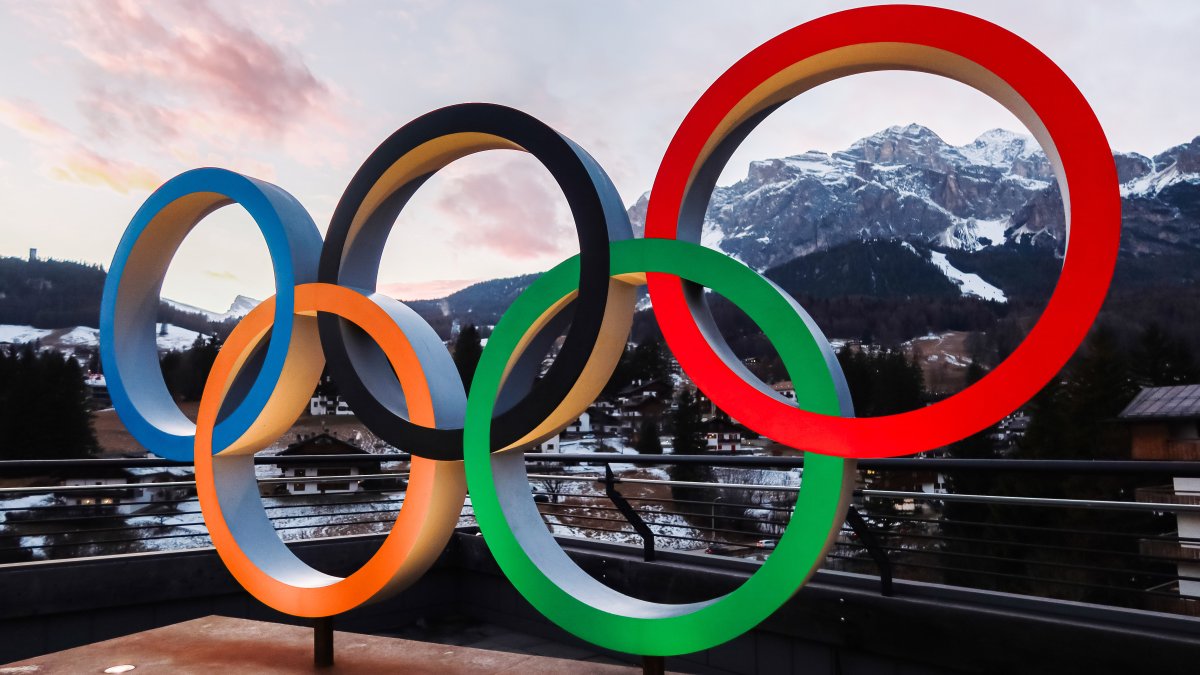
A new analysis from a U.S. based nonprofit organization is looking into the long term viability of outdoor winter sports at the Olympics.
Researchers at Climate Central found in the 70 years since Cortina first held the Winter Games in 1956, February temperatures in the northern Italian town have warmed by 6.4 degrees Fahrenheit.
Studies also show the average February snow depth there decreased by about six inches from 1971-2019, requiring the Games to use more than three million cubic yards of artificial snow, according to Climate Central.
According to its mission, the organization “aims to move climate science forward, and to communicate that science so it’s locally relevant and compelling for anyone, anywhere.”
“Overall, this is painting a picture of our winters, and specifically winters in these Olympic cities getting warmer over time because of climate change,” said Kristina Dahl, the Vice President for Science at Climate Central.
Racing on artificial snow comes with risks, as it is icier and can be faster and more dangerous.
With less snow, there are also fewer opportunities for training, making it harder for athletes to get the training they need ahead of the Games.
“When we have a lack of snow in the wintertime, it changes the state of play in a number of different ways,” said Dahl. “If your snow is decreasing in wherever you live as an athlete, and you’re trying to train for the Olympics, you have less access to the kind of conditions you’ll need to be skiing in. If snow is melting or is slushy, that creates more hazardous conditions for the athletes, so there’s a greater chance of slippage and injury in those kinds of conditions.”
The last time Milan-Cortina hosted the Games, they had on average, about 200 days per year of below freezing temperatures, which is needed to sustain snowpack required for the Olympics.
Now, the cities experience about 170 days below freezing, according to Climate Central researchers.
Scientists also looked at 90 cities that have conditions optimal for hosting the Olympics and found that over the course of this century, conditions will only be appropriate for outdoor sports in about half of those, meaning fewer viable options to host the Games in the future.
Hence then, the article about how climate change is impacting the winter olympics was published today ( ) and is available on NBC Chicago ( Middle East ) The editorial team at PressBee has edited and verified it, and it may have been modified, fully republished, or quoted. You can read and follow the updates of this news or article from its original source.
Read More Details
Finally We wish PressBee provided you with enough information of ( How climate change is impacting the Winter Olympics )


Also on site :
- Zelensky has gone too far – Musk
- In 1931, William Wrigley Jr. built a $1.2 million mansion as a 50th anniversary gift for his wife; it has now sold for $17 million to the Arizona Biltmore’s owner
- Sci-Fi Thriller ‘Overstake’ Gets Generative AI Rebuild, Boarded by Cappu Films at Busan Market (EXCLUSIVE)