
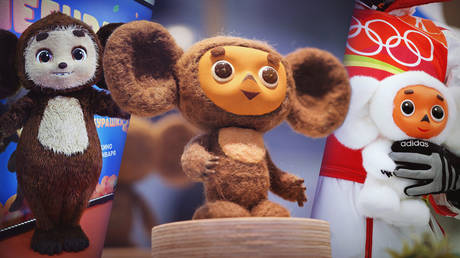
How a Soviet cartoon about loneliness, friendship, and hope turned into the country’s biggest modern film success
Like in most countries, the holiday season in Russia is a time for family-friendly movie premieres. However, in Russia, the celebrations last at least a week after New Year, so there’s an even bigger demand for family entertainment.
Competing for the attention of parents and children are fairy tales, comedies about getaways from the city, and the long-running movie franchise ‘Yolki’ which has released new installments almost every year since 2010. But not this year.
In early January, Cheburashka 2, directed by Dmitry Dyachenko, broke Russia’s box office into the global conversation. In its first week of release, the film ranked third worldwide in theatrical box office charts, outperforming many international competitors. Within just two weeks, Cheburashka 2 crossed the five-billion-ruble mark, becoming only the second film in Russian history to do so. The only other movie to ever reach that milestone was its predecessor.
At first glance, the success of a sequel about a mysterious furry creature from a Soviet children’s cartoon may seem puzzling. But Cheburashka’s story – which began with a book, grew into a beloved animated series, and evolved into a record-breaking live-action franchise – taps into something deeper than nostalgia. Beneath its family-friendly surface lies a reflection of Soviet and modern anxieties, loneliness, and the enduring need for kindness and connection.
"Cheburashka" by Dmitry Dyachenko, 2022. © Yellow, Black & WhiteSoviet friendship blues
On December 31, 1969, a new cartoon was released by Soyuzmultfilm. According to the plot, a fruit seller at a market opened a box of oranges and discovered a creature “unknown to science.” The creature was sleepy, and when the seller tried to set it upright, it fell over twice. “Fell over again, eh? You’re quite a cheburashka,” the fruit seller remarked. [In Russian, a play on words – Cheburashka is derived from “cheburakhnut’sya”, i.e., to “fall over”] That’s how the creature got its name. Soon after, Cheburashka met a lonely crocodile, inspired a grumpy old woman to become kind, and even went to school.
Based on a book by Eduard Uspensky, the cartoon ‘Gena the Crocodile’ quickly became a hit in the USSR. To be fair, there wasn’t much competition; Soviet animation was in its infancy, and the year lacked major family movie releases. It wasn’t just about the market, however. People were attracted by the cartoon’s unique animation style, the earworm songs, and the famous author, Eduard Uspensky. But above all, they loved the memorable main characters.
Read more Soviet psychedelia, fairy tales, and space-themed stories: Hidden gems that will make you fall in love with Russian animationCrocodile Gena is an intelligent crocodile who sports a hat and bow tie and plays chess. He doesn’t have many friends, but once he finds companions, he realizes that there are many lonely people in his city. Determined to do something about it, he decides to build a Friends’ House where everyone can find companionship. Moreover, Gena continues to assist others and helps his friends find their place in life. Gena is melancholic, occasionally awkward, and somewhat pessimistic, but ultimately he’s the image of a caring adult.
In contrast, Cheburashka embodies childlike optimism. Cheburashka is the only one who is not afraid of the rat – the assistant of the film’s antagonist, old lady Shapoklyak – simply because he doesn’t know that rats are considered scary. Worried that he might not fit in, he nevertheless strives to connect with everyone. Viewers are enchanted by his childlike sincerity and lines like, “Let me carry the bags, and you can carry me!”
The characters’ experiences and aspirations reflect real issues in the USSR at the time. By then, the post-war demographic boom had subsided, and birth rates had been steadily declining. Additionally, a new wave of urbanization and industrialization was underway, causing families across the country to relocate to other cities or even different republics in the Soviet Union.
Everyone had trouble making new friends. Kids struggled as they changed schools, often moving to places with fewer peers, while adults found it tough to connect due to the challenges of moving and adapting to new places in a country that was still recovering from the aftermath of World War II.
Emotional resonance and vibrant animation secured Gena and Cheburashka a place in popular culture. They became toys and mascots for Russia’s Olympic team, graced postage stamps, inspired popular jokes, and even saw international adaptations, like the Japanese series ‘Cheburashka Arere?’ which retold the story of the House of Friends in short episodes.
"Cheburashka" by Roman Kachanov, 1969-1983. © SoyuzmultfilmBridging the generation gap with fur
During the 2023 holiday season, Cheburashka returned to the big screen – not as a cartoon, but as a live-action animated comedy. Other things changed as well.
This time, Cheburashka doesn’t arrive in a box of oranges; instead, the creature is swept into Russia by a powerful tornado from an orange grove. Gena is no longer a crocodile but a grumpy janitor in a botanical garden trying to mend his relationship with his estranged daughter. Old lady Shapoklyak has transformed into the head of a corporation aiming to buy out the chocolate shop owned by Gena’s daughter.
Read more Hollywood abandoned Russia one year ago, but the country's box office has just set an all time record: How did this happen?Initially reluctant to welcome Cheburashka into his solitary life, Gena gradually warms up, especially as the creature helps his grandson speak for the first time. Cheburashka then learns to read, unites the family, saves the small business from bankruptcy, and even softens the heart of the hardened entrepreneur.
Rather than sticking to the original plot with minor tweaks or updates – as is common in live-action remakes of classic cartoons – the creators opted for a completely new story.
The original Soviet cartoon no longer reflects Russian society; people aren’t as isolated as before. Both kids and adults can connect through social media, interest-based communities, etc. Today’s pressing issues revolve around strained generational bonds, the quest for individuality in a globalized world, and finding genuine, meaningful connections.
Gena has changed, too. The creators believed that an awkward, intelligent Gena wouldn’t be as appealing to modern viewers.
The filmmakers knew that many Russians feel sentimental about the beloved Soviet cartoon, and they could’ve gone the safe way by relying on a star-studded cast and sticking to the old plot. But instead, they decided to create an entirely new storyline.
Critics had mixed reviews about the CGI and music but praised everything else about the movie. Even though ‘Cheburashka’ was marketed as a holiday film, viewers continued to flock to movie theaters well after the holidays. In five months, the comedy grossed nearly seven billion rubles, making it the highest-grossing Russian film and placing it among the top 20 global box office hits of the year.
Analysts believe that the recently released sequel could break box office records.
"Cheburashka" by Roman Kachanov, 1969-1983. © SoyuzmultfilmCheburashka’s secret
The global “remake trend” has reached Russia. But not every new take on a beloved classic is a success.
‘Cheburashka’ stands out because its creators updated the story, but didn’t change the essence. The endearing creature from afar remains just as innocent, kind-hearted, optimistic, and friendly as ever. The film doesn’t attempt to explain Cheburashka’s origins, complicate the creature’s character, or subvert expectations.
Modern viewers – even those who typically favor realistic and gritty narratives – need such unapologetically kind and uplifting characters. That’s why Cheburashka is universally beloved.
Recently, a member of the State Duma jokingly suggested that Cheburashka might be Jewish, claiming that in 1969, oranges in the USSR were imported only from Israel, so the mysterious creature must have gotten into one of those boxes. Not everyone found the joke amusing. Some argued that Cheburashka originated in Russia and can only be Russian; others noted that Cheburashka’s nationality is irrelevant – the furry creature belongs to the whole world.
Hence then, the article about cute ears that captured the world the miracle of russian cheburashka was published today ( ) and is available on Russia Today ( News ) The editorial team at PressBee has edited and verified it, and it may have been modified, fully republished, or quoted. You can read and follow the updates of this news or article from its original source.
Read More Details
Finally We wish PressBee provided you with enough information of ( Cute ears that captured the world: The miracle of Russian Cheburashka )


Also on site :
- Former UFC Star Shot 3 Times in Deadly Congo Ambush While on Mission for Blackwater Founder’s Security Firm
- Tammy Wynette’s Favorite Song Reimagined By ’70s Music Star 50 Years Later for Star-Studded Tribute Concert
- In 1970, Oregon highway crews packed a dead 45-foot sperm whale with a half-ton of dynamite; the blast rained blubber on spectators and crushed a new car a quarter-mile away