
T he oldest baby boomers — once the vanguard of an American youth that revolutionized U.S. culture and politics — turn 80 in 2026.
The generation that twirled the first plastic hula hoops and dressed up the first Barbie dolls, embraced the TV age, blissed out at Woodstock and protested and fought in the Vietnam War — the cohort that didn’t trust anyone over age 30 — now is contributing to the overall aging of America.
Boomers becoming octogenarians in 2026 include actor Henry Winkler and baseball Hall of Famer Reggie Jackson, singers Cher and Dolly Parton and presidents Donald Trump, George W. Bush and Bill Clinton.
America’s population swelled with around 76 million births from 1946 to 1964, a spike magnified by couples reuniting after World War Two and enjoying postwar prosperity.
Boomers were better educated and richer than previous generations, and they helped grow a consumer-driven economy. In their youth, they pushed for social change through the Civil Rights Movement, the women’s rights movement and efforts to end the Vietnam War.
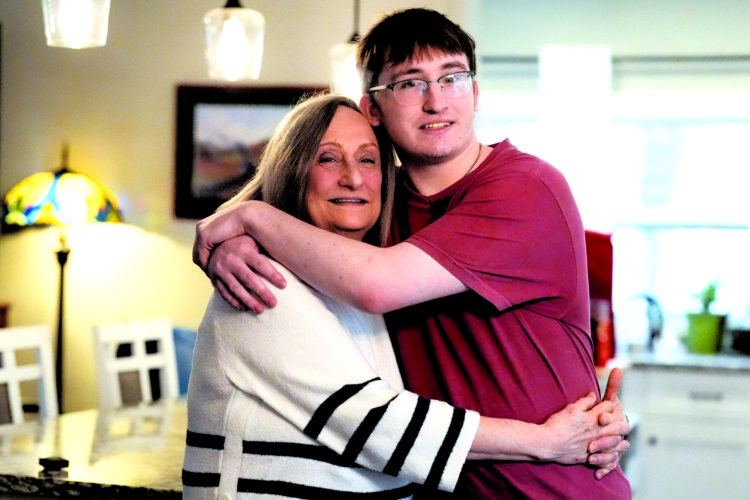
“We had rock ’n’ roll. We were the first generation to get out and demonstrate in the streets. We were the first generation, that was, you know, a socially conscious generation,” said Diane West, a metro Atlanta resident who turns 80 this month. “Our parents played by the rules. We didn’t necessarily play by the rules, and there were lots of us.”
As they got older they became known as the “me” generation, a pejorative term coined by writer Tom Wolfe to reflect what some regarded as their self-absorption and consumerism.
“The thing about baby boomers is they’ve always had a spotlight on them, no matter what age they were,” Brookings demographer William Frey said. “They were a big generation, but they also did important things.”
By the end of this decade, all baby boomers will be 65 and older, and the number of people 80 and over will double in 20 years, Frey said.
The share of senior citizens in the U.S. population is projected to grow from 18.7% in 2025 to nearly 23% by 2050, while children under 18 decline from almost 21% to a projected 18.4%.
POPULATION TO SHRINK
Without any immigration, the U.S. population will start shrinking in five years. That’s when deaths will surpass births, according to projections from the Congressional Budget Office, which were revised in September to account for the Trump administration’s immigration crackdown. Population growth comes from immigration as well as births outpacing deaths.
The aging of America is being compounded by longer lives due to better health care and lower birth rates.
The projected average U.S. life expectancy at birth rises from 78.9 years in 2025 to 82.2 years in 2055, according to the CBO. And since the Great Recession in 2008, when the fertility rate was 2.08, around the 2.1 rate needed for children to numerically replace their parents, it has been on a steady decline, hitting 1.6 in 2025.
Women are having fewer children because they are better educated, they’re delaying marriage to focus on careers, and they’re having their first child at a later age. Unaffordable housing, poor access to child care and the growing expenses of child-rearing also add up to fewer kids.
University of New Hampshire senior demographer Kenneth Johnson estimates that the result has been 11.8 million fewer births, compared to what might have been had the fertility rate stayed at Great Recession levels.
“I was young when I had kids. I mean that’s what we did — we got out of college, we got married and we had babies,” said West, who has two daughters, a stepdaughter and six grandchildren. “My kids got married in their 30s, so it’s very different.”
A recent Census Bureau study showed that 21st century young adults in the U.S. haven’t been adulting like baby boomers did. In 1975, almost half of 25-to-34-year-olds had moved out of their parents’ home, landed jobs, gotten married and had kids. By the early 2020s, less than a quarter of U.S. adults had hit these milestones.
West, whose 21-year-old grandson lives with her, understands why: They lack the prospects her generation enjoyed. Her grandson, Paul Quirk, said it comes down to financial instability.
“They were able to buy a lot of things, a lot cheaper,” Quirk said.a
All of her grandchildren are frustrated by the economy, West added.
“You have to get three roommates in order to afford a place,” she said. “When we got out of college, we had a job waiting for us. And now, people who have master’s degrees are going to work fast food while they look for a real job.”
The aging of America could constrain economic growth. With fewer workers paying taxes, Social Security and Medicare will be under more pressure. About 34 seniors have been supported by every 100 workers in 2025, but that ratio grows to 50 seniors per 100 working-age people in about 30 years, according to estimates released last year by the White House.
When West launched her career in employee benefits and retirement planning in 1973, each 100 workers supported 20 or fewer retirees, by some calculations.
Hence then, the article about baby boomers coming of age was published today ( ) and is available on TribToday ( Middle East ) The editorial team at PressBee has edited and verified it, and it may have been modified, fully republished, or quoted. You can read and follow the updates of this news or article from its original source.
Read More Details
Finally We wish PressBee provided you with enough information of ( Baby boomers coming of age )


Also on site :
- Boston’s Skinny House is about 10 feet wide at the street and just over 6 feet wide inside in places; in September 2021 it sold for $1.25 million
- ‘Two and a Half Men’ Creator Says Charlie Sheen Made Show a ‘Nightmare’: ‘I Had No Choice But to Shut Down’
- ‘Triangle of Sadness’ Producer Backs Park Syeyoung’s Memory-Bending Love Motel Drama ‘Satellite of Love’ at Busan Asian Project Market