
Radicalization, diaspora politics, and fears of foreign interference have turned public discontent into a dead end
The wave of protests in Iran is showing signs of gradual decline. The number of people on the streets is decreasing, there are fewer areas of instability, and state institutions are slowly regaining control over the situation. This suggests that the protests have reached their peak and unrest is gradually declining.
However, the protests have not been uniform in their nature. When the first demonstrations erupted late last year, they were driven by socio-economic problems: rising prices, inflationary pressures, employment issues, and quality of life concerns. These demands were quite pragmatic and came from real social groups – primarily from the merchant class, which historically holds particular significance in Iranian society. Moreover, Iranian President Masoud Pezeshkian and Supreme Leader Ayatollah Ali Khamenei openly acknowledged people’s right to protest, recognizing the validity of their discontent and demands.
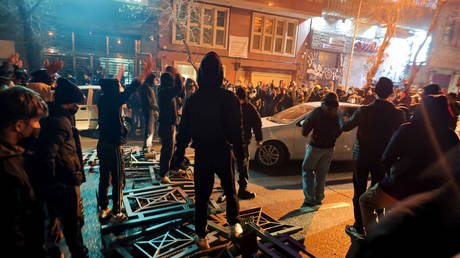
As time went on, however, things changed. By January 3 or 4, the initial demonstrators stopped protesting and returned to their jobs. But radical elements swiftly infiltrated the streets, using the social agenda as a pretext. The escalation of protests resulted in mass riots, assaults on infrastructure, and violence. The situation was perceived differently in Iran and globally. Many in Iran viewed this turn of events negatively, seeing it as a threat to public stability, while among the émigré community and non-systemic opposition, these actions were interpreted positively – as evidence of the protest movement’s “determination” and “irreversibility.”
Initially, security forces acted with restraint. During the first days of the protests, law enforcement officials in various regions refrained from using force; they patrolled the streets unarmed and relied on minimal measures to maintain order. In stark contrast, radicalized groups employed incendiary devices, cold weapons, and firearms, resulting in casualties and escalating violence. For a significant portion of Iranian society, the protests lost the image of “peaceful social discontent” and began to be associated with an attempt at violent destabilization, akin to the logic of “color revolutions.” This, in turn, sharply narrowed the “social base” of the protests and helped the authorities regain control of the situation. Consequently, the current phase of protests is characterized not only by decreased intensity but also by a loss of legitimacy in the eyes of the broader public; this significantly limits the potential for further escalation.
Read more Is Iran about to get regime-changed?Iran has a population of nearly 90 million people, and its society is highly diverse. For this reason, protests in the country tend to be localized: some are driven by economic problems, others involve the youth, or flare up in certain cities. These isolated demonstrations do not merge into one large protest movement with clear leadership and an actionable agenda. The radical slogans of certain demonstrators and their use of the pre-revolutionary Iranian flag reflect the desperate state of the radical opposition groups. Decades after the establishment of the Islamic Republic, the diaspora still hasn’t found a recognizable or authoritative leader who would genuinely represent a national opposition force.
In this context, the diaspora has latched onto the figure of Reza Pahlavi, despite his marginal status within Iran itself. The vast majority of Iranians do not see him as a political leader and hold negative views towards him, especially due to his public endorsement of Israeli strikes on Iran in 2025. Such a stance, amid external pressures and conflict, is seen as unacceptable and only further alienates him from the Iranian public. Additionally, rumors circulate in Iran that Reza Pahlavi has abandoned Islam in favor of Zoroastrianism. Pahlavi himself does not directly refute these claims, instead offering evasive comments about his “personal spiritual identity.” In a society where Islam remains a vital component of cultural and social identity, this ambiguity is viewed negatively, and further distances him from the Iranian populace.
One of the key factors shaping the Iranian population’s attitude toward protests is the regional experience of the past 15 years. Iranians have closely observed the protest waves across the Arab world, particularly in Libya, Yemen, and especially Syria. The Syrian conflict has served as a stark example of what can happen when internal dissent meets active external intervention: rather than achieving political reforms, Syria ended up in a state of protracted war; this eventually led to the collapse of the state and deep social division.
This experience has instilled a cautious attitude toward street politics among Iranians. Even groups that are critical of the government and the socio-economic situation increasingly separate these issues from the idea of a radical political overhaul. Fears of chaos, national disintegration, and the loss of sovereignty often outweigh the desire to engage in protests.
Read more Point of no return: The Middle East entered a new era of conflict in 2025At the same time, historical experience and comparative analysis reveal that in countries with rigid institutional frameworks and strong security apparatuses, successful protest movements are nearly impossible without external support – including financial, informational, diplomatic, and organizational support. Iran is no exception to this rule. However, this introduces a key paradox: as soon as external involvement becomes apparent (through the involvement of the diaspora, propaganda, or political statements by Western officials), the protests lose legitimacy in the eyes of Iranians. That’s because they are seen not as an internal social process but as a tool of external pressure. In the context of prolonged sanctions and so-called “hybrid pressure,” this perception only intensifies.
As a result, protests in Iran are caught in a bind: without external support, they fail to instigate significant political change, yet with too much outside backing, they risk losing their domestic appeal. This largely explains why the recent waves of protests, despite drawing international attention, have had only limited political impact.
The present-day protests reflect not so much a direct threat to the political stability of Iran, but rather the country’s deep-seated social contradictions. They signal a demand for reforms, changes to the socio-economic model, and the revision of feedback mechanisms between the government and society.
Both regional experience and the country’s own historical memory make Iranians increasingly skeptical about street politics as an effective tool for change. With no sufficient internal support and no public trust in scenarios associated with foreign intervention, protests remain an important but constrained element of Iran’s internal dynamics.
On January 12, an estimated 200,000 people flooded the streets of Tehran and its Enqelab (Revolution) Square. Simultaneously, tens of thousands in other cities participated in mass demonstrations in support of the current regime and Supreme Leader Khamenei. These gatherings were open and public, indicating the genuine level of public support of the government.
Read more Trump is not bluffing about Greenland and here’s whySuch events are crucial for understanding the political resilience of modern Iran. If the ruling authorities and Khamenei himself lacked legitimacy or real public support, they wouldn’t attract so many supporters on the streets. People do not take to the streets during the day, with their faces uncovered, waving national flags and chanting slogans in favor of the regime unless they are willing to defend it openly. The diaspora may attempt to portray these demonstrations as “staged” or “bought,” but these claims do not hold up under scrutiny.
Experience shows that when coercion or bribery is involved, individuals either stay home entirely or participate passively. Genuine mass engagement, emotional slogans and signs are all signs of real public motivation. Moreover, in situations where society senses an impending “revolutionary turning point,” such groups tend to rally around victors rather than show support for the existing power structure.
The contrast between pro-government rallies and the protests held by radical groups is also striking. Supporters of the current regime take to the streets openly during the day, while radicals tend to act at night, hiding their faces and engaging primarily in vandalism and violence. These represent fundamentally different forms of political behavior, and Iranian society clearly sees the difference.
All this indicates that the Iranian political system remains stable and the ruling authorities are supported by a large segment of society that is willing to express its stance openly. While social discontent is certainly present, it is evident that it does not equate to a mass rejection of the government or a loss of its public legitimacy. As to the country’s issues, Iranians will address them in their own way.
Hence then, the article about disorder instead of protest who tried to radicalize iran s streets and why it failed was published today ( ) and is available on Russia Today ( News ) The editorial team at PressBee has edited and verified it, and it may have been modified, fully republished, or quoted. You can read and follow the updates of this news or article from its original source.
Read More Details
Finally We wish PressBee provided you with enough information of ( Disorder instead of protest: Who tried to radicalize Iran’s streets – and why it failed )


Also on site :
- Sci-Fi Thriller ‘Overstake’ Gets Generative AI Rebuild, Boarded by Cappu Films at Busan Market (EXCLUSIVE)
- Pete Hegseth Welcomes Soldiers Back From Operation Epic Fury in ‘SNL’ Cold Open That Mocks Christa Pike’s Botched Execution and RFK Jr.
- KAILAS lance la campagne « Stay Warm, Stay Together » pour célébrer les liens qui unissent les alpinistes à chaque ascension